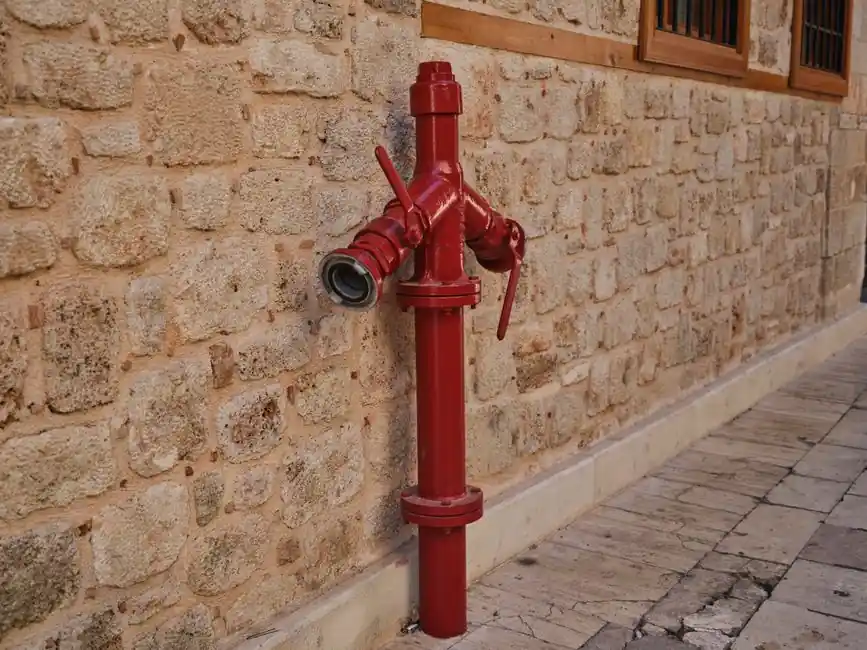
A check valve for irrigation must prevent reverse flow without creating unacceptable head loss or uncontrolled pressure surges, so selection starts with the pump configuration, pipe diameter, water quality, and allowable closing speed.
Pressurized drip and sprinkler networks normally require reverse-flow protection, while direct flood irrigation to open channels or the ground may not; a check valve is therefore a system function, not a universal fitting.
Where Reverse-Flow Protection Is Required
A pressurized irrigation network requires a check valve to prevent reverse flow, isolate the pump from system pressure, and help maintain prime between pump strokes [S4]. A check valve is also recommended where an elevated tank could drain back toward the pump, because uncontrolled drain-back reduces priming and operating efficiency [S4].
At sprinkler laterals, low heads, or zones with elevation changes, an inline check valve closes as system pressure falls and stops drainage toward the lowest point [S3]. The component is passive, operating from flow and differential pressure without an external power supply or manual control [S3].
Direct surface irrigation, open-channel distribution, bucket filling, and gravity discharge do not normally create the same reverse-pressure condition, making a check valve optional in those configurations [S4]. Direct discharge from the pump to the field remains the simplest arrangement because there is no closed pressurized line to sustain reverse flow [S4].
Compare Swing, Spring, and Foot Valves
A swing check valve is economical, fully flow-driven, and can provide a full-bore opening with low head loss, but it is best suited to clean water with a low risk of pressure surge [S2]. A spring check valve adds a closing force that helps control shutdown, making it more suitable where reverse flow or water hammer requires firmer shutoff [S5].
A nozzle check valve adds another option for pumped systems: its disc moves along a short linear stroke and the spring reacts against incoming flow, giving quick opening and closing where water hammer is a concern [S2]. The disc remains in the stream, so the design can produce slightly more head loss than a swing design [S2].
Match the Valve to Water and Flow Conditions
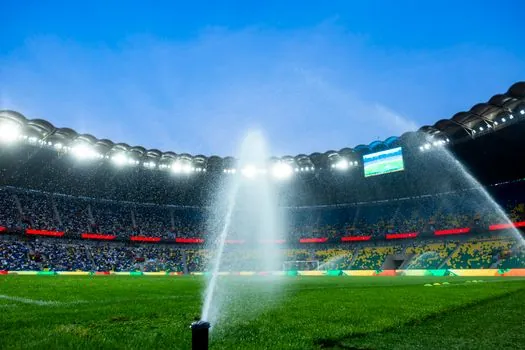
Water quality determines whether a full-bore ball check valve is practical: its smooth bore reduces the tendency for solids to settle, while the rotating ball can self-clean [S2]. Raw wastewater or sewage with solids can impair valve performance, making material compatibility and passage geometry more important [S2].
A ball check valve has a compact body and no external moving parts, but it normally lacks an open or close indicator, which limits field verification [S2]. Swing designs can be specified with lever-and-weight, lever-and-spring, or digital-feedback arrangements where operating status must be visible or monitored [S2].
Large irrigation transmission mains commonly use DN200 and larger pipe, together with long pipelines and changing flow velocities [S1]. The consequence for check-valve selection is a requirement for adequate flow capacity and low resistance at large diameters, rather than treating a small irrigation valve as a scaled copy of the main-line specification [S1].
Control Surge at Pump Discharge
Frequent pump starts and stops create changing velocity and pressure in irrigation mains, with the most significant pressure surges occurring at pump discharge [S1]. A check valve that closes rapidly can limit reverse flow and protect upstream equipment, but rapid closure can itself intensify the transient [S2].
Spring-assisted and nozzle-style designs shorten or control closure timing, while a weighted swing check can slow the final movement of the disc. Slow closing is particularly useful where the discharge path has low resistance and a fast-acting check would cause a damaging pressure rise, as discussed in Weight and Lever Assisted Swing Check Valves: Tuning for Slow Closing.
Valve sizing must therefore use the expected line flow, available differential pressure, minimum cracking pressure, and permissible pressure surge. Neither the nominal diameter nor the absence of reverse flow establishes suitability; an inadequately opened check valve can impose a pressure drop and reduce the flow delivered to downstream zones [S2].
Foot Valves Fit Pump Suction Applications
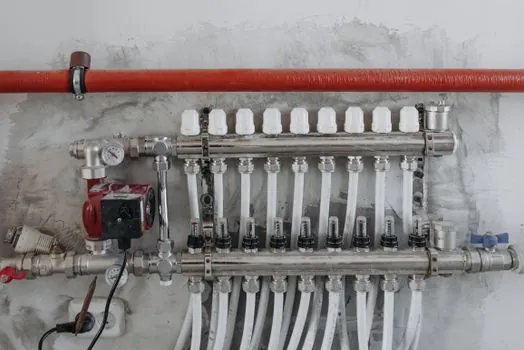
A screened foot valve is intended for pump suction lines drawing from tanks, ponds, and wells, while swing, spring, and wafer designs serve other reverse-flow prevention positions [S5]. The foot-valve approach supports pump suction and prevents loss of prime, provided the inlet screen remains clear and the valve has adequate submergence.
Irrigation pump systems also require attention to daily water volume, pumping duration, motor operation, float control, and dry-run prevention [S4]. These requirements affect the complete suction and discharge arrangement, not merely the check-valve body. A storage tank can buffer flow and provide constant head, changing the required valve arrangement compared with direct pumping into a pressurized main [S4].
For a simple pump installation, the flow arrow should point away from the pump, the valve should remain accessible for service, and exposed installations should be protected from freezing [S4]. Inspection access matters because a foot screen, disk, or spring that cannot be serviced becomes a preventable source of reduced flow or loss of prime.
Do Not Confuse Check and Backflow Devices
An inline check valve permits flow in one direction and closes when pressure reverses, but it is not interchangeable with a backflow preventer assembled from a normally closed air vent and check valve [S3]. The backflow device addresses contamination of a potable source through back-siphonage and is installed where the local code requires that protection [S3].
Backflow preventers must not remain in continuous service for more than 12 hours because extended exposure increases the risk of failure [S3]. Municipal requirements can specify the required device, so irrigation equipment selection does not remove the need to verify local potable-water rules before specifying the assembly [S3].
A flush valve, auto-drain valve, air-release valve, and pressure-relief valve each perform a different function. A flush valve opens at startup to discharge debris and reopens during depressurization to help drain low points; it does not substitute for a reverse-flow check [S3].
Build the Selection Around the Duty Point
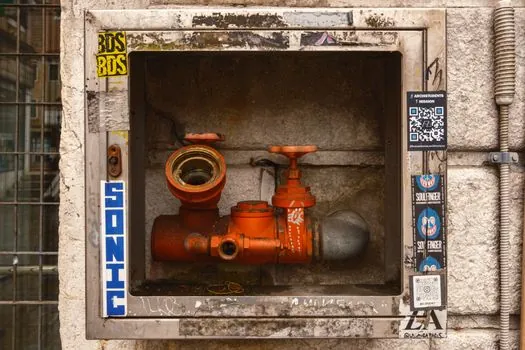
Start with the system configuration: pressurized drip or sprinkler service calls for a check valve, an elevated tank calls for drain-back control, and direct flood irrigation makes the device optional [S4]. Next define the valve position, including pump discharge, zone lateral, elevated low point, or suction inlet, because each location has a different flow and pressure duty [S3][S5].
Specify the valve by size, flow rate, pressure rating, allowable loss, opening or cracking pressure, closure behavior, material, connection method, and access requirements. For clean gravity or low-surge service, favor a full-bore swing design; for controlled closure, evaluate spring-assisted, weighted, nozzle, or other engineered swing arrangements; for pump suction from a stored source, evaluate a screened foot valve with the complete suction conditions [S2][S5].
The next verification points are measurable: record the calculated line flow and pressure drop across the selected valve, confirm the reverse-flow condition it must stop, verify water-borne solids and filtration needs, and check the applicable potable-water backflow requirement where the source is protected [S2][S3].