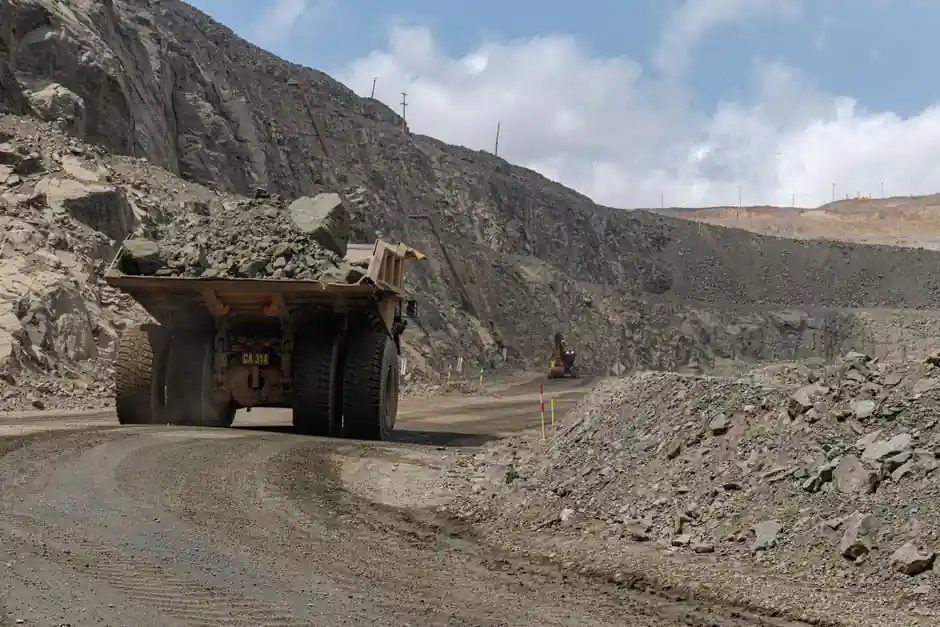
Demolition rubble is the worst-case cargo for a dump body: jagged rebar, 2-ton concrete slabs, mixed timber, and abrasive fines. A standard on-highway rigid dump truck with 10 to 16 tons of payload handles most commercial demolition sites, while an articulated chassis is the right call once ground conditions turn soft, muddy, or steep.
The decision is driven by three engineering facts: body steel grade, axle count, and ground-bearing pressure. Hardox/AR400/AR450 plate resists the impact load of falling concrete that would puncture an aluminum bed in a single shift [S3]. A tri-axle or quad-axle configuration spreads the load to stay within road and bridge axle limits, while an articulated mining dump truck class chassis puts a powered rear bogie on terrain a rigid truck cannot traverse.
Rigid vs Articulated: The Two Core Chassis Choices
A rigid dump truck, sometimes called a standard or on-highway dump truck, is built on a single non-articulating frame with the tipping bed mounted over the rear axles; typical payload runs 10 to 20 tons depending on model and configuration [S1]. The single-frame layout keeps maintenance simple, parts common, and the unit street-legal, which matters for hauling rubble to a public disposal site rather than an on-site fill area.
An articulated dump truck (ADT) adds a powered, oscillating rear bogie steered by a hydraulic hitch between front and rear frames, which keeps all six wheels on the ground across ruts, mud, and 30% grades. ADTs dominate inner-city demolition where the working pad is crushed concrete rather than pavement, and they remain the bridge between on-highway rigid trucks and true off-highway mining dump truck class haulers. For a deeper breakdown of tipping hydraulics and chassis variants, the dump truck encyclopedia entry covers the full taxonomy from 3-tonne residential tippers to 400-tonne mining haul trucks [S2].
Body, Tailgate, and Suspension: Where Demolition Beats Standard Build
Demolition-grade bodies are specified by steel grade first, volume second. AR400 and AR450 abrasion-resistant plate are the two grades repeatedly named for hauling concrete rubble, rebar, and structural steel, with Hardox cited as a comparable high-tensile alternative [S3]. A high-lift tailgate is mandatory, since a standard swinging tailgate will jam on the first 1.5-meter slab and force the operator to leave the cab with a bar. For sticky clay infill the source allows a high-molecular-weight polyethylene liner, but for sharp debris a steel liner is the safer choice because tear propagation in poly is fast once a rebar tip catches.
Suspension is the second demolition-specific decision. Camelback or heavy-duty leaf-spring packs are preferred over air ride for stability during tipping, because air bags can crack a hard concrete impact that a steel pack simply shrugs off [S3]. Engine output for demolition-class rigid trucks starts at 450 HP to move dense payloads up grade, and a tri-axle 6x4 or quad-axle 8x4 driveline is the typical configuration for 16 to 20-tonne payloads. The same rule that makes a body heavier for demolition, heavier steel, also raises tare weight, so buyers must check legal gross vehicle mass rather than rated body volume.
Payload, Axle, and Tonnage Selection Map
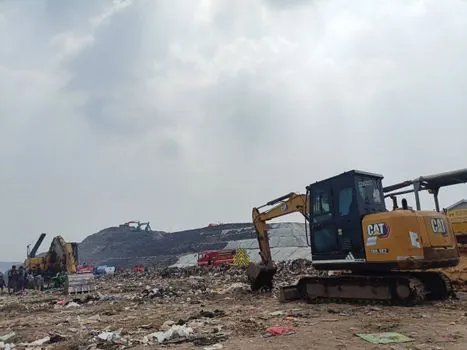
Payload tiers are the cleanest way to match truck to project. The commonly published bands are: standard single-rear-axle 5 to 10 tons, tri-axle 12 to 16 tons, side-dump 10 to 13 tons, super dump (lift axle) up to 20 tons, and transfer dump with pup trailer 15 to 30 tons combined [S5]. For residential and small commercial demolition in the 3 to 5 tonne GVM band, a small tipper on a tight-access chassis is the right tool, and a 9-tonne GVM tipper is the documented sweet spot for most demolition and construction projects once debris volumes cross a few skips per day [S4].
Comparison on the four criteria a contractor actually weighs:
Rigid single-axle (5 to 10 t): lowest cost, narrowest access, lowest legal road risk; correct for residential driveways and small landscaping debris. Tri-axle rigid (12 to 16 t): the default commercial demolition hauler, balances payload, road legality, and maneuverability on a finished site pad. Articulated (25 to 40 t typical ADT class): the only correct answer on muddy, soft, or steep ground, but cannot legally drive on public roads fully loaded in most jurisdictions. Transfer dump (tractor + pup, 15 to 30 t combined): the highest legal on-highway volume for long hauls to a regional landfill, at the cost of two drivers and a more complex tipping sequence [S5].
Roll-Off vs Standard Dump: When a Hook Lift Wins
For mixed demolition with sorted skips, roll-off (hook-lift) trucks can outperform standard dumps by letting the contractor drop a loaded bin at the jobsite and retrieve it later, instead of idling a tipper in the loading queue. This is the workflow used on partial demolition and strip-out jobs where the loader/excavator cycle is faster than truck turnaround [S3]. For bulk concrete and structural demolition, a standard rigid tri-axle still wins on cost per ton because the bin and the truck are paid for separately on a roll-off, and bins are capital-intensive.
Tipper trucks, the regional term for dump trucks, add value over skip bins by being mobile: the same vehicle can serve multiple drop points in one day, rather than paying for a stationary skip that sits half-full [S4]. For wet hire vs dry hire, the choice is operational: wet hire (truck plus driver) is correct when the demolition contractor does not run its own class-2 or class-3 drivers, dry hire is correct for a fleet that already has licensed operators.
Site Constraints: Access, Grade, and Tipping Surface

Dump trucks must tip on level, stable ground, and within the load limits specified for the bed's raised position; tipping on a side slope or a soft pad shifts the center of gravity unpredictably and is the leading cause of tip-over incidents in demolition [S2]. Confined inner-city sites with limited swing radius favor side-dump or transfer dump configurations, where a long rear-tipping conventional cannot unload without reversing into a public footpath. If the working surface is crushed demolition rubble, an articulated chassis with a powered rear bogie is the right tool; a rigid truck on the same surface will high-center and lose traction on the loaded return.
Buyers also need to confirm local weight regulations and bridge-formula axle loadings before sizing up, because a 20-tonne super dump that is legal on a flat state highway can be illegal on a township road posted to a lower gross mass [S5]. For projects that must haul at night, the same legal limits apply and a contractor can be shut down by a single overweight ticket; the saving from a bigger truck evaporates the first time the truck is impounded.
Inspection Checklist When Buying or Hiring
For used demolition trucks, the [S3] inspection protocol comes from owner-operator experience and is worth following in order: first, the dump body, look for AR400 or AR450 plate stamping, not generic mild steel, and check the floor for through-thinning around the hoist area. Second, the tailgate, confirm it is a high-lift or three-way design and that the hinges are not egg-shaped from impact loads. Third, the suspension, verify Camelback or heavy-duty spring packs, and that no airbag has been substituted on a truck that has seen demolition work. Fourth, the engine and driveline, 450+ HP for a tri-axle demolition hauler, with a documented maintenance log covering the last 12 months of work.
Two red flags override everything else: an aluminum bed sold as a "demolition truck", and a truck whose owner cannot answer "what was the heaviest load you ever hauled" with a specific tonnage. The price differential between an owner-sale truck and a dealer is 15 to 20%, which is real money, but only on a truck whose body and suspension have actually been built for the work [S3].
For a fleet manager building a demolition capability, the next decision node is matching the truck to the primary excavator on site: a 30-tonne excavator cycles faster than a 9-tonne tipper can haul, so either upsize the tipper to 16-tonne tri-axle or add a second tipper. Trackable signal to watch: regional highway-weight enforcement patterns, which directly change the legal payload band of every on-highway rigid truck in the fleet. For demolition sites that need temporary on-site weighing, a truck scale is the standard solution, and a properly specced demolition hammer on the excavator sets the size distribution of the rubble that the truck will then have to haul.
This topic is covered further in Best MCC for Data Centers: 2026 Spec and Selection Map.