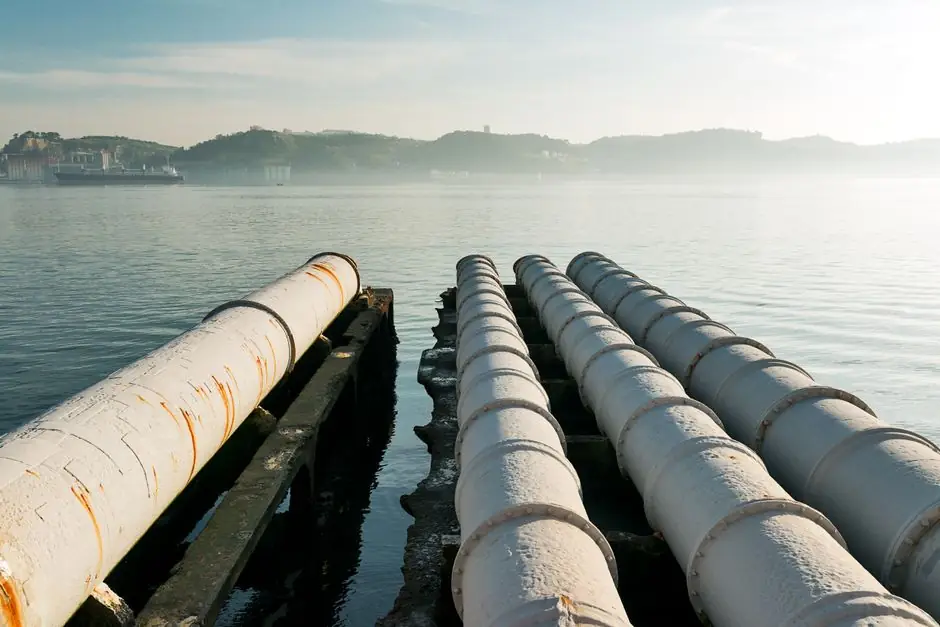
Concrete pump trucks for pipeline construction are typically truck-mounted boom pumps with 20–70 m articulating reach, 90–200+ yd³/hr output, and twin-piston hydraulics that move ready-mix concrete through steel delivery pipeline at sustained pressure [S4][S1].
On long pipeline or right-of-way work (water mains, utility trenches, industrial process piping backfill, energy corridors), selection is driven by three numbers: horizontal reach along the trench, vertical lift to elevated crossings, and maximum aggregate size the pump can pass without plugging the line [S5].
Boom Reach Bands and What They Actually Pour
Boom reach is the single most decision-driving spec for a concrete pump truck, and on pipeline work it splits into three practical bands: 24–32 m for shallow utility trench backfill and small valve-chamber slabs, 36–42 m for mid-rise pumping stations and elevated pipe racks, and 47–70 m for high-rise process structures and bridge crossings where the truck cannot park next to the form [S1][S4]. A 36 m boom is the most common all-rounder, serving roughly 10 floors of vertical lift on a typical project, while a 24 m unit handles villas and ground rafts where the truck can set up within a short hose run of the pour [S1]. The 47–52 m class reaches 15–16 floors and is reserved for high-rise or large infrastructure pours where smaller booms cannot physically span the obstruction [S1].
Output, Pressure, and Pump-Drive Topology
Output on truck-mounted boom pumps runs 90–200+ yd³/hr, roughly 2–3x what a trailer-mounted line pump delivers (40–90 yd³/hr), so boom pumps win on continuous pipeline pours where a transit mixer is feeding the hopper without pause [S4]. Inside the pump, twin hydraulic pistons alternate, one cylinder draws wet concrete from the hopper while the other pushes it into the delivery line, and an S-valve (S-tube) transfer tube switches the discharging cylinder between the two pipeline ports each stroke [S5]. This twin-cylinder reciprocating topology, governed by ASME B30.27 for material placement systems, is what lets a single truck maintain steady pipeline pressure on runs of several hundred feet without pulsation-related blockages [S5].
Pipeline vs Boom: Decision Matrix for Pipeline Jobs
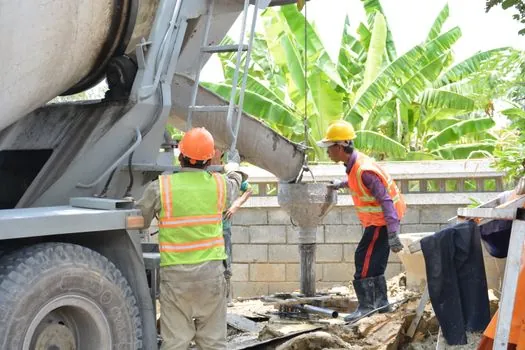
For a horizontal pipeline spread (trench backfill, culvert surround, utility ducts), a trailer-mounted line pump with up to 1,500 ft horizontal reach and 300+ ft vertical reach is often the lower-cost answer, especially on remote or restricted-access right-of-way where a 30+ ton boom truck cannot safely set outriggers [S4][S2]. Where the pour includes both a long horizontal run and a vertical lift to a pipe rack or tank top, a boom truck with pipeline extension along the boom is the standard configuration, with a 28–32 m unit covering residential and light-commercial pump stations and a 36–40 m unit opening mid-rise commercial work [S3]. Crew size is part of the trade: a boom pump runs with 1–2 operators, a line pump needs 2–4 crew for hose handling, which matters on remote pipeline spreads where labour mobilization is a real line item [S4].
Mix Design Rules That Keep the Line Flowing
The generally accepted rule for pumpable mix is that the internal pipeline diameter must be at least 1.5 times the maximum nominal coarse aggregate size; below that ratio, the stone bridges at bends and the line plugs [S5]. For long-distance pumping, a dual-layer bend pipe at the hinge elbows is the standard fix for the wear problem that ends most boom-pump pipelines prematurely, replacing single-wall elbows that wear through and burst under the abrasive slurry load [S6]. Slump is the other lever: too stiff and the line stalls, too wet and the aggregate segregates and seals a plug at the first elbow, so most field engineers target a 100–150 mm slump for boom-pump work and tighter control for high-pressure line-pump runs above 300 ft horizontal equivalent [S5].
Setup, Outriggers, and Site Constraints
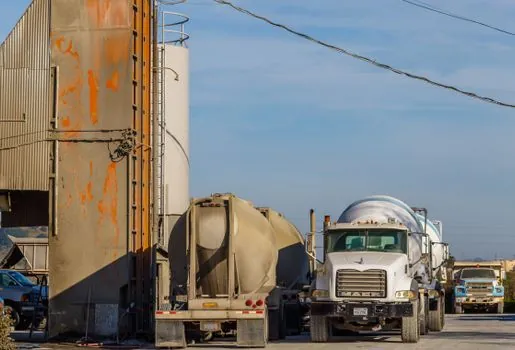
Boom-pump setup runs 15–30 minutes, dominated by outrigger deployment on solid, level ground, the four legs that stop the truck tipping when the boom swings out with a full pipeline of wet concrete [S1][S4]. Line-pump setup is 30–60 minutes, mostly laying and priming the ground-laid hose network, which is why line pumps dominate on long, narrow pipeline spreads where the truck is parked once and the hose does the reaching [S4]. Weight restrictions on older bridge decks and urban streets will rule out the 47+ m boom class regardless of reach advantage, forcing selection back to a 36 m unit plus pipeline extension along the deck [S4].
Capital Cost, Revenue, and Fleet Sizing
A new 28–38 m boom pump lists at $350,000–$700,000, a used unit of the same class at $100,000–$400,000, and a line pump at $30,000–$150,000, so the entry price for a pipeline-construction fleet is roughly 5–10x lower with a line-pump first truck [S3][S4]. Revenue per boom-pump day runs $2,000–$5,000+ on well-run jobs, and ancillary kit (pipeline, hoses, clamps, support pickup) adds another $35,000–$75,000 of working capital before the first pour [S3]. For pipeline contractors who run a single dedicated machine, the common pattern is one 36 m boom truck for elevated and structural pours plus one trailer line pump for trench and right-of-way work, sized so the boom truck covers 100+ yd³ jobs and the line pump covers everything below that threshold [S3][S4].
Who Should and Should Not Spec a Boom Pump
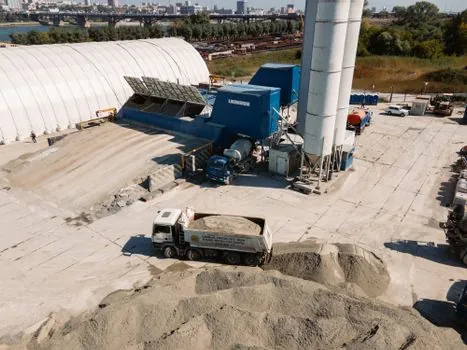
Spec a boom pump truck when the pour is over 100 yd³, the placement point is more than 30 ft above truck level or across an obstacle the truck cannot drive over, and the site has firm level ground for all four outriggers [S4]. Do not spec a boom pump when access is narrow (suburban lanes, inside existing plant pipe racks), when the pour is below 50 yd³ and slow output is acceptable, or when the mix is a specialty grout or shotcrete that a line pump handles more cleanly [S4]. For forestry and remote terrain pipeline work, a purpose-built forestry-class boom pump with shorter wheelbase and higher ground clearance is a separate selection branch, covered in the forestry concrete pump truck spec map.
Trackable signals for the next planning cycle: (1) whether fleet operators shift from 36 m to 42 m as default on mid-rise process structures, and (2) whether dual-layer bend pipes become the default factory fit on new boom-pump hinge elbows rather than a retrofit option [S6].
The underlying component specifications are covered under concrete pump truck, truck mounted concrete pump, and concrete mixer truck.