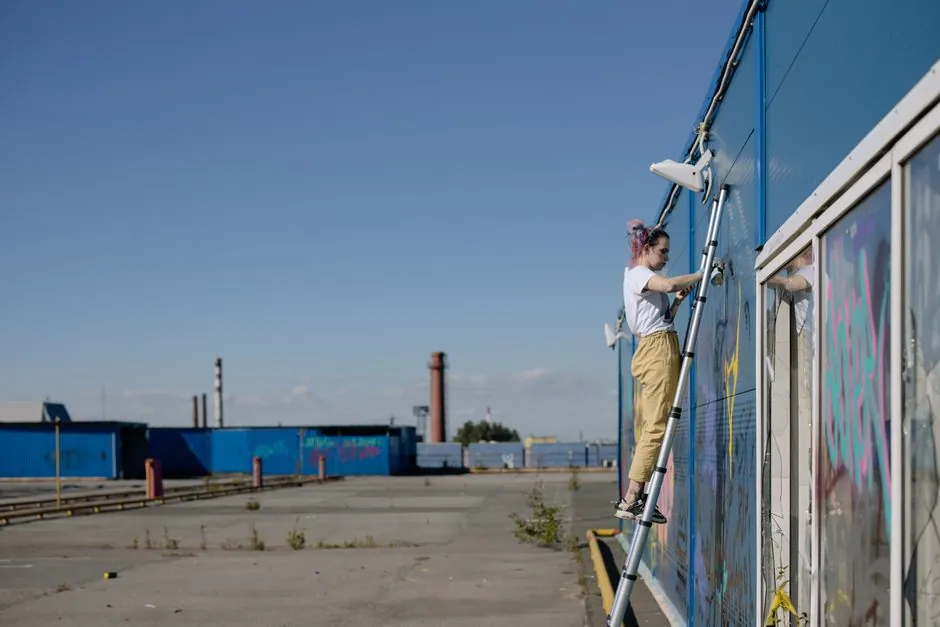
Spec an aluminum ladder by the reach height you need at the work point, then back-calculate ladder length: extension ladders should run 7 to 10 ft longer than the highest support or contact point, and stepladders should be sized so the user stands no higher than two steps down from the top [S3][S2].
Step ladders in 4 ft to 20 ft sizes pair with average reach heights from 8 ft to 24 ft, while 16 ft to 24 ft extension ladders deliver average reach of 15 ft to 23 ft, giving a direct lookup table for painters, roofers, and warehouse stockers [S3].
Working Height vs Ladder Length: The Conversion That Drives the Spec
Reach height, not ladder length, is the number that should drive the purchase, because reach is what the user can actually touch with their hands while standing inside the safe zone of the ladder [S3]. Werner's published reach guide maps a 6 ft stepladder to 10 ft of reach, a 10 ft stepladder to 14 ft, a 16 ft stepladder to 20 ft, and a 20 ft stepladder to 24 ft, which lines up with the rule of thumb that most users can reach about 4 ft above the height of the ladder they are standing on [S3][S5]. For extension ladders, the same chart maps a 16 ft extension to 15 ft of average reach, a 20 ft extension to 19 ft, and a 24 ft extension to 23 ft, showing that the roofline and overlap eat roughly 1 ft of effective reach per size step [S3].
For an aluminum ladder purchase, the practical workflow is: measure the highest point you need to touch, add at least 4 ft of safe overhead reach for a stepladder, or add 7 to 10 ft of ladder above the contact point for an extension ladder, and only then look at the model number [S3][S4]. Rodda Paint's trade-painter guidance repeats the extension rule verbatim: the ladder should be 7 to 10 ft longer than the highest support or contact point, which may be the wall or roof line [S4].
When an Aluminum Ladder Is the Right Pick, and When It Is Not
Aluminum is the lightest ladder material versus fiberglass or wood of equal duty rating, so it is the default pick for jobs where the ladder has to be moved and set many times per shift, including interior finishing, warehouse picking, and exterior painting on dry surfaces [S2]. The American Ladder Institute states explicitly that an aluminum ladder is the lightest option when there are no electrical power sources in the work area, which is the core trade-off a specifier has to make on every job [S2].
Aluminum is also a conductor, so any work near energized lines, open panels, or capacitor banks requires fiberglass instead, regardless of how convenient the lighter weight would be [S2]. For plant maintenance and utility crews who alternate between live electrical work and dead work, the practical answer is to keep both an aluminum and a fiberglass ladder of the same duty rating on the truck, and choose by hazard, not by reach alone. Material choice interacts with the aluminum alloy used in the rail and step extrusions, with 6000-series alloys (6061, 6063) being the common structural choice for rail stock because of their strength-to-weight ratio and weldability.
Extension Ladders: Set the Overlap and Roofline Correctly

Two failure modes dominate extension ladder incidents: the base kicks out because the ladder extends too far above the upper support, or the user climbs above the highest permitted standing level because the ladder was undersized [S2]. ALI is explicit on both: the top three rungs of an extension ladder must not be used for climbing, and the ladder must not extend more than 3 ft beyond the upper support point, since the overhang acts as a lever that can slide the base out [S2]. Werner's safety chart adds that the highest standing level is four rungs down from the top, which is the manufacturer's own reinforcement of the same rule [S3].
Roofline work is the most common case where the 7 to 10 ft rule gets violated. For a single-story eave at roughly 9 ft, the specifier needs at least a 16 ft extension ladder (9 ft contact point plus 7 ft of overlap and roofline extension) to get 15 ft of safe average reach and still leave overlap between the fly and base sections [S3][S4]. A two-story eave at roughly 18 ft to 20 ft needs a 24 ft or 28 ft extension ladder to leave the required 3 ft of overhang above the gutter line and keep the standing level at least four rungs down from the top [S2][S3].
Stepladders: A 4 ft Rule of Thumb You Can Trust
Stepladder sizing is simpler than extension sizing but just as easy to get wrong by going too small. Grainger's trade rule is that a person can reach about 4 ft above the height of the stepladder they are standing on, which is why a 5 ft stepladder covers roughly 9 ft of working height and an 8 ft stepladder covers roughly 12 ft [S5]. Werner's reach table confirms the same offset: an 8 ft stepladder gives 12 ft of reach, a 10 ft gives 14 ft, and a 12 ft gives 16 ft, so the 4 ft overhead allowance is a stable, repeatable spec number across manufacturers [S3].
Louisville Ladder's selection flow puts the standing-level rule ahead of reach: never stand on the top cap or the step below the top cap, because the reduced rail length above the user makes balance recovery almost impossible if a foot slips [S6]. Combined with ALI's standing-level rule for extension ladders (four rungs down from the top), this gives a single, easy-to-enforce job-site rule: the highest permitted standing level on any aluminum ladder is the labeled standing level, and it is non-negotiable regardless of how short the ladder feels [S2][S3][S6].
Duty Rating, Weight, and Aluminum Section Sizing

Duty rating is a separate decision from height, and it has to be solved first because it sets the rail cross-section, rung thickness, and the resulting ladder weight. The five ANSI duty ratings (Type III, II, I, IA, IAA) run from 200 lb up to 375 lb, and the total load is the user's body weight plus clothing and PPE plus tools and supplies carried plus tools and supplies stored on the ladder, summed together before the ladder is selected [S2]. For a solo electrician with a 25 lb tool bag, that means a 250 lb-plus total load, which forces a Type IA (300 lb) or Type IAA (375 lb) aluminum stepladder, not the lightest Type III unit the shelf might offer.
For typical industrial maintenance, a 6 ft to 10 ft Type IA aluminum stepladder covers about 90% of the bench-and-overhead work inside a plant, and a 16 ft to 24 ft Type IA extension covers roof and exterior unit access. A useful sanity check is aluminum alloy temper: rail and rung extrusions are commonly 6061-T6 or 6063-T5, which gives a yield strength in the 145 to 240 MPa range depending on temper and wall thickness, and is what lets a Type IA aluminum ladder stay under 50 lb in the 8 ft size.
Surface, Obstructions, and Setup Angle: The Hidden Height Variables
Two job-site conditions silently change the height you need from the same aluminum ladder: the surface under the feet and the obstructions at the top. On uneven ground, gravel, or sloped concrete, the user needs to drop one stepladder size and add a leveling accessory, because an out-of-level ladder reduces effective rail length on the downhill side and the user will naturally stand lower to keep their center of gravity over the feet [S2]. Crowded work areas with people, materials, or swing paths around the climb force a wider base or a podium-style stepladder, both of which trade raw height for a stable working platform at the top of the safe standing level [S2].
Setup angle is the third variable: the 4-to-1 rule (1 ft of base distance for every 4 ft of working height) is what the 7 to 10 ft extension rule is built on, and if the wall or roofline prevents that angle, the only correct response is a shorter ladder with a taller stepladder section in front of it, not a longer ladder leaned in at a steeper angle. ALI's obstruction question is a good job-site checklist: any object in the climb path that forces the user to reach sideways past the rail is reason to upsize by one length, because lateral reach on an aluminum ladder is the precursor to a base kick-out [S2].
Quick Selection Matrix: Match Height, Material, and Duty
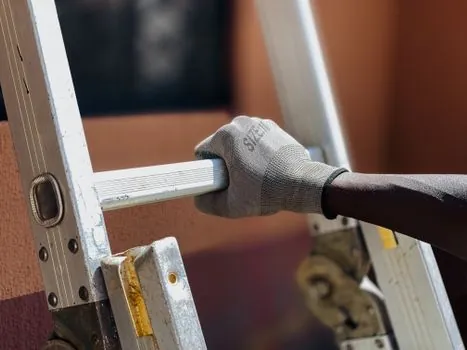
For a one-shot spec, work down this matrix in order. First, set the duty rating from the sum of user + PPE + tools, with the 250 lb total load line forcing Type IA as a practical floor for trade work [S2]. Second, set the material: aluminum for dry, non-electrical work where weight matters; fiberglass for any work within reach of energized parts [S2]. Third, set the height: for a stepladder, ladder height plus 4 ft of reach; for an extension ladder, working height plus 7 to 10 ft of ladder above the contact point, capped at 3 ft of overhang above the support [S3][S4][S2]. Fourth, verify the standing level: never above the labeled highest standing level, never on the top cap of a stepladder, and never on the top three rungs of an extension ladder [S2][S6].
The next trackable signal for specifiers is the ANSI A14 committee output through the American Ladder Institute, which publishes the underlying standards for aluminum, fiberglass, and wood ladder duty ratings, rung shear, and rail strength that every manufacturer certifies against; any change to those test loads flows directly into how high a given aluminum ladder can safely reach under a real load.
For component-level specifications, see height gauge.
See also our earlier report, FEM 9.851 cycle time math for stacker cranes: double-cycle cases, reference cycles, and.