
Foundries supplying semiconductor equipment and back-end packaging often run specialty alloys (e.g. high-purity silicon contact hardware, quartz-handling components) where binder residue and thermal-expansion defects show up as scrap rates that erode margins fast. Pneumatic scrubbers, attrition mills, and thermal reclamation plants are the three platforms most commonly specified for this work, and each maps to a distinct operating envelope [S1][S2][S4].
Capacity bands now span 0.25 TPH pilot units to 60 TPH integrated lines, with thermal retort designs holding sand at 1,200 to 1,500 °F to oxidize organic binder residue before the sand is re-screened and air-classified [S1][S4]. For semiconductor-adjacent work, the choice is rarely about which technology is "best" in the abstract; it is about which combination drives LOI down and clay content into a stable band without contaminating the next pour.
Mechanical (Pneumatic + Attrition) Reclamation: Low-Energy Core Loop
Mechanical reclamation physically strips binder coatings through attrition, vibration, and air-driven particle impact, and a turbo blower-driven pneumatic scrubber is the most energy-efficient method currently marketed for chemically bonded and green sand reuse [S2]. The Simpson Pro-Claim system claims a continuous, no-operator duty cycle with the option to recirculate sand through successive cells until the desired AFS clay and LOI targets are reached [S2].
Foundries running the Pro-Claim platform have publicly reported increasing their reclaimed-sand share from 40% to 95% of the mix, with one corporate sustainability manager at Waupaca Foundry noting that "every grain of sand is getting through our process 30 or more times" [S2]. For semiconductor foundries running nobake or shell systems, this kind of multi-pass scrubbing is the cheapest way to push the binder-residue envelope down without buying a thermal retort.
The mechanical loop also dovetails with sand cooler and shakeout-deck equipment that Omega Sinto packages in its Gamma range, where the cooler-classifier cools sand to within 6 °C of the inlet water temperature while simultaneously removing fines in nine models from 1 to 30 TPH [S1].
Thermal Reclamation: Binder Burnout and Expansion-Control
Thermal reclamation is the only path that fully oxidizes resin residue, and foundries that run it for quality reasons often send 100% of their return sand through the heated retort to lock down a consistent LOI baseline [S5]. EnviroAir's gas-fired rotary retort holds sand at 1,200 to 1,500 °F, then discharges it through a cooling drum that leaves the product 10 to 30 °F above ambient, followed by a 20-mesh screen and air classifier for fines removal [S4].
Cost-wise, EnviroAir publishes an operating-cost figure under $7.00 per ton for its six standard models spanning ¼ to 6 TPH, and the indirect-fired design prevents burner flame from impinging directly on the sand grains, which is critical when the next pour feeds semiconductor-grade components [S4]. Omega Sinto's gas-fired thermal line covers 0.25 to 12 TPH using a patented dead-bed and bubble-cap arrangement, with a heat-recovery system that the vendor positions as the lowest-maintenance terminal in its class [S1].
Quality data from peer-reviewed work on chemical reclamation of green foundry sand has confirmed that reclaimed product can be evaluated against standard foundry tests (clay content, compressive strength, grain fineness), and the paper by Khan et al. (2024) is a useful starting point when validating a reclamation recipe [S3].
Capacity and Footprint: Matching TPH to Foundry Cell
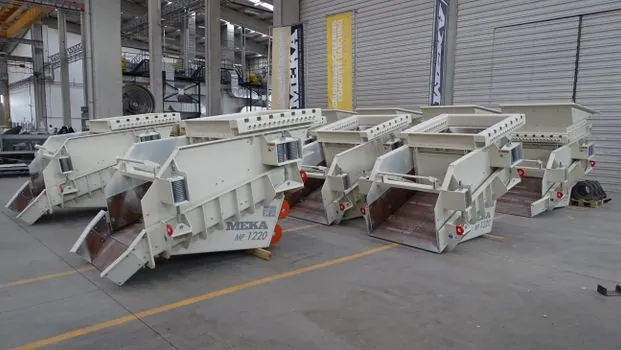
Capacity is the second filter, and the published ranges frame the decision. Omega Sinto lists primary, secondary, and thermal plants from 0.25 to 30 TPH in its standard catalog and up to 60 TPH across the full Omega lineup; the Gamma Vator shakeout/attrition combo ships in 1 and 3 TPH models with an integral elevator and optional fluidised fines discharge [S1]. Simpson's Pro-Claim is sold as a continuous, compact pneumatic scrubber without a published TPH ceiling in the vendor material, but the energy-per-ton claim and the absence of post-process cooling or screening set it apart from thermal cells that need downstream buffer silos [S2].
For a semiconductor foundry cell pouring in the 1 to 5 TPH return-sand range, a single Pro-Claim cell or a small Omega GV-3 is usually sized correctly; for 6 to 30 TPH return-sand, an Omega thermal plant plus a cooler-classifier tends to dominate the layout. Larger integrated foundries supplying wafer-handling and back-end packaging castings typically layer both technologies, using a sand reclamation unit for bulk mechanical cleaning and a smaller thermal loop for the high-purity alloy or shell-mold stream [S1][S2][S4].
Decision Criteria: Energy, LOI, Clay, and Footprint
Four criteria line up the options cleanly. Energy per ton: pneumatic scrubbers sit at the low end with no retort heat input, while gas-fired thermal retorts in the 1,200 to 1,500 °F range carry the bulk of the operating load even at sub-$7.00/ton published rates [S2][S4]. Binder-residue removal (LOI target): mechanical scrubbing handles nobake and green-sand residues with multi-pass recirculation, but thermal oxidation is the only practical path to consistent sub-1% LOI on shell or phenolic-urethane systems [S2][S5]. Clay content / AFS grain fineness: an Omega cooler-classifier or any air-classifier stage in a thermal cell is required to hold AFS numbers stable while pulling fines [S1][S4]. Footprint and integration: the Pro-Claim's no-cooling, no-screening claim removes downstream buffer volume; thermal cells always need a degassing unit and dust collector in series with the retort exhaust [S2][S4][S5].
What Semiconductor Foundries Should Validate Before Buying
Three datapoints are non-negotiable in the RFQ. First, ask the vendor for a published operating-cost per ton at your TPH and your inlet moisture band, since EnviroAir's $7.00/ton figure is a stated reference and the Pro-Claim's energy number is described qualitatively as the most efficient method available [S2][S4]. Second, require AFS grain fineness, clay content, and LOI test results on a trial batch of your actual return sand, using the test methods outlined in standard foundry practice and confirmed in the chemical-reclamation literature [S3]. Third, lock down the upstream and downstream interfaces: shakeout-deck load rating, magnetic separator, attrition mill, surge hopper, fluid-bed cooler, and the dust-collector duty at retort exhaust temperature [S1][S5].
Foundries specifying for semiconductor-adjacent castings should also cross-check that the hydraulic power unit and FRL unit feeding any attrition-mill or shakeout-deck actuator are sized for the vendor's peak duty, since intermittent hydraulic stall on a shakeout deck is the most common upstream root cause of throughput loss on a reclamation cell [S1].
Limits, Failure Modes, and When to Walk Away
Every platform has a hard ceiling. Pneumatic scrubbers cannot fully burn off phenolic or furan binder skins, so a foundry pushing for sub-0.5% LOI shell-mold sand will hit a wall and either accept a thermal reclaimer or blend with new sand [S2][S5]. Thermal retorts in turn reject any feed with high free-metal or tramp-chrome content, since unburned metal fuses onto the retort and forces a shutdown; a magnetic separator upstream is mandatory, not optional [S1][S4][S5]. Cooler-classifier sizing errors show up as sand leaving the cooler 30 to 50 °F above the inlet-water target, which then drives higher binder demand in the next mix and erases the per-ton savings the cell was bought to deliver [S1][S4].
Foundries weighing a turn-key reclamation line for the first time should also note the cost-of-entry warning that Foundry Management & Technology flagged in its 2021 advances piece: thermal cell capex is high enough that without a confirmed 5+ year ROI, the math tends to fail for jobbing shops under ~5,000 TPY of return sand [S5]. For a semiconductor foundry pushing 10,000+ TPY of return sand, the same math flips and a thermal cell is usually payback-positive inside 36 months at current sand and disposal prices.
Trackable signals to watch next: vendor-published updates to the Pro-Claim TPH ceiling, Omega Sinto's expansion of the 12 TPH thermal line above 0.25 TPH at the low end, and any peer-reviewed AFS/LOI benchmark for reclaimed sand running into semiconductor-packaging castings at sub-1% LOI [S1][S2][S3][S4]. See also our shot blasting machine suppliers spec map for the surface-finish side of the same castings workflow, and our casting-mold selection guide for the upstream mold-design constraints that determine what your reclamation cell has to clean.