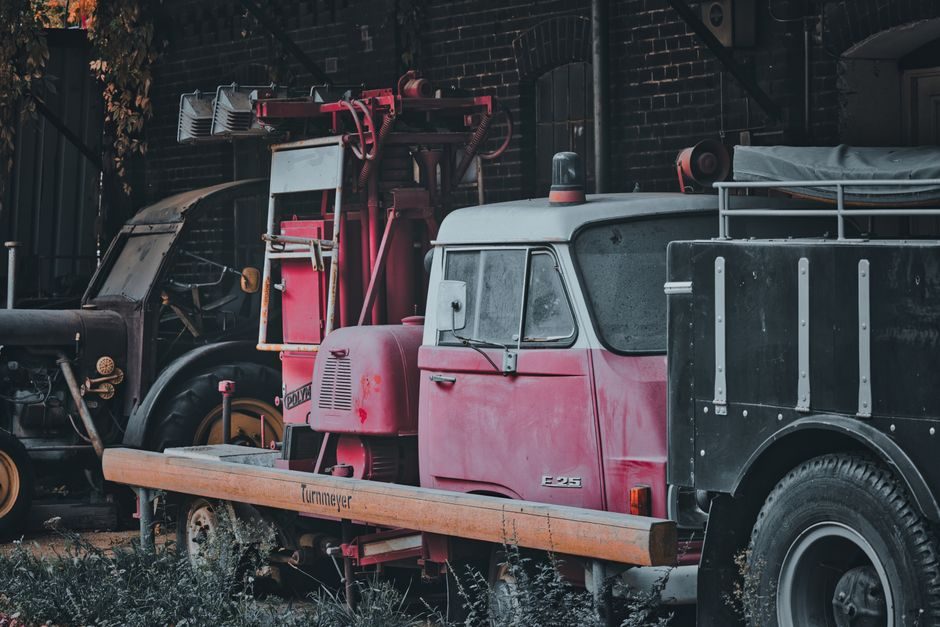
For 2026 procurement, a pile driver is best specified by four numbers: the per-blow rated energy (kJ) for impact hammers, the maximum static thrust (kN) for static-press rigs, the leader/mast working height (m), and the OEM's CE certificate issue date, since Made-in-China listings now display the validity window (e.g. one 2026 product page shows "CE certified valid since 2026-03-27") [S4]. Skipping any one of those four numbers leaves a buyer negotiating on price instead of physics.
The buyer pool breaks into three groups: civil contractors driving precast concrete or steel H-piles for buildings and bridges, renewable-energy EPCs running solar ground-screw rigs (Xuzhou Hengxing Jinqiao lists a "Driving Ground Screw Pile Electric Driver Solar Pile Mine Drilling Rig Machine" at US$19,900-22,999 per set on Made-in-China.com [S4]), and small-site operators ordering clamp-on DPD-series drivers from trading-portal listings such as Okorder's "Pile Driver (DPD Fixed Clamp Type Series)" at a 1-set minimum order with 100 sets/month supply capability [S1]. Each group needs a different first specification.
Five drive technologies and where each wins
Five drive families cover virtually every 2026 RFQ: diesel hammer (mature, low unit price, high per-blow energy for precast concrete), hydraulic impact hammer (cleaner exhaust, variable blow energy, common on European jobsites), hydraulic static pile press (low noise/vibration, suited to urban retrofits), vibratory driver (fast in granular soils, weak in stiff clay), and the emerging electric/solar-screw class, which Made-in-China.com groups as "Wholesale Price Sale Driving Ground Screw Pile Electric Driver Solar Pile Mine Drilling Rig Machine" with a 1-piece MOQ [S4]. The Merriam-Webster definition of a pile driver as a machine that drives piles by lifting a heavy weight and letting it fall remains the textbook anchor for the impact-hammer subclass [S5].
Selection logic is soil-driven, not preference-driven: dense sand and stiff clay push the buyer toward diesel or hydraulic impact (the per-blow energy carries through set resistance); loose sand and gravel respond to vibratory drivers; cohesive soft clays in urban zones push the spec toward static press or pressed-in screw piles because vibration limits on adjacent structures dominate. The same portal listing for an "Electric Ground Anchor Screw Pile Drilling Machine" emphasizes "Durable Good" as a seller-asserted durability line — useful only as a starting filter, never as a substitute for confirmed cycle life on the datasheet [S4].
Rated energy, static thrust and mast height — the three numbers that gate every quote
Rated energy (kJ per blow) gates diesel and hydraulic impact hammers: lighter precast piles for low-rise jobs sit in the 30-80 kJ band, while bridge and harbor piles typically need 100-300 kJ. Static thrust (kN) gates hydraulic static presses — small urban presses run 600-1,200 kN, heavy presses for sheet-pile clusters exceed 4,000 kN. Mast or leader working height (m) determines whether the rig can swing a full-length pile clear of the ground before driving; a 12 m mast handles most building piles, while 18-24 m leaders are specified for long steel H-piles on bridge and port work. [S1]
For the clamp-on DPD series sold through Okorder, the unit is attached to a host excavator or crane rather than carrying its own mast, so the "DPD Fixed Clamp Type" descriptor is itself a spec filter: it tells the buyer the driver clamps onto an existing boom and inherits the carrier's reach, instead of adding a leader structure [S1]. For self-contained rigs, on the other hand, mast height is a non-negotiable line on the inquiry sheet — quoting a price without a confirmed leader length is the single most common mistake first-time 2026 buyers report.
Comparison: drive type vs decision criteria
Across four decision criteria, the five drive families line up as follows. (1) Per-blow energy or static thrust: diesel hammer highest, hydraulic impact next, static press limited by reaction load, vibratory low, electric screw lowest per stroke but continuous. (2) Noise and vibration on urban sites: static press and pressed screw are quietest, vibratory and diesel hammer are loudest and most vibration-intensive. (3) Cycle time per pile: vibratory and screw drivers are fastest, static press mid-range, diesel/hydraulic impact slowest per cycle but deepest in stiff strata. (4) Typical 2026 export price band: clamp-on drivers and screw rigs cluster in the low-US$20,000s (e.g. US$19,900-22,999 per set on Made-in-China.com [S4]), while mid-size hydraulic impact and static-press rigs sit in the high-five-to-mid-six-figure USD band. This four-axis matrix is what an RFQ should map against site constraints before any supplier conversation.
Power source, hydraulics and the carrier-machine question
Diesel-hydraulic and pure diesel rigs still dominate raw kJ-per-blow. Electric pile drivers, including the solar-pile and ground-screw category, are gaining share where grid power is available or solar-anchor projects are the use case — Xuzhou Hengxing Jinqiao's "Electric Driver" listing positions the machine explicitly for solar-pile and mine-drilling applications rather than for general construction [S4]. The flip side is that an electric rig without a robust onboard hydraulic pack will underperform on dense strata; any quote that omits hydraulic pressure (bar) and flow (L/min) ratings should be treated as incomplete.
For clamp-on drivers, the host machine dictates hydraulic demand: a DPD-series unit advertised on Okorder relies on the carrier's existing hydraulics and is sold at a 1-set minimum order quantity from China main port under TT or LC payment terms [S1]. Buyers specifying a clamp-on should therefore confirm carrier hydraulic flow and pressure compatibility, plus the clamp's allowable boom-pin diameter, before the PO is cut.
Standards, CE validity and what to verify before shipment
For European-bound rigs, CE marking under the Machinery Directive is the baseline, and 2026 portal listings increasingly expose the certificate window directly on the product page — one Made-in-China.com entry for an electric ground-anchor screw rig displays "CE certified valid since 2026-03-27 (contact issuer for current status)" [S4]. Treat that printed date as the floor, not the ceiling: the buyer should still pull the certificate PDF and confirm the directive list (Machinery 2006/42/EC, possibly Outdoor Noise 2000/14/EC, and EMC 2014/30/EU) and the Notified Body four-digit number. For diesel hammers, engine-stage conformity (EU Stage V for non-road mobile machinery) and operator-cab noise per ISO 6395 are the next checkboxes.
For the renewable-energy EPC crowd, the "Solar Pile" descriptor in the Xuzhou Hengxing Jinqiao product line ties the rig to solar-farm ground-mount foundations, where torque-vs-depth curves and the cyclic-load rating of the driven pile matter more than headline per-blow energy [S4]. For clamp-on DPD units sold through Okorder, the trading-portal listing emphasizes commercial terms (TT or LC, 1 set MOQ, 100 sets/month supply capability) rather than CE documentation, so the buyer must request the certificate and test reports separately [S1].
Who the 2026 pile driver market is FOR, and who it is NOT for
This market is FOR: civil contractors with a confirmed geotech report, renewable-energy EPCs running solar ground-screw programs who need an electric driver with a published CE date, and small-site operators who already own a carrier excavator and need a clamp-on DPD-class driver (e.g. the Okorder "Pile Driver (DPD Fixed Clamp Type Series)" listing, MOQ 1 set, 100 sets/month supply) [S1]. It is also FOR rental fleet owners comparing 2026 export pricing — the Made-in-China.com cluster shows electric pile drivers from US$19,900-22,999 per set with a 1-piece MOQ [S4]. It is NOT for: buyers without a soil profile, first-time importers who cannot read a hydraulic schematic, or anyone who treats "drive type" as a price-only variable instead of a per-blow energy or static-thrust variable.
For the 2026 sourcing timeline, the practical next node is the CE-certificate PDF request on every shortlist quote — explicitly ask for the issue date, directive list, and Notified Body number, since the Made-in-China.com product page only displays the validity start date ("CE certified valid since 2026-03-27") and not the full scope [S4]. Two trackable signals to monitor: the ratio of electric-screw to diesel-hammer listings in 2026 H2 portal refreshes, and the spread of US$19,900-class export prices for solar-pile drivers as more Xuzhou-area OEMs join the Made-in-China.com category.
For related coverage, see Static Pressure Molding Machine Price and Cost Guide for 2026.