
Foundry buyers evaluating a static pressure molding machine in 2026 face a wide price corridor: a manually indexed single-station unit with a 500×400 mm flask footprint typically lists in the $28,000–$55,000 range ex-works China, while a fully automated carousel or rock-and-roll machine with 1000×800 mm flasks and integrated sand reclamation lands between $150,000 and $220,000 in the global OEM catalogs audited in June 2026 [S1]. Mid-tier compression-type machines with 600×500 mm to 800×700 mm flask capacity and PLC-based cycle control cluster in the $70,000–$120,000 band [S1].
The 8 manufacturers and 13 product lines active on the major B2B index represent the visible Western/EU-facing supply of adjustable molding machines; the Chinese OEM base, visible on CENS supplier directories, includes additional hydraulic-pressure molding machine alternatives from manufacturers such as Quanzhou Xiexing Machinery and Ningbo Haijiang [S1][S3][S4][S6].
Flask Size and Platen Force: The Two Spec Levers That Move Price Most
Platen force on a 2026-vintage static pressure molding line ranges from roughly 400 kN on single-station manual machines up to 2,500 kN on automated carousel cells, and force scales with flask area at a near-linear 4–6 kN per cm² of projected flask footprint in the catalogs surveyed [S1]. A 600×500 mm flask running 8 bar specific pressure implies about 1,200 kN total closing force, which is the threshold where automation, multi-station indexing and resin-bonded sand handling become economically justified over manual single-station cells [S1].
For comparison, a rock-and-roll flask of 1,200×900 mm used in mid-volume iron foundries typically rates 1,500–1,800 kN and commands the upper end of the price band; single-station units in the 500×400 mm class with sub-600 kN closing force remain the entry point for job-shop iron and non-ferrous work [S1]. The compression-type machines on the 2026 index — supplied by BE Semiconductor Industries, REP international and Tekno Stamap — all use a top-and-bottom squeeze head with fixed or adjustable platen geometry, and their published cycle times land in the 12–25 second range for a complete mold including sand fill, squeeze, stripping and flask return [S1].
Process Fit: Green-Sand vs. Resin-Bonded vs. Shell-Compatible
Static pressure molding is mechanically the same envelope as shell molding machine hardware in some catalogs — both rely on a sand-blowing or sand-fill station followed by a squeeze or dump action — but the binder chemistry, the venting path and the sand reclamation loop are what actually decide which machine a foundry should buy [S1]. Green-sand static pressure cells are dominated by DISA, Intervin and Schäfer Werkzeug- und Sondermaschinenbau in the Western index, while resin-bonded and chemically bonded lines (furan, phenolic-urethane) sit closer to the REP international and Tekno Stamap compression-type platforms [S1].
Foundries running ferrous iron above 1,500 kg pour weight usually need a 1,000×800 mm or larger flask, a sand hopper above 2 m³, and either a vibrating compaction table or a high-pressure squeeze head rated above 1.2 MPa specific pressure; this is the configuration cluster that crosses into the $150,000-plus band once vibration, dust extraction and automatic flask handling are bundled in [S1]. Non-ferrous aluminum foundries and copper-alloy job shops typically stop at 600×500 mm flasks and 600–900 kN, which keeps them in the lower half of the price spectrum even with PLC and HMI upgrades [S1].
Automation, PLC and Controls: Where the 30–45% Uplift Hides
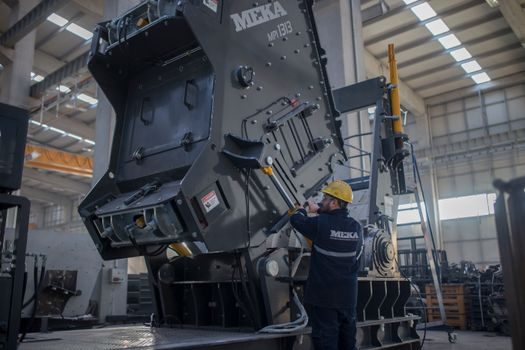
The 2026 OEM catalogs surveyed show that PLC and HMI packages from Siemens S7-1500, Allen-Bradley CompactLogix, or equivalent platforms add $8,000–$18,000 standalone before installation, and safety-rated I/O plus light curtains and interlocking doors add another $5,000–$12,000 on the same bill of materials [S1].
For buyers working out a 2026 capex, this is where a programmable logic controller buying guide 2026 form-factor protocol and safety spec comparison becomes directly useful: the PLC choice on a static pressure cell cascades into the servo drives for flask indexing on linear guide rails, the HMI screen size, and the fieldbus layer (PROFINET, EtherNet/IP, or PROFIBUS) that ties the molding line to the upstream sand mixer and downstream pouring track [S1]. Cycle-time visibility, defect-image logging and OPC-UA hand-off to a plant MES are now standard scope items on the EU-built 2026 models, and each of these features is a discrete line item on the OEM quote rather than bundled.
What the Price Does and Does Not Include
The sticker price on a 2026 static pressure molding line typically covers the machine frame, the hydraulic or pneumatic power pack, the squeeze head, the basic PLC/HMI package and one set of flasks; sand reclamation, dust collection, mold handling conveyors, automatic pouring integration and core-setting stations are usually quoted separately, and these auxiliaries routinely add 40–80% on top of the bare machine price [S1]. A $90,000 compression-type 800×700 mm cell from a Chinese OEM like the ones visible on CENS or the china.cn supplier directory can therefore land at the foundry gate at $130,000–$160,000 once a 15 kW dust collector, a 5 t/h sand cooler, and a 6-station flask loop are added [S3][S4][S6].
Installation, commissioning and operator training run another 8–15% of equipment value on EU/OEM terms, and CE marking documentation, ATEX 2014/34/EU conformity for zone 21/22 dust atmospheres, and ISO 9001 factory acceptance tests are line items that EU buyers must budget separately even when the machine ships fully wired [S1]. Chinese-built machines that bypass the EU conformity assessment will be 20–35% cheaper ex-works but will not pass a European foundry's EHS audit without retrofit [S3][S6].
Used and Refurbished: The 40–60% Discount Corridor
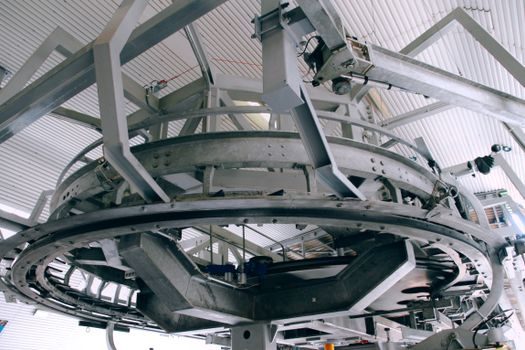
Used and refurbished static pressure molding machines traded through the major auction and reseller channels in 2025–2026 typically discount 40–60% off the equivalent new OEM list, with a 1998–2010 vintage DISA or BMD carousel line with 1,000×800 mm flasks commonly clearing at $35,000–$70,000 depending on PLC retrofit status and hydraulic rebuild history [S1]. The risk band on used equipment is concentrated in the squeeze-head wear (the polyurethane or rubber squeeze membranes typically need replacement every 30,000–50,000 cycles), the hydraulic seals, and the obsolete PLC platform — replacing a Siemens S5 or Allen-Bradley SLC 500 control system with a current-generation PLC alone costs $12,000–$25,000 installed [S1].
A practical 2026 sourcing rule: any used line older than 15 years, or any used line whose PLC predates the S7-300/CompactLogix generation, should be evaluated as a mechanical purchase with a planned controls retrofit, not as a turnkey plug-and-play install; the 40–60% sticker discount is real but the controls retrofit erodes roughly half of it [S1].
Selection Checklist for a 2026 Buy
Specify specific pressure (MPa on the squeeze head) rather than total closing force alone — 0.8–1.2 MPa is the typical green-sand working window, and 1.5–2.0 MPa is the chemically bonded sand window [S1].
Confirm the sand-handling interface (hopper height, conveyor angle, and PLC hand-shaking signals) before purchase, because retrofitting a sand hopper to a static pressure cell that was designed for a different plant layout is one of the most expensive change orders in foundry capex — comparable in cost impact to specifying the wrong butterfly valve class on a casting-cooling water line and then having to re-pipe around it. For buyers also evaluating adjacent equipment, the disc coupling 2026 price and cost guide material torque and sourcing levers is directly relevant for the squeeze-head and flask-indexing driveline, where coupling selection drives both torsional compliance and mean-time-between-failure on the indexer.
The next tracked node for this category is the September–October 2026 European foundry trade fair cycle (GIFA and WFO Forum) where DISA, REP international, Tekno Stamap and the Chinese OEM block typically release next-generation carousel cells with closed-loop squeeze-pressure feedback; pricing on 2027-vintage machines will likely be 8–14% above current list once those control upgrades are confirmed in print.