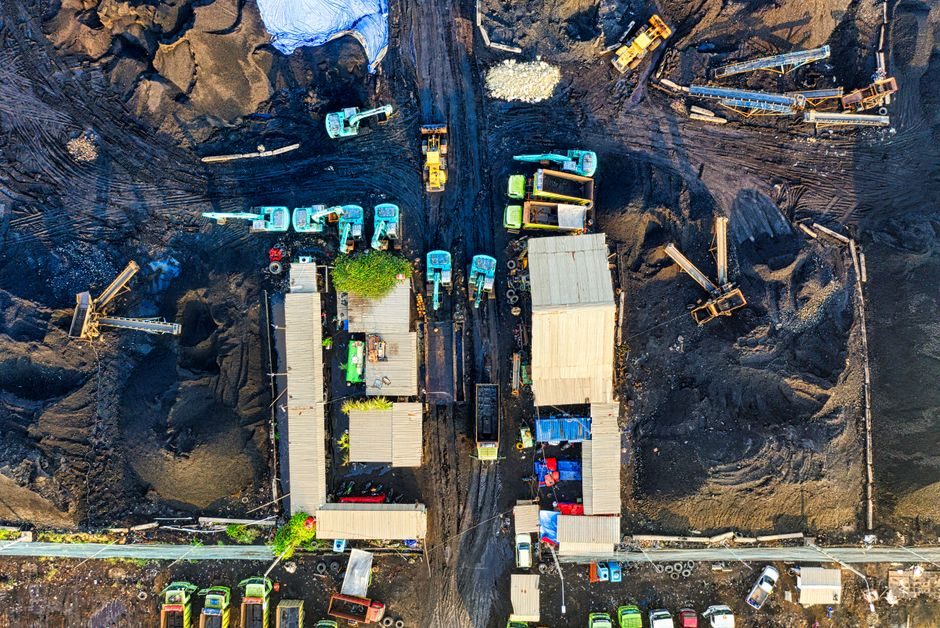
Pile driver selection in 2026 is governed by four sequential spec gates: pile type and required driving force, hammer energy class, mobility class (excavator-mounted vs dedicated crawler vs skid), and power source (diesel, hydraulic, or electric). Hydraulic impact and hydraulic staticpress-in drivers now dominate the European solar-farm and North American utility-scale PV build, displacing conventional diesel drop hammers on noise and emissions grounds [S1].
The global supplier base splits cleanly: European OEMs (MGI in Italy, via Pile Driver UK distribution) ship crawler-rigs for utility-scale solar EPCs; Chinese OEMs led by Shanghai Yekun Construction Machinery export a wide range of excavator-mounted hydraulic drivers and square piling rigs into civil, road, and rail work [S1][S2]. A separate mobile unit, the U-DA relocatable driver, is positioned for portable, low-overhead site campaigns rather than continuous production piling [S3].
Gate 1 — Pile Type, Required Driving Force, and Energy Class
Hydraulic impact hammers are increasingly specified for new European and North American solar-farm builds where the standard driven element is a 100–300 mm hot-rolled steel post or H-beam to 6–12 m embedment, per OEM guidance [S1]. Required ram mass and stroke energy scale with the soil class: light rigs in the 1.5–3 t class drive small posts into sandy or pre-drilled profiles, while 5–8 t hammer modules are needed for dense clays and gravels [S2].
For the wider market of construction-machinery specifications, the encyclopedia entry on pile drivers frames the operating envelope as a triangle of pile section modulus, required bearing capacity (kN), and hammer energy per blow (kJ). Selecting outside that triangle — under-rated hammer, oversized pile, or mismatched stroke frequency — is the single most common cause of refused piles and premature hammer wear.
Gate 2 — Hammer Type: Hydraulic Impact vs Hydraulic Staticpress-in vs Diesel Drop
Hydraulic impact hammers use a free-falling or accelerated ram driven by hydraulic pressure and typically deliver 30–80 strokes per minute with adjustable stroke length, allowing energy tuning on the same pile [S1][S2]. Hydraulic staticpress-in (press-in) drivers push piles into the ground with a static reaction force clamped against previously driven piles or ballast, eliminating vibration and noise — the dominant specification on urban transit and hospital-adjacent sites.
Diesel drop hammers remain the lowest-cost option for remote civil work and small-diameter timber or precast concrete piles, but noise envelopes of 90–110 dB(A) at 7 m and unburned-hydrocarbon emissions now bar them from many EU and California jobsites. Side-by-side on the four key criteria, the trade-off reads: hydraulic impact scores high on energy tunability and productivity, hydraulic staticpress-in scores high on noise/vibration and neighbour-friendly operation, and diesel drop scores high on capex and fuel logistics at the cost of every other line. For a process-engineer reader used to instrumentation trade-offs, the decision tree is similar in shape to the industrial valve selection problem — match the control characteristic to the process, not the brochure.
Gate 3 — Mobility Class: Crawler Rig, Excavator-Mounted, or Skid/Trailer
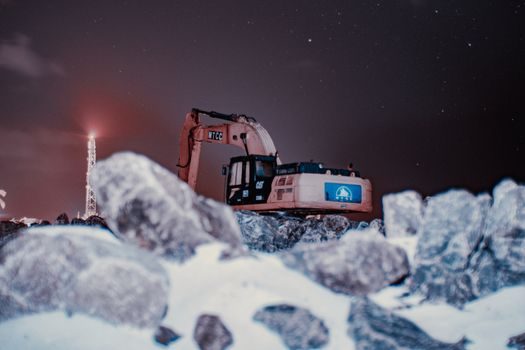
Mobility class is a hard capex gate. A dedicated crawler-rig (such as MGI's TKR 2.0 platform) is the right answer for utility-scale solar farms of 50 MW and above, where daily production targets of 200–400 piles/day make a self-propelled, self-plumb, single-operator rig the only economic choice [S1]. For smaller commercial PV arrays, road signage, and fence-post work, an excavator-mounted hydraulic driver that piggy-backs on a 20–30 t carrier is the volume seller globally, and the form factor that Chinese OEM Shanghai Yekun and peers export by the container-load [S2].
Skid and trailer-mounted drivers (including mobile units such as the U-DA platform) cover low-volume, high-portability work — temporary fencing, relocatable structures, site investigation anchor trials — where the cost of mobilising a 40 t crawler cannot be amortised [S3]. The selection rule: if daily production exceeds ~80 piles or the average move distance between piles is greater than 15 m, dedicated crawler-rig productivity wins; below those thresholds, the excavator-mounted and skid platforms are the lower total-cost answer.
Gate 4 — Power Source, Hydraulics, and Controls Integration
Diesel-driven hydraulic power packs remain the default for off-grid solar-farm sites, but Tier 4 Final / Stage V diesel engines are now the minimum spec on most EU and North American tenders, with electric-over-hybrid power packs emerging for grid-connected sites [S1]. Hydraulic flow and pressure requirements are usually expressed as 200–280 bar working pressure at 120–250 L/min, and the hydraulic circuit must include a load-sensing or pressure-compensated pump to keep ram impact energy constant regardless of carrier engine speed.
For a controls-integration view, the programmable logic controller reference notes that a modern piling rig typically uses a CAN-bus or PLC-driven control layer to log blows per metre, hydraulic pressure, verticality, and depth — data that flows into the EPC's as-built pile register. A growing share of 2026-spec rigs expose this data over MQTT or REST for IIoT integration with the same back-end that handles flow meter and pressure transmitter telemetry on the same site.
Use Cases, Failure Modes, and Sourcing Signals
Utility-scale solar EPC work dominates 2026 demand: MGI-built rigs distributed by Pile Driver UK are explicitly marketed to that segment, with the TKR 2.0 platform framed for North American PV carrier roles [S1]. Civil and rail work — driven precast concrete piles, sheet piles for cofferdams, guardrail post installation — pulls the volume of Chinese-built excavator-mounted drivers into road and bridge tenders [S2]. Smaller portable and relocatable drivers cover site-investigation, anchor testing, and short-cycle commercial fencing where a 40 t crawler is uneconomic [S3].
Common failure modes to spec against: (1) hammer-pile resonance at certain soil-driving combinations, mitigated by variable-stroke hydraulic hammers; (2) premature wear of the impact block and cap on hard driving, mitigated by selecting drop-weight and anvil mass matched to ram energy; (3) hydraulic-oil overheating on continuous high-cycle operation, mitigated by an oversized cooler or demand-based fan drive. A useful peer comparison for buyers balancing mobile-plant sourcing decisions is the rotary drilling rig selection guide, which applies the same gate-based selection logic to a different but adjacent machine class.
Standards, Sourcing, and Selection Checklist
For European tenders, the relevant safety baseline is the Machinery Directive 2006/42/EC for the carrier and the noise-emission obligations of Directive 2000/14/EC for outdoor-use equipment; for ATEX-classified sites, hydraulic and electrical sub-assemblies need category 3 or higher as a function of the pile-driving zone classification. Buyers should confirm the OEM holds a current CE technical file covering both the carrier and the hammer module rather than relying on a generic carrier declaration. [S1]
Selection checklist for a 2026 tender: (1) match pile section, length, and required bearing capacity to hammer energy per blow; (2) match the mobility class to daily production and inter-pile move distance; (3) confirm Tier 4 Final / Stage V diesel or verified electric power pack for the site jurisdiction; (4) confirm CAN/PLC data logging and IIoT export for the EPC's as-built register; (5) verify CE / Machinery Directive 2006/42/EC technical file and noise-compliant rating per Directive 2000/14/EC. The lower-risk sourcing path remains a European or North American OEM-distributor for high-hour crawler work, and a Chinese OEM for excavator-mounted volume where a local service partner is in place. Track the next quarterly OEM release notes from MGI and the Tier 1 Chinese exporters for any new electric-power-pack options; the European solar-farm EPC pipeline is the demand signal most likely to shift the supply mix before year-end.