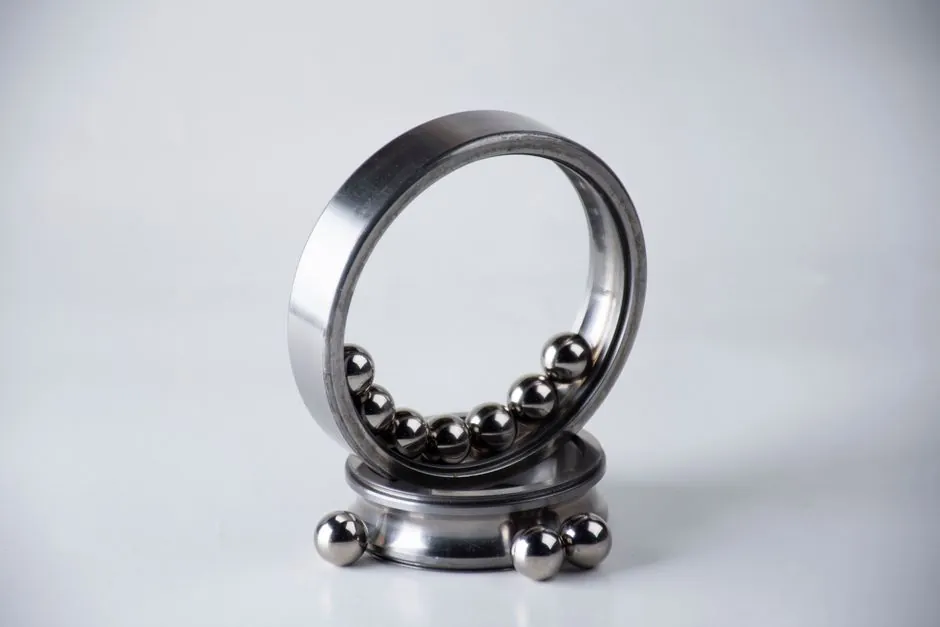
Automotive body-in-white, paint, and final-assembly shops overwhelmingly run 2-bolt UCP200/UCP300 series insert-bearing pillow blocks, with cast iron and pressed-steel housings dominating non-corrosive zones and 304/316 stainless variants specified in washdown areas [S1][S2][S3][S4].
The standardized envelope, with bore diameters from 12 mm (UCP 201) to 75 mm (UCP 315), dynamic load ratings 9.88-47.5 kN, and the same 30-50 mm center-height family used across European and Asian OEM conveyor builders, is the reason this product class is the default pick on general-purpose transfer lines, skid conveyors, and overhead-trolley drives [S4].
Why insert-bearing units, not plummer blocks, in body shops
Pillow block bearings are pre-assembled units whose housing handles alignment, sealing, and shaft support in a single package, while plummer blocks use split housings and roller inserts for heavier shafts [S1][S4]. On automotive lines running shafts typically in the 5/8"-5" (16-127 mm) window with mostly radial loads, the one-piece UCP/UEP unit outranks SN, SNL, SAF, and SD series plummer blocks because the bearing insert can be swapped in minutes without disturbing the shaft [S2][S4].
The spherical outer ring on the insert is the engineering feature that tolerates ±2° to ±5° of static misalignment, which matters on long conveyor runs where structural deflection between supports accumulates and where perfectly level mounting surfaces are not realistic on a stamped floor [S1].
The six selection variables a process engineer should pin down first
Selection in practice is governed by six variables: shaft diameter, load type, operating environment, seal design, shaft locking method, and lubrication cadence [S2]. The shaft diameter fixes the UCP series code first, UCP 201 (12 mm) up through UCP 315 (75 mm), and from there the basic dynamic load rating Cr scales from 9.88 kN at UCP 204 to 47.5 kN at UCP 310 [S4].
Load type decides whether a set-screw UC insert, eccentric-collar UEL insert, or adapter-sleeve UK insert is the right shaft-locking device; set screws are the cheapest and standard for unidirectional axial loads, eccentric collars give a more secure grip under vibration, and adapter sleeves are reserved for the larger bores and easier field removal [S2]. Operating environment then drives housing material: cast iron for the bulk of the line, pressed steel for the lightest duty, ductile iron or cast steel for shock-loaded zones, and stainless or thermoplastic where coolant, wash chemistry, or salt exposure is present [S3].
Material and seal pairings that match each shop zone
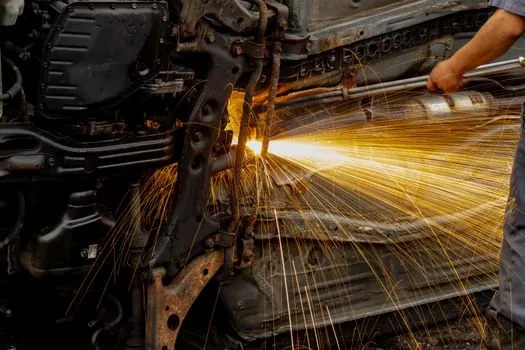
Housing material options for an automotive plant are cast iron (the default), pressed steel (light duty), stainless steel (washdown and paint-shop prep), thermoplastic (corrosive chemical exposure), and occasionally ductile iron or cast steel for shock-loaded zones [S3]. The seal must match that material choice: nitrile-rubber double-lip seals handle the standard coolant and oil mist found in machining and press shops, while heavy-contact or labyrinth seals are the call for stamping cells where die lube and scale are airborne contaminants [S1][S2].
For paint-shop pretreatment and e-coat lines, where the shaft runs through a wet chemical zone, 304 stainless housings with food-grade grease are the typical pairing; for phosphate and rinse tanks, thermoplastic housings are specified because they tolerate the acid splash profile without corrosion [S3][S5].
Locking method and installation tolerance
The three common shaft-locking options in service on automotive lines are set-screw, eccentric locking collar, and adapter-sleeve locking, each with a different vibration and reversal-load profile [S2]. Set-screw inserts (UC series) are the lowest cost and dominate general-purpose conveyors; eccentric-collar inserts (UEL series) are preferred on skid-conveyor drives that reverse direction or run at variable speed, because the cam action resists back-spin loosening [S2].
Correct installation requires shaft-to-housing alignment held within 0.05 mm at the mounting face; routine re-lubrication every 3-6 months via the zerk fitting then delivers service life in the 30,000-50,000 hour band on most general-purpose units [S2]. Operating above that relube interval is the single most common cause of premature failure, ahead of misalignment and contamination [S1][S2].
Spec map for the most common automotive-line bore sizes
The UCP 200 series covers 12-60 mm bores with Cr from 9.88 kN to roughly 36.8 kN, and the UCP 300 series steps up for higher-capacity shafts in the 25-75 mm band with Cr from 19.2 kN up to 47.5 kN at UCP 310 [S4]. For a 30 mm shaft the call is UCP 206 (Cr 15.1 kN, center height 42.9 mm), for 40 mm the UCP 208 (Cr 22.8 kN, center height 49.2 mm), and for 50 mm the UCP 210 (Cr 27.0 kN, center height 57.2 mm); the 300-series equivalents (UCP 306, 308, 310) raise Cr by roughly 35-65% for the same bore when the line is shock-loaded or runs at lower rpm with higher radial force [S4].
These ratings are the engineering reason automotive conveyor OEMs default to the 200-series for general transfer and to the 300-series for drives, lift stations, and turntable indexing tables; the dimensional envelope stays common enough that a maintenance technician can swap inserts across both series with the same tool set [S4].
Failure modes and what the data actually points to
Over 50% of pillow-block bearing failures trace back to contamination ingress past a worn or mismatched seal, which is why seal selection is treated as a primary spec variable, not a secondary one [S1]. The next-largest failure bucket is lubrication: missed 3-6 month re-lube cycles lead to grease starvation, brinelling on the inner ring at the loaded zone, and accelerated raceway spalling [S2].
Misalignment outside the ±2° to ±5° self-alignment envelope is the third bucket, typically caused by frame deflection on long conveyor spans or by a soft foot at the bolt-down interface, and is best caught at installation with a dial indicator rather than at failure with a replaced insert [S1]. The pillow block bearing reference page covers the housing-geometry and self-alignment data in more detail, and a directly comparable spec walkthrough for packaging-line conveyors is given in this conveyor-and-filler selection guide. For shaft-seal and zerk-lubrication details shared with rotating process equipment, the bearing process control instrumentation reference is a useful cross-check.
Where the leading suppliers sit in 2026
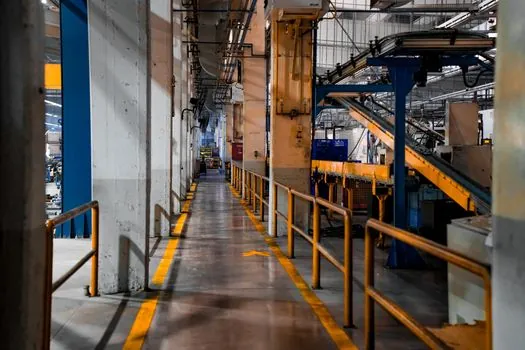
The 2026 supplier landscape for automotive-spec pillow blocks spans Timken, NSK, and JTEKT on the premium tier with full material traceability and PPAP documentation, and a long tail of Chinese and Indian manufacturers covering the UCP 200/300 series at materially lower cost with comparable dimensional conformance [S7].
Final-assembly cells with frequent washdown tend to dual-source 304 stainless inserts from both premium and cost-tier suppliers, with the premium lot used on ergonomic lift tables and the cost-tier on underbody skids where contamination exposure is lower [S3][S7].
The next tracking signal to watch is whether the major premium-tier suppliers release higher-capacity 300-series inserts with improved seal cartridges rated for the new phosphate-free pretreatment chemistries being adopted across European OEMs through 2026-2027; the second is whether cost-tier UCP 300-series suppliers close the Cr-tolerance gap that currently sits a few percent wider than the premium-tier published ratings.
For the relevant spec sheets and selection criteria, see aac block, and block brick.