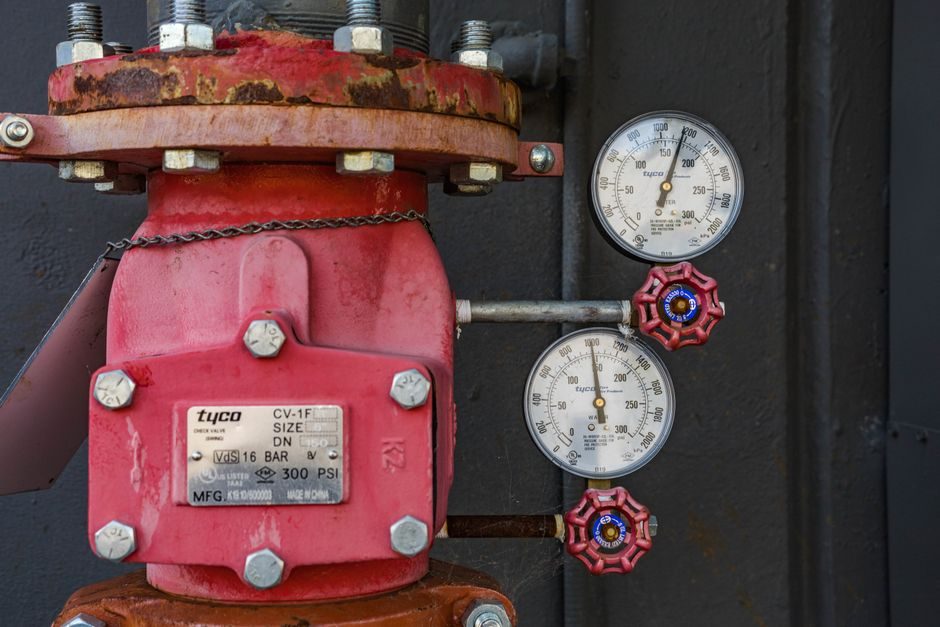
A correctly sized pinch valve is a full-bore elastomer sleeve pinched closed by a mechanism from outside the flow path, so the process media never touches metal wetted parts — only the sleeve.
Sizing is governed by five inputs in this order: line size (DN/ NPS), Cv at the chosen travel, sleeve elastomer and pressure class, service temperature and chemistry, and the actuation package (manual / pneumatic / electric). Skipping any of these produces the four classic failure modes: leakage at partial stroke, sleeve blowout, stem-jam under slurry, and actuator stall.
Selection Criteria: The 5 Inputs a Process Engineer Must Lock First
The first lock is line size in DN or NPS; a pinch valve is normally full-bore, meaning its flow path equals the connecting pipe ID, so undersizing the valve costs Cv with no recovery [S3].
The second lock is Cv, the valve flow coefficient that expresses water capacity in gpm at 1 psi drop; the valve flow-coefficient formula accepts fluid, inlet/outlet pressure, and temperature, and a Cv calculator will return either required Cv or resulting flow from the other inputs [S3]. Pick a valve whose published Cv at the operating travel exceeds the calculated value with at least 15–25 % margin for slurry, where solids shift the effective flow area.
The third lock is sleeve elastomer against chemistry and temperature: natural rubber, EPDM, NBR, FKM, and PTFE/FEP/PFA are the common families, and the same OEM line that supplies a butterfly valve with fluorine lining will often pair the sleeve to the same FEP/PTFE/PFA chemistry on the lined side [S1].
The fourth lock is pressure class: a 150 lb ANSI flange body typically pairs with sleeve ratings up to about 10–16 bar in service, while high-pressure series from specialised Chinese manufacturers reach into higher ranges for mining and tailings duty [S2].
The fifth lock is actuation: manual (handwheel or lever) for infrequent isolation, pneumatic (air-operated) for on/off slurry service with quick opening, and electric for modulating loops where 4–20 mA or bus feedback is needed.
Manual vs Pneumatic vs Electric: Decision Comparison
Pinch valve actuation falls into three practical groups, and the decision is driven by cycle count, speed, and signal type rather than by valve body size. [S1]
Manual pinch valves use a handwheel or lever to drive a compressor cone or gate down onto the sleeve; they suit infrequent isolation, low-cycle duties, and remote sites without instrument air, and the spare parts list collapses to the sleeve itself. Pneumatic (air-operated) pinch valves use plant air to drive a piston against the sleeve; they are the default for slurry, mining, and tailings because they deliver fast open/close, fail-safe spring-return options, and tolerate solids-laden flow that would score a ball valve seat. Electric pinch valves use a motorised actuator to position the compressor; they fit modulating control loops, where the 4–20 mA position signal ties into the DCS, and they avoid the compressed-air utility entirely at the cost of slower stroke and higher unit price.
Sleeve Elastomer and Lining: Material Comparison
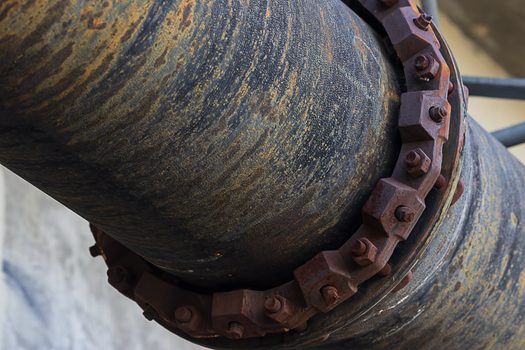
Natural rubber sleeves handle abrasive slurry and mining service up to roughly 80 °C and dominate tailings and cyclone isolation duty [S2].
EPDM suits hot water, steam condensate, dilute acids, and outdoor service to about 120–140 °C, but is unsuitable for hydrocarbons. NBR handles oils and aliphatic hydrocarbons up to about 90–100 °C, while FKM extends chemical resistance to aggressive acids and solvents at the cost of higher price. PTFE / FEP / PFA liners, the same chemistry used in the lined-valve family at the same factories, push the upper temperature above 150–200 °C and handle concentrated acids, alkalis, and strong oxidisers; PTFE has the broadest chemical resistance but the worst cold-flow behaviour and is rarely used as a standalone sleeve — it is bonded or supported [S1].
Who Should NOT Pick a Pinch Valve
A pinch valve is the wrong pick when the service demands tight shutoff against high pressure, because the elastomer sleeve sets a hard ceiling on differential pressure, typically far below a metal-seated balancing valve or a butterfly valve on a high-class flange. [S1]
It is also the wrong pick for clean, high-temperature, high-pressure steam, where the elastomer simply cannot survive; for hydrocarbon lines where the rubber will swell (use NBR/FKM only after lab confirmation); and for vacuum service above about 0.3 bar absolute without a body support design. Anyone specifying a pinch valve for a modulating control loop with sub-1 % setpoint tolerance is also buying the wrong tool: sleeve hysteresis at partial lift makes tight modulation a struggle and a linear guide of the compressor mechanism is the wrong fix — the answer is duty-class matching, not mechanical refinement.
Sourcing, Standards, and Lead-Time Reality
Pinch valves are commonly built to ANSI, DIN, and JIS flange standards, and Chinese factories supply API / ISO 9001 / CE / RoHS certified production with standard stock delivery quoted at 2–3 days from factory [S1][S2].
One Chinese manufacturer is the lead drafting unit of the Chinese industrial standard for pinch valves, and is a national high-tech enterprise holding numerous invention and utility-model patents, with ISO 9001:2015, ISO 14000, ISO 45001, CE, and RoHS certifications on the quality stack [S2]. Sizing calculations themselves follow the standard valve-Cv method: input fluid, inlet/outlet pressure, and temperature into a Cv calculator, then verify that the valve's published Cv at the operating travel exceeds the calculated value with margin [S3]. For a deeper look at how sleeve, actuator, and duty map together, the related selection map covers the matching logic in more detail: Pinch Valve Selection Map: Sleeve, Actuator, and Duty Match.
Field Use Cases and Failure Modes
Mining and mineral processing use large-bore pinch valves on cyclone feed, tailings lines, and thickener underflow where the full-bore opening passes rocks and fibrous slurry that would foul a crossed-roller guide in a metal-seated valve. [S2]
Power and FGD scrubber service use rubber or EPDM sleeves for lime slurry and gypsum; chemical plants use PTFE / FEP / PFA lined pinch valves for concentrated acids and chlor-alkali brines; pulp and paper mills use them for stock and reject lines. The four recurring failure modes are sleeve wear from abrasive particles, sleeve blowout from pressure spikes, stem or compressor jamming from solids lodging in the mechanism, and actuator stall from undersized air supply on pneumatic units — each one maps back to one of the five lock-in inputs above.
Track the next revision of the Chinese pinch-valve industrial standard for any test-pressure or marking change; verify that the supplier's Cv curve is published for the same travel profile the actuator will command, and confirm elastomer compatibility with a vendor lab immersion test before finalising the PO on any acid or solvent service.