
A pinch valve closes flow by squeezing a flexible elastomer sleeve from the outside, so only the sleeve touches the media — the body, stem, and seat stay out of the process stream. That single design rule is why the format dominates slurry, mining tailings, cement, ceramic slip, and corrosive dosing lines where metal-seated ball valves or butterfly valves erode or scale in weeks.
Working envelope from the published Chinese process reference: rubber-sleeve pinch valves are normally specified at working pressure ≤ 0.7 MPa and nominal bore ≤ DN 300 mm, and are classed alongside wear and corrosion-resistant valves [S5]. The media never contacts the body or any metal seal, which is the structural reason for the format's leak-free, no-packaging-gland reputation [S2].
Sleeve Material and Elastomer Match
Natural rubber, EPDM, NBR, FKM, chlorobutyl, and silicone sleeves cover the realistic media matrix, and hardness is the first number to lock down [S1]. The Keyto 1269 series specifies a silicone tube at Shore 60 hardness with a 6 mm × 9 mm cross-section, paired with a wetted material declared as "depends on the silicon tube" — the datasheet is treating the sleeve as the only wetted part, which is consistent with the genre [S1].
For slurry, mining, and corrosive-material service, a flexible rubber sleeve is typically specified because the elastomer isolates the flow media from the mechanical parts and resists abrasion and corrosion. For pharmaceutical or analytical fluid paths, platinum-cured silicone or peroxide-cured EPDM sleeves meet extractables and sterilisation limits; for hot water and steam-cleaned lines, EPDM is the standard pick. The Keyto 6 mm × 9 mm silicone example delivers Cv ≥ 0.05 and flow ≥ 8.5 mL/s at 50 kPa differential on pure water at 25 °C [S1], giving a concrete bench value for low-pressure analytical circuits.
Body Style: Open-Body vs Enclosed-Body
Open-body pinch valves expose the elastomer sleeve to the surrounding frame, weigh less, and let the operator see slurry build-up; enclosed-body designs shield the sleeve from UV, mechanical damage, and external contamination and are the right pick for outdoor or hygienic lines [S2]. The structural difference drives the pressure rating, the maintenance interval, and the operator-safety envelope.
Open-body designs are typically the lowest-cost option and the easiest to re-sleeve in the field, which is why they dominate mining and mineral processing where the sleeve is a consumable. Enclosed-body designs are standard in food, pharmaceutical, and chemical plants where the operator must not contact the media and CIP or wash-down cycles demand an external surface that drains and cleans. For most process-plant retrofit work, enclosed-body is the default unless the line is in a covered maintenance bay and budget is tight [S2].
Internal vs External Pinch Geometry

The Lee Co. application note frames medical and scientific pinch valves along two axes — internal and external — and the same logic applies to process-scale units [S3]. External pinch valves use a replaceable tube clamped by an external plunger, so the tube can be swapped without breaking into the fluid manifold; internal pinch valves seal the tube inside the port head, which cuts internal volume and carryover but makes the tube a factory service item.
For low-volume analytical and medical circuits, tubing ID is usually 1.5 mm or less, capping flow under 50 mL/min, and the volume-vs-ID table is a useful scale-down reference: 0.020 in (0.5 mm) ID gives 20 µL per 10 cm and roughly 9 mL/min at 1 psi drop, while 0.125 in (3.2 mm) ID gives 792 µL per 10 cm and roughly 2,100 mL/min at 1 psi drop [S3]. Internal-pinch designs minimise the volume between the pinch point and any Y-junction, which is decisive for 3-way circuits where carryover wastes reagent or dilutes sample.
Actuator Choice: Manual, Pneumatic, Electric, Solenoid
Manual pinch valves are hand-operated, low-cost, and limited to low-pressure and infrequent duty; pneumatic (air-operated) pinch valves are the workhorse for slurry on/off and modulating control because compressed air drives a clean open-or-squeeze stroke with predictable timing [S2]. Electric and solenoid actuators enter the picture on analytical and process-instrument lines where 24 VDC or 110/220 VAC is the available power and compressed air is not.
The Keyto 1269-22-Z1C/0NSC is electric, single-channel, solenoid-pinch architecture with DN 6 mm, maximum pressure 80,000 Pa (11.6 psi), minimum pressure -70,000 Pa (-10.2 psi), and a published service life of over 2 million cycles [S1]. That pressure window and life figure set the realistic envelope for instrument-grade electric pinch valves: sub-bar working pressure, multi-million-cycle life, and cleanability over raw flow capacity. For a process-plant pinch valve, the analogue of the same envelope is a 0.4–0.6 MPa pneumatic unit with a cycle rating driven by sleeve wear rather than solenoid coil burn-out.
Pressure, Temperature, and Sizing Limits
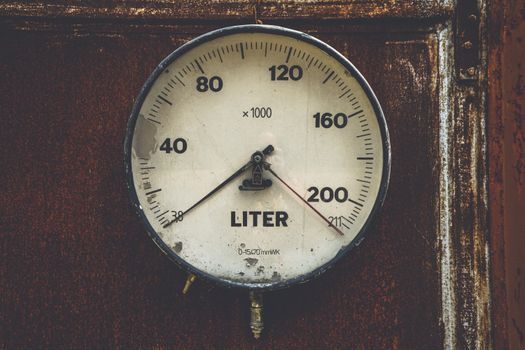
The published duty envelope for rubber-sleeve pinch valves is working pressure ≤ 0.7 MPa and nominal bore ≤ DN 300 mm [S5], and the sleeve elastomer is the binding constraint on both pressure and temperature. Beyond that envelope, metal-seated butterfly valves or ball valves take over because the elastomer sleeve cannot hold the differential without permanent set.
On the low-pressure end, instrument-grade electric pinch valves such as the Keyto 1269 are specified at maximum 80,000 Pa (11.6 psi) and minimum -70,000 Pa (-10.2 psi), so they can hold vacuum as well as modest positive pressure on a peristaltic-style line [S1]. Sizing should follow the same Cv / flow logic as any other control valve: pick the smallest ID that still meets required flow at available ΔP, then check that the chosen ID keeps velocity below the slurry erosion limit and internal volume below any reagent-economy target [S3].
When NOT to Pick a Pinch Valve
A pinch valve is the wrong pick for clean, high-pressure steam, high-temperature hydrocarbons, or any line where working pressure routinely exceeds 0.7 MPa or the elastomer sleeve cannot survive the temperature window [S5]. It is also the wrong pick where bubble-tight shut-off is needed at high ΔP, where the media contains hard, sharp particles that will cut the sleeve in hours, or where the duty demands tight throttling accuracy — a sleeve does not give the same equal-percentage characteristic as a contoured plug in a control valve.
For high-pressure block-and-bleed, full-bore clean service, or cryogenic lines, a ball valve or metal-seated butterfly valve is the right call. For backflow prevention on a slurry line, add a dedicated check valve upstream of the pinch valve, because the flexible sleeve does not give a positive non-return function and slurry settling can hold a "closed" sleeve open. The pinch valve's strength is its media isolation, not its dynamic or sealing character.
Selection Shortlist and Decision Logic
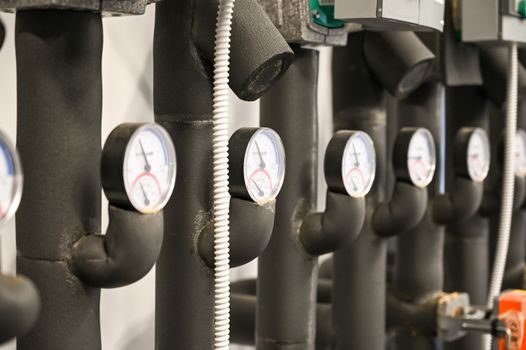
Lock the working pressure first, then the media chemistry, then the cycle rate, then the actuator energy available. If the duty is slurry, dosing, or sterile fluid at ≤ 0.7 MPa, a rubber-sleeve pinch valve is on the shortlist [S5]. If internal volume and carryover dominate, choose internal-pinch geometry; if field sleeve replacement dominates, choose external-pinch [S3]. If the line is outdoor or hygienic, choose enclosed-body; if it is a covered maintenance bay and budget dominates, open-body is acceptable [S2].
For an instrument-grade or analytical circuit at sub-bar pressure, an electric solenoid-pinch valve such as the Keyto 1269 series at DN 6 mm with Shore 60 silicone sleeve and 2 million-cycle life is the right format [S1]. For a process-plant slurry line, the realistic shortlist is a DN 50–300 enclosed-body, air-operated pinch valve with a natural-rubber or chlorobutyl sleeve, sized on Cv at the design ΔP, and protected upstream by a check valve and a manual isolation ball valve for service. Track two signals over the next sourcing cycle: published Cv curves on enclosed-body slurry pinch valves in the DN 100–300 range, and any IEC 60534-style characterisation data on electric pinch valves aimed at modulating rather than on/off duty.
Background reading: Plug Valve Selection Map for Water Treatment: Body, Lining, and Seat.