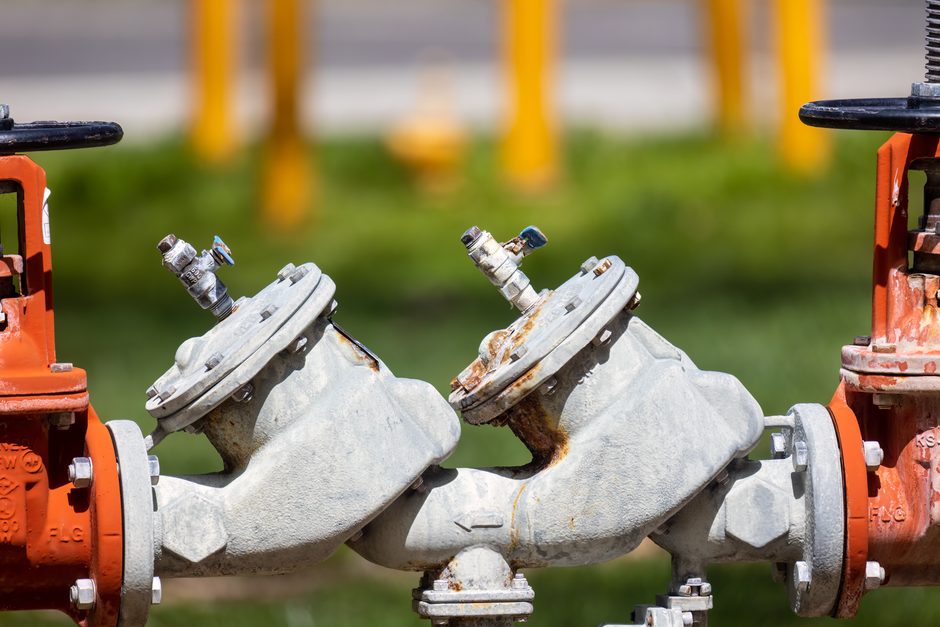
Pinch valve manufacturing in 2026 is concentrated in Indian and Chinese OEM clusters, with API-certified factories like Lianke operating since 1982 and serving 40+ countries with ANSI/DIN/JIS standard valves on 2-3 day stock delivery [S3].
The product line splits into manual, air-operated, electric, and pneumatic actuation, with sleeve materials ranging from natural rubber to FEP/PFA for corrosive chemical service [S3]. Pneumatic flexible-grant units dominate shut-off duty in mining and slurry lines, while full-bore rubber-sleeve designs remain the default for abrasive media [S5][S6].
Major Manufacturing Clusters and Capacity Signals
Shanghai Fengchi Pump & Valve runs 100+ employees with annual output above 30 million yuan and ranks among the largest Chinese producers of rubber hose (pinch) valves, with pneumatic flexible and conventional models shipping from Songjiang District [S5]. Hubei Xianning Di Xin Valve operates from Fenghuang Industrial Zone, Xianan, with a foreign sales desk handling pneumatic, rubber, and plastic pinch-valve export inquiries [S4].
India-side, Beena Engineering Works in Ahmedabad reports 35+ years of continuous production under the Flowrise brand, supplying DIN and kg/cm2 ratings with IBR and non-IBR approval certificates, plus ASA Class 150 and Class 300 pressure classes conforming to ASA, DIN, BSS, and ISS standards [S1]. Lianke (Zhejiang) holds 42 years of factory-direct history with an OEM partner model aimed at global project packs [S3].
Autorun positions its air-operated pinch valve as a low-cost shut-off because the design does not require a separate drive for actuation, only a compressed-air supply [S6]. For buyers building a pinch valve shortlist, factory age (35-42 years), export footprint, and dual ASA 150/300 rating coverage are the most consistent differentiators across these clusters [S1][S3][S5].
Body Types, Sleeve Materials, and Actuation
Open-body, closed-body, industrial, pneumatic, and customised body formats are the standard five-way split offered by Indian and Chinese suppliers, with elastomer sleeves swappable for abrasive versus corrosive service [S1]. Lianke extends the sleeve range to fluorine-lined options (FEP/PTFE/PFA), pairing them with butterfly, ball, diaphragm, check, gate, globe, and plug bodies for anti-corrosion piping [S3].
Pinch valve construction isolates the process fluid from metal wetted parts, which is the structural reason it handles rough, destructive media without erosion of the body and supports easy sleeve substitution as the consumable wears [S1]. The natural corollary is full-bore, self-cleaning flow with no clogging pockets, suited to slurries, powders, and coarse solids where a ball valve seat would score rapidly [S1].
Actuation choice drives both cost and control resolution. Manual units suit low-cycle isolation; air-operated and pneumatic pinches give on/off duty at the lowest hardware spend [S6]; electric units add modulating throttling and remote feedback where DCS integration is required [S3]. For modulating slurry flow, a control valve trim is often a competing option, but pinch trim wins on solids tolerance and sleeve replaceability [S1].
Pressure Ratings, Standards, and Certifications
Common published pressure ratings sit at ASA Class 150 and Class 300, with metric equivalents in DIN and kg/cm2 and IBR / non-IBR certification available for Indian steam-service builds [S1]. Lianke publishes compliance to ANSI, DIN, and JIS flange standards across its pinch and fluorine-lined ranges, with a 42-year manufacturing track record as the consistency claim [S3].
Buyers specifying pinch valves for chemical or hygienic duty should confirm sleeve compound (natural rubber, EPDM, FKM, FEP/PFA) against the process fluid MSDS rather than relying on a generic "corrosion-resistant" marketing line, because elastomer compatibility is the primary failure mode in service [S3]. For abrasive slurry lines, natural rubber remains the default; for strong oxidisers and acids, FEP/PFA-lined sleeves and bodies are the published alternative [S3].
When evaluating a ball valve or butterfly valve against a pinch for the same line, the decision usually turns on three criteria: solids content (pinch wins on coarse particles), throttling resolution (pinch offers smooth linear control), and cycle life on clean service (metal-seated ball/butterfly typically outlasts a rubber sleeve) [S1][S3]. Pinch is rarely the right pick for high-temperature steam above the elastomer limit, where metal-seated alternatives dominate [S1].
Selection Criteria: Manual vs. Pneumatic vs. Electric
Manual pinch valves are the lowest unit cost and the right answer for infrequent isolation in lubricant, alcohol, oil, chemical, dairy, and fertilizer duty where 100% tight shut-off is acceptable at hand-wheel speed [S1]. Pneumatic and air-operated units add compressed-air consumption but remove the operator from the loop, which is the standard fit for remote manifolded slurry headers in mineral processing [S5][S6].
Electric pinch valves add position feedback and DCS/PLC integration for throttling loops, and they are stocked by the same OEM lines (Lianke lists Manual, Air Operated, Electric, and Pneumatic as four discrete SKU families) so buyers do not need to split vendors between on/off and modulating duty [S3]. For food and beverage lines, sleeve FDA-grade documentation and clean-in-place access become the gating criteria, covered separately in dedicated food-grade sourcing notes like the food and beverage pinch valve spec map.
A short comparison frame for procurement: Manual = lowest cost, no auxiliary power, operator-dependent; Pneumatic/Air-Operated = low hardware cost, fast cycle, needs clean dry air; Electric = highest unit cost, precise throttling, native DCS signal. Cross-check this against line size, media abrasiveness, and required cycle rate before locking the actuation spec [S3][S6].
Sourcing Channels: Direct Factory, B2B Portals, Sourcing Fairs
Direct factory contact is the dominant 2026 channel: Lianke, Di Xin, Fengchi, and Beena all list direct email/phone and (in Lianke's case) Facebook, LinkedIn, and TikTok handles for inbound RFQs [S3][S4][S5]. Made-in-China and Gold Supplier hosted showroom pages remain the standard discoverability layer for Chinese OEMs entering export markets [S4][S5].
Hong Kong's HKTDC sourcing platform indexes heater-valve and adjacent HVAC categories with Best Match sorting, supplier-type filters, and a built-in RFQ workflow that remains a useful cross-check channel even though the broader pinch-valve category is typically sourced through the dedicated industrial portals rather than HKTDC's HVAC tab [S2]. For buyers mapping global valve capacity, complementary cast-component sourcing notes such as the investment casting suppliers capacity map and electric-actuator pairing data in the electric ball valve suppliers 2026 sourcing map help triangulate vendor maturity beyond the pinch-valve catalogue itself.
Two trackable signals to watch into late 2026: (1) whether Indian OEM hold times on rubber sleeves shorten as the Beena / Flowrise model scales IBR-certified capacity beyond ASA 150/300 [S1]; (2) whether Chinese fluorine-lined pinch lines (Lianke-style) extend FEP/PFA sleeve stocking from 2-3 day ship times into shorter JIT windows for European chemical EPCs [S3].