
Reliable pipe and tube fitting joints come from controlling four variables: tube end geometry, ferrule engagement depth, tightening torque expressed as turns from finger-tight, and material compatibility with the process fluid, with Parker's Bulletin 4200-B4 (Oct 2023) and Swagelok's MS-INS-001 field manual as the primary references for instrument-grade installations [S1][S3].
Across instrument tubing, threaded pipe, CSST gas lines, and press-fit systems, the practical failure modes are under-torque, over-torque, and tube-end distortion; the corrective action for each is mechanical and procedural, not equipment substitution, and the appropriate standards are catalogued in the pipe fitting encyclopedia entry and the piping fitting reference page.
Cut, deburr, and clean: the tube prep that decides joint life
A tube cut at less than 90 degrees to the axis produces a ferrule seat that loads one side of the body bore, and the joint leaks regardless of torque. Parker's Bulletin 4200-B4 requires a tube-end squareness of 0.010 in or better, measured with a tube cutter guide, before any ferrule is slid on [S1]. The acceptable cutting methods are a roll cutter for thin-wall 316L stainless, a hacksaw with a finetooth bi-metal blade for heavy-wall carbon steel, and a band saw for sizes above 25.4 mm OD, with abrasive wheels prohibited because they work-harden the end face and contaminate the sealing surface.
Deburring is non-optional. The Bulletin specifies a rotary deburring tool or a reamer to break the inside edge to a 0.4-0.8 mm chamfer, and the same tool to knock off the outside burr that lifts the ferrule out of concentricity [S1]. Cleaning follows a defined sequence: blow out the tube bore with oil-free instrument air at 0.4-0.7 MPa, wipe the end with a lint-free wipe soaked in isopropyl alcohol, and reject any tube carrying visible drawing compound, oil, or particulate, because contamination at the ferrule seat becomes a leak path under thermal cycling. The PE pipe reference covers a comparable cleanliness protocol for fusion joints in polyolefin systems, where the analogous failure mode is oxide entrapment during heating.
Torque, turns, and the 1-1/4 rule for ferrule fittings
For double-ferrule instrument fittings (CPI / A-LOK style), the canonical Parker tightening sequence is: insert the tube fully into the body, press the front ferrule against the seat by hand, mark the nut at the 9-o'clock position, and then advance the nut to the 3-o'clock position, which equals 1-1/4 turns past finger-tight for sizes up to 25 mm OD, dropping to 1 turn for 28-50 mm OD, per Bulletin 4200-B4 [S1]. Swagelok's published equivalent is 1-1/4 turns from finger-tight on 1/8 to 1/2 in OD 316L stainless, tightened with two opposing wrenches so that no rotational load transfers into the tubing run [S3].
Over-tightening deforms the rear ferrule past its elastic limit, so that a remake does not re-seat, and under-tightening leaves a micro-gap at the front ferrule that leaks at the first thermal cycle. The accepted remediation is to back the nut off, inspect both ferrules for plastic deformation, and replace the fitting if the bite marks on the tube show elliptical rather than circular ring impressions, a check Parker codifies under "Assembly and Remake" in Bulletin 4200-B4 [S1]. Single-ferrule and elastomeric seal systems (O-ring face seal, gasket-seal pipe unions) use a different torque protocol, typically a published torque table in N-m keyed to size and material, and mixing protocols between systems is a documented source of joint failure in field service.
Pipe threads vs tube fittings: which system goes where
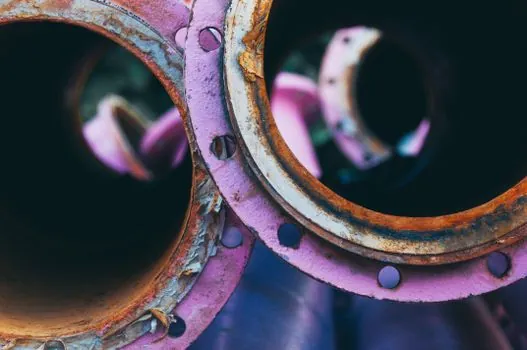
Threaded pipe (NPT/BSPT) is the correct choice for sizes above 50 mm OD, for lower-pressure utility services, and where the line must be disassembled repeatedly for maintenance; it is the wrong choice for instrument air, analyzer sample lines, and any service where a leak of a few sccm biases a measurement. The Bulletin 4200-B4 boundary is: tube fittings up to 25 mm OD and up to the fitting body pressure class (commonly 1378 bar / 20000 psi on 1/4 in 316L), with threaded pipe taking over above that envelope [S1]. The pneumatic fitting reference covers the overlap zone (push-in fittings, OD-tapped ports) where the tubing is sized below 25 mm but the port is a tapered thread.
Selection criteria in tabular form, drawn from the three instrument-grade manuals [S1][S2][S3]:
1. Pressure class: double-ferrule 316L reaches 1378 bar on 6 mm and 1/4 in tube; NPT 1/2 in 3000# forged steel caps at 207 bar at 38 to 200 degrees C; CSST (TracPipe) is rated 0.05 MPa working for natural and LP gas, certified to ICC-ES ESR-4565 for seismic resilience and CSA standards for gas service [S4].
2. Remake count: double-ferrule can be remade 6-10 times with the same body if ferrules are replaced; NPT pipe threads degrade after 2-3 cycles; LOKRING elastic strain preload (ESP) fittings are designed for one-time make, after which the joint is permanent [S1][S2].
3. Materials: 316L stainless ferrules for corrosive and hygienic service; carbon steel MAS-3000 series for hydraulic and oil; CN-200 90/10 copper-nickel for marine seawater; BR-series brass for medical gas copper tubing, per the LOKRING field guide matrix [S2].
4. Skill floor: 1-1/4 turn from finger-tight is field-installable by a trained fitter; ESP requires the LOKTOOL and factory training; orbital-welded tube fittings require an orbital weld head plus a qualified procedure, and re-make is impossible without cutting out the joint.
CSST, press-fit, and specialty systems: where the rulebook changes
Corrugated stainless steel tubing (CSST) for residential and commercial natural gas and LP gas follows TracPipe's published design and installation guide: routing with a minimum bend radius of 25 mm, manufacturer-supplied strike protectors at every penetration through wood or metal framing, and a single shutoff bonding clamp at the manifold with a 6 AWG copper bonding conductor back to the building's grounding electrode system, as required by the manufacturer's ICC-ES ESR-4565 listing and the underlying fuel-gas code [S4]. Pressure testing is at 0.069 MPa (10 psig) for 30 minutes with no pressure drop, and the test gauge resolution must be 0.0007 MPa or better. The relevant standard citations are ICC-ES ESR-4565 (seismic), CSA (gas), and the master specification for NG and LP bundled on the manufacturer's site [S4].
Press-fit copper and stainless (Viega, ApolloPress, Geberit Mapress) replace soldering for water and HVAC service, with the published protocol being a calibrated electric press tool, jaw matching by pipe size, and a visual indicator ring that drops when the jaw has completed the stroke. A joint without a fully visible indicator ring is rejected, because partial press is the dominant field failure mode. Westlake's pressure-pipe installation guide adds the gravity-PVC discipline: a 12 o'clock reference mark on the bell, depth mark on the spigot, and a home-line that must align within 1 degree of the pipe axis at full insertion, with a hydrostatic test at 1.5 times working pressure for 2 hours per the manufacturer's protocol [S6].
Field failure modes, acceptance criteria, and when to replace
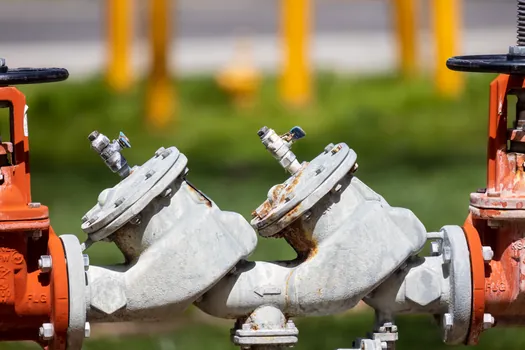
The three failure modes that show up at commissioning and the first 90 days of service are (a) bubble-tight leak on a ferrule joint at 1.0 working pressure, root cause under-torque or a square-cut violation, action remake with new ferrules if the tube-end shows clean ring impressions, otherwise cut back 50 mm and start a new joint; (b) body crack at the hex, root cause over-torque on a NPT male adapter that was never meant to be torque-loaded, action replace the body and verify that the downstream connection is the torque-bearing surface, not the adapter; (c) galling of stainless threads on 316L pipe threads, root cause lack of anti-seize or mismatched hardness, action replace both parts and apply a PTFE-based or nickel-based thread compound qualified for the service [S1][S3].
Acceptance criteria for the leak test: instrument-grade tube fitting lines hold 1.5 times design pressure for 10 minutes with a pressure-decay rate under 0.001 MPa on a Class A gauge, or under 1 sccm helium on a mass-spec leak detector at 0.001 Pa sensitivity. When the joint does not pass this gate, the documented action is remake or replace, not re-torque, because re-torque on an already-yielded ferrule accelerates the path to a fatigue crack. The same accept-or-replace discipline shows up in adjacent spec-first articles such as the stainless steel pipe pros and cons reference, which treats tube end prep as the single most consequential step in joint reliability.
Trackable signals worth following are (1) the next revision of Parker Bulletin 4200-B4, which currently lists the 1-1/4 turn rule for sizes up to 25 mm OD, and may consolidate the remake-count guidance, and (2) the next TracPipe CSST guide update, which is on a roughly 24-month publication cadence per the 2025-08 publication record on the manufacturer site [S4]. Engineers should also note that LOKRING's published field guide list, with separate matrices for carbon steel (MAS-3000), 316L stainless (SS40/SS-3300), copper-nickel (CN-200/CN-700), and brass medical-gas (BR) fittings, is the cleanest material-by-application matrix available as a free field reference [S2].