Press-fit systems install up to 60% faster than soldered copper or threaded steel joints, eliminate open-flame work, and remove curing time from the schedule, which is the single largest labour productivity gain documented in modern joining practice [S3].
Elbows, Tees, and Couplings: The Geometry Trade-offs
Elbows (45° and 90°) redirect flow without bending the pipe and ship in PVC, copper, and steel, but every direction change costs static head; long-radius elbows recover more of that loss than standard-radius units [S1].
Tee fittings split flow at 90° into a branch line and are stocked in equal-port and reducing-port patterns; reducing tees are the go-to for combining a large main with a smaller instrument or drain take-off, and they are rated for both liquids and gases [S1].
Couplings and adapters extend a run or transition between metal and plastic pipe; they are inexpensive, but the joint is the weak point under pressure surge if the installer fails to ream the pipe end or to apply the correct torque on threaded variants [S1].
For unions, the rule is simple: any joint that will be broken for service inside the equipment life should be a union, not a coupling, and the extra cost is recovered the first time a seal is replaced without cutting pipe [S1].
Threaded vs Press-Fit vs Welded: Joining Method Comparison
Threaded fittings remain the cheapest to produce, ship in the widest size and shape range (90° and 45° elbows, tees, crosses, laterals, caps, couplings, half couplings, hex bushings, hex/round/square/bull plugs, swage nipples, hex nipples, round nipples), and need no special tooling, which keeps them the default for low-pressure utility and fire-protection lines [S5].
Press-fit fittings replace both soldered copper and threaded steel in many new builds: installers report up to 60% faster install, no flame permit, no hot work, and no solder flux residue, with the trade-off being a higher unit cost and reliance on the manufacturer-specific jaw profile [S3].
Welded and flanged joints, including socket-weld and butt-weld patterns listed across the same product family, dominate high-pressure and high-temperature service where threaded joints would gall or leak; ASTM A105, A182, and A350 material grades cover the bulk of carbon, alloy, and stainless forged fittings used in process piping [S5].
Solvent-welded PVC and CPVC joints are the plastic equivalent of welded steel: the body and the fitting chemically fuse, but the joint cannot be reopened for service, and any rework means cutting the fitting out and replacing the section [S1].
Material Selection: PVC, Brass, Copper, Stainless Steel
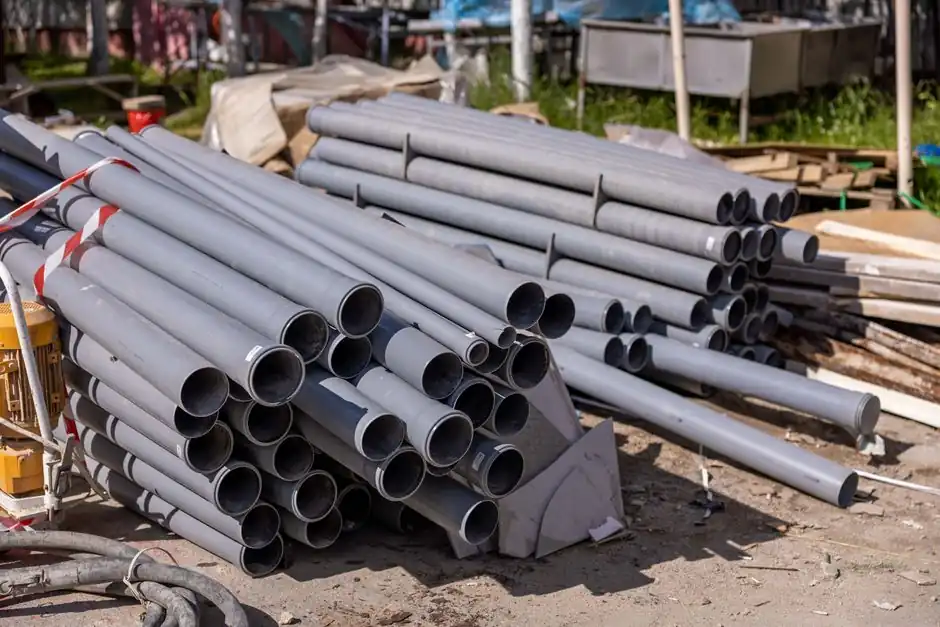
PVC is light, corrosion-resistant, cheap, and easy to transport, with factory colour options that suit exposed architectural runs; its ceiling is around 60°C continuous service, UV exposure causes surface cracking, and high-impact or high-pressure service should be rerouted to HDPE or steel [S4].
Brass fittings resist corrosion, install easily, and need only soap-and-water cleaning, but weigh noticeably more than PVC, cost more than plastic, oxidise in humid or coastal atmospheres, and historically carried lead content, so spec sheets should call out lead-free certification before potable use [S2].
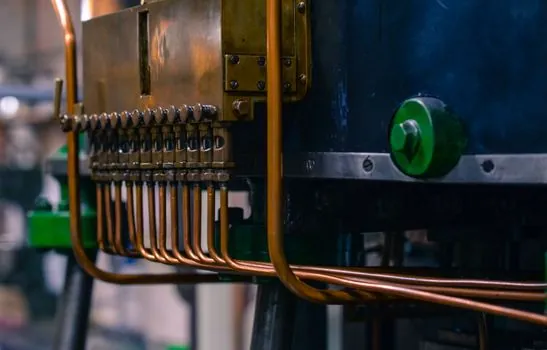
Copper and stainless steel remain the workhorses for hot water, steam, and chemical service; stainless is the most corrosion-resistant and the strongest, but it is also the most expensive per fitting, while copper splits the difference on price and handles both hot and cold water cleanly [S1].
For a deeper dive into the geometry and classification scheme, see the pipe fitting types and classifications reference; the stainless steel pipe TCO breakdown is the right companion when procurement needs lifecycle numbers rather than sticker price.
Where Press-Fit Wins, Where It Does Not
Press-fit earns its place on cold and hot potable water, hydronic heating, compressed air, and low-pressure gas in renovation work where open flame is a permit headache or an insurance problem, with the 60% install-time saving documented in field comparisons against solder and thread [S3].
It loses on high-temperature steam, on systems that see aggressive chemicals that attack the EPDM or HNBR sealing element, and on buried service where the joint cannot be inspected or re-pressed after soil movement; in those cases, welded steel or soldered copper remains the safer specification [S3].
For broader joining hardware context, the pipe fitting encyclopedia entry covers material, pressure class, and end-connection nomenclature, and the piping fitting reference maps the same data to system-level design choices.
Failure Modes and Inspection Signals
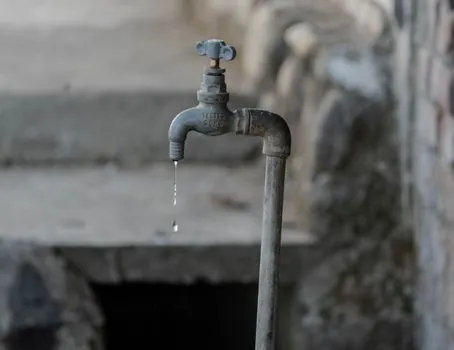
Threaded joints fail at the seal: over-torque splits the fitting, under-torque leaks, and galvanic mismatch between dissimilar metals accelerates thread corrosion, especially at the transition from steel pipe to brass or copper fitting in wet service [S5].
Brass fittings fail by dezincification in aggressive water, by stress-corrosion cracking in ammonia-rich environments, and by pitting when residual flux is left inside the line; the visible warning is greenish surface staining before any leak appears [S2].
PVC fails by UV embrittlement on outdoor runs, by softening and creep above its temperature ceiling, and by brittle fracture on mechanical impact; the unnotched surface crack and the discoloured, chalky exterior are the field tells [S4].
Press-fit joints give a clear go/no-go signal during installation: the jaw either completes the full compression stroke and the indicator ring drops, or it does not, and any joint that did not fully press must be cut out and replaced; the system is designed so that ambiguity is not a possible outcome [S3].
Decision Criteria and Selection Matrix
For residential cold water, PVC wins on cost and ease, copper or PEX wins on hot water, and brass threaded fittings are the right call for shut-offs, transitions, and exposed trim [S1][S2][S4].
For commercial hydronic and compressed-air retrofits, press-fit cuts schedule by up to 60% versus solder or thread, at a higher unit cost that pays back on labour [S3].
For process and high-pressure service, welded steel in ASTM A105 / A182 / A350 grades, plus flanged joints where disassembly is required, remains the only defensible specification [S5].
For chemical or coastal service, stainless steel (304 for general, 316 for chloride exposure) is the most corrosion-resistant option, with brass explicitly flagged as prone to oxidation in salt-air atmospheres [S1][S2].
The cross-reference for the pneumatic fitting family covers low-pressure instrument-air and compressed-air fittings, which is the right page to read alongside this one when the system boundary is a compressed-air header rather than a process line.
Trackable signals to watch: revised lead-free brass certification rules in potable water fittings, and any extension of the press-fit pressure/temperature envelope into steam and higher-pressure gas service; both would shift the current selection defaults documented above.