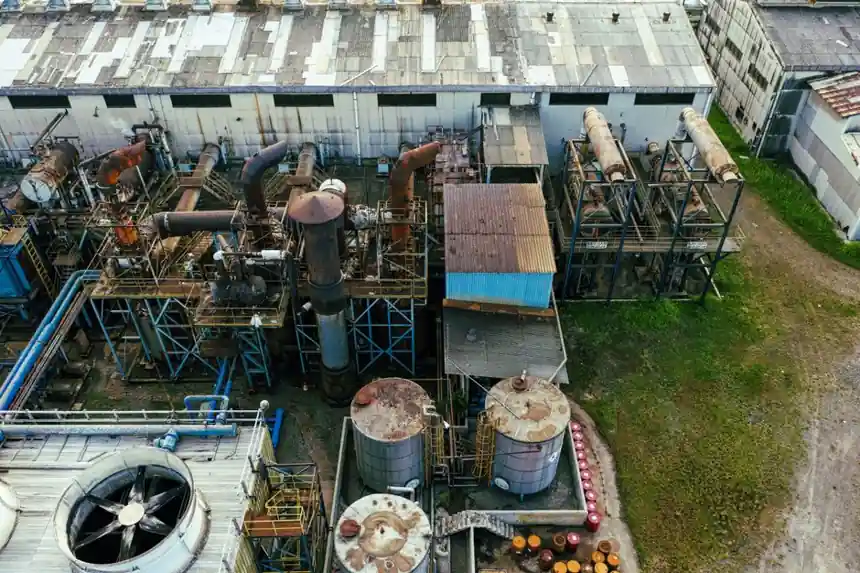
Pipeline-construction storage racks must be specified to the inventory they actually carry: line pipe, flanges, fittings, valves, and prefabricated spools, with bay capacity commonly in the 800-4,000 lb per arm range for cantilever systems and up to 4,000-6,000 lb per pallet position for selective pallet racks.
The selection drivers that come up on every pipeline ROW laydown yard, from a Williams-scale NESE project of approximately $1 billion [S3] to Kinder Morgan's 5,400-mile Florida Gas Transmission system [S2], are pipe diameter envelope, corrosion environment, retrieval speed, and forklift reach, not the catalog brochure.
Why Pipeline Yards Are Not Warehouse Yards
Pipeline construction laydown yards deal in long-axis, heavy, often greasy inventory: 40-80 ft joint racks of API 5L line pipe, valve stands for 2 in. through 48 in. flanged bodies, and pre-fab spool trees that arrive on cradles. Standard warehouse pallet rack frames set at 96 in. centers cannot accept 30 ft pup joints, so cantilever racks with arms projecting 24-48 in. and column heights of 12-20 ft are the default. Cantilever bay capacities in the 1,500-4,000 lb per arm range are typical for 4-12 in. line pipe on pipe shoes; capacities above 6,000 lb per arm require structural (bolted) bases and engineered anchor plans, not the roll-formed knock-down style. [S1]
Two yard typologies dominate. (1) Mainline ROW camp yards holding 20,000-60,000 ft of pipe per spread, where cantilever racks are arranged in back-to-back rows with 14-16 ft aisles for forklifts with 20-30 ft reach masts. (2) Compressor-station and terminal material yards, where storage racks carry a mix of pipe, valve skids, and palletized fittings; selective or drive-in pallet racks at 4,000-6,000 lb per pallet position are the workhorse here because the inventory is mixed, not long.
Selection Criteria: Load, Environment, Pipe OD, Throughput
Four criteria decide the rack spec on a pipeline job. (1) Per-arm or per-pallet load: line pipe at 0.283 in. wall, 24 in. OD weighs roughly 67 lb/ft, so a 40 ft joint loads to about 2,680 lb, and a 6-pipe arm carries 16,080 lb. Cantilever column bases must be rated for that cumulative moment. (2) Pipe OD envelope: arm length should equal pipe length plus 6-12 in. of clearance, and upright spacing on pipe shoes should be roughly 8-12 ft for 40 ft joints to control sagging within API 5L ovality tolerance. [S1]
(3) Environment: coastal or offshore marshaling yards (NESE runs about three miles off the Rockaway Peninsula [S3]) demand hot-dip galvanization to ASTM A123 with 85-100 µm coating or powder coat over galvanized substrate; sour-service laydowns near H2S-prone gas plants need the same coating plus a documentation trail for NACE MR0175 compatibility of any elastomer pads. (4) Throughput: high-pull yards (a typical 4-spread mainline pulls 2,000-4,000 ft/day) want cantilever arms with bolted, not welded, end caps so a forklift can reset a dropped pipe without torch work. Drive-in storage handling racks give density but slow picking; selective racks give access but consume aisle width.
Main Rack Types Compared Against Four Decision Criteria
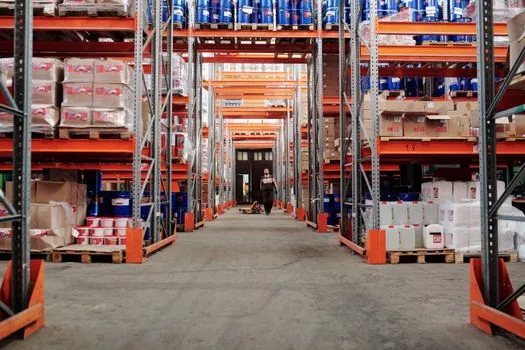
The three rack types seen on pipeline work line up as follows against the four criteria above. Cantilever racks: 1,500-4,000 lb per arm, 24-48 in. arm length, ideal for long pipe and timber, low SKU density, fast FIFO via forklift. Selective pallet racks: 4,000-6,000 lb per pallet position, 96-120 in. beam length, best for mixed fittings and valve skids, 100% SKU accessibility, slower for long goods. [S1]
For yard-wide planning, the rule of thumb process engineers use: allocate cantilever racks to 70-80% of the linear-footage pipe inventory and pallet racks to 20-30% of palletized fittings and valves.
Use Cases: NESE-Scale Mainline vs Compressor Station Yards
On a Williams-class mainline spread like the Northeast Supply Enhancement project, slated to run Pennsylvania to New Jersey and then under New York Harbor about three miles off the Rockaway Peninsula [S3], the storage plan is dictated by the welding spread rate: each spread typically needs 15,000-30,000 ft of pipe staged, plus a valve farm for mainline block valves and launcher/receiver barrels. Cantilever racks in 8-12 row blocks, served by 30-ton forklifts with 24-30 ft masts, are the dominant storage hardware. Yard floor loading assumptions are commonly 4,000-6,000 lb/ft², with rack anchor bolts at 5/8 in. or 3/4 in. diameter into 4,000 psi concrete.
On a Kinder Morgan-class compressor or terminal site, such as the 200-mile bidirectional Elba Express system tying into the Elba Island LNG terminal [S2] or the 185-mile Fayetteville Express Pipeline at about 2.0 Bcf/d capacity [S2], the material mix tilts toward valves, fittings, and instrumentation. Selective pallet racks at 4,000 lb per pallet, 42-48 in. frame depth, and 12-16 ft clear height cover this mix efficiently. Storage cages for chainage, gaskets, and small-bore fittings are a useful add-on, typically 60 x 60 in. with 1-1/4 in. mesh and 3,000 lb UDL, lockable for NACE-traceable hardware.
Inspection, Coatings, and Standards You Cannot Skip
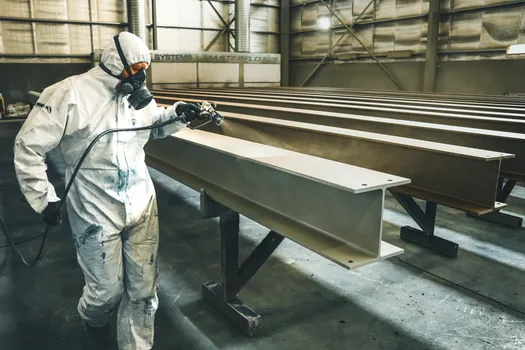
Pipeline-yard racks live outside, so coating and inspection are not optional. Hot-dip galvanizing to ASTM A123 with a minimum 85 µm coating gives roughly 30-50 year first-life in C3/C4 environments; in salt-spray C5-M conditions (Rockaway-class coastal yards) the same spec should be paired with a duplex powder coat at 60-80 µm. Welds on structural cantilever columns should be to AWS D1.1, and any field touch-up to a zinc-rich primer compatible with the parent coating. A documented coating spec saves the QA fight at project handover. [S3]
Inspection cadence matters because the yard is also a working pipe marshaling area where dropped joints and forklift impacts are routine. Drone-based RGB plus thermal inspection of pipe racks and pipe itself is now a real option, with vendors using AI to flag corrosion and coating damage on both the pipe and the rack structure [S1]. Monthly walk-downs for arm straightness, anchor torque verification, and base-plate grout integrity catch the failures before a 2-ton pup joint hits the ground.
Who Cantilever Racks Are For, and Who Should Not Specify Them
Cantilever racks are the right call for any yard storing 70% or more of inventory as linear goods: line pipe, casing, conductor tube, rebar, and timber. They are also correct for valve stands and skid cradles up to about 6,000 lb per arm. They are the wrong call for high-SKU warehouses, retail-style picking operations, or any site where OSHA-mandated rack protection (column guards, end-of-aisle guards) cannot be installed, because a cantilever arm has no structural column on the load side to take a fork impact, and a single bent arm can cascade a whole column run. [S1]
For mixed-inventory or pallet-dominant yards, selective pallet racks remain the safer default. For very high density and low SKU variety, drive-in or push-back racks cut floor use by 30-40% versus selective, but require a disciplined FIFO or LIFO plan, single-SKU lanes, and a forklift operator population trained to the configuration. If your yard has more than 4-5 SKUs per lane, walk away from drive-in.
Common Failure Modes and Constraints
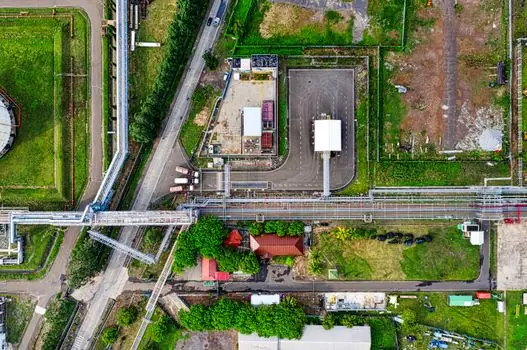
The four failure modes that show up on pipeline-yard racks are (1) anchor pull-out from undersized concrete, typically where 4,000 psi mix was not specified; (2) arm bending from concentrated point loads, usually a dropped pup joint landing on a single arm; (3) coating breakdown at the column base where standing water collects, accelerated by road salt or sour-gas condensate; (4) base-plate corrosion hidden behind timber blocking crews stack for level adjustments. Each one is preventable with the right base detail, the right arm section modulus, and a hot-dip plus duplex coating. [S1]
A useful pre-purchase spec list: column section modulus (in.³), arm section modulus, base-plate thickness (typically 1/2 in. or 5/8 in. for heavy duty), anchor bolt diameter and embedment depth, coating standard, UDL per bay, and a stamped engineered drawing for seismic zone if applicable. Reputable rack suppliers publish seismic OBE and SSE ratings; if yours does not, that is a red flag for any pipeline yard within 50 miles of a fault zone or designated high-wind coastal area.
Trackable signals for the next 6-12 months: Williams' NESE project construction start (slated for fall 2026, with full completion by the end of 2027 [S3]) will be the first major East Coast pipeline yard ramp of 2026-2027, and yard-build RFQs typically precede pipe-lay by 4-6 months, so rack orders for that work will firm in late 2026. Kinder Morgan's 704 Bcf working gas storage portfolio and roughly 65,000-mile network footprint [S2] signals ongoing compressor-station and storage-field yard refreshes, typically 200-500 bay orders per site, that storage-rack suppliers should be quoting into now.
This topic is covered further in Safety relay selection for chemical plants: SIL, ATEX, and E-Stop wiring criteria.