Specifying storage racks for mining sites is a three-variable problem: load class (typically 4,000–10,000 kg per pallet position for crusher spares and drill components), corrosion environment (often C4/C5 per ISO 12944), and the structural clear-span of the host building. A DAYWALK case study published 2026-08-20 documents a custom storage retrofit built specifically because the existing racks showed visible signs of age and deterioration, underscoring that conventional racking rarely survives a 10-year mine duty cycle without redesign [S1].
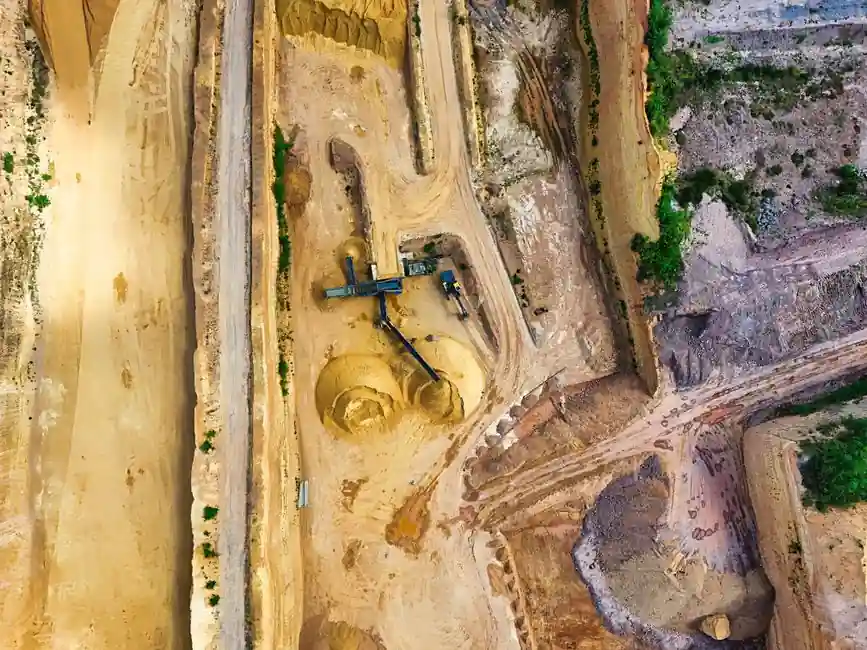
For tailings and slurry service the rack question collides with a broader containment shift: the U.S. metals and mining industry posted $146.14 billion in 2024 revenue, and operators are pivoting from earthen tailings dams to engineered steel tanks, a market segment now embedded in a $250.77 billion global mining waste management spend in 2025 [S4]. Bolted steel containment tanks, dry-stack filtered tailings, and paste thickeners are squeezing the available footprint for above-ground racking and forcing layout decisions onto engineers earlier in the project.
Duty Class and Rack Type: What Survives a Mine Floor
Standard selective pallet racks rated 4,000–5,000 kg per beam pair (EN 15512 / RMI MH16.1 design class) cover MRO consumables and PPE, but crusher liner stacks, drill-bit tubes, and CAT 793F haul-truck wear components regularly exceed 6,000 kg per position and require heavy-duty pallet rack with reinforced column profiles, typically 100×70 mm or larger [S3]. Palsatech's April 2026 infrastructure guidance is explicit that equipment selection for mining must prioritize durability, adjustability, and workflow integration, with adjustability tied to bolted beam connectors that allow slot pitch changes as inventory mix shifts [S3].
For stillages, cage pallets, and small-parts kitting, steel stillages and storage cages deliver the closed-side containment that loose bulk hardware needs, while heavy pallet rack configurations handle the bulk wear-component inventory. The DAYWALK retrofit at the unnamed mining operation paired certified steel stillages with racking to support growing throughput without expanding the warehouse footprint, a layout pattern now common across Australian and Chilean copper operations [S1].
Corrosion, Coatings, and Material Selection in C4/C5 Environments
Underground hard-rock and concentrate-handling areas routinely classify as ISO 12944 corrosivity category C4 (industrial, high humidity) with localized C5-M (marine, high salinity) on coastal processing sites; hot-dip galvanizing to ASTM A123 (min 85 μm coating) is the default for racking in those zones, with epoxy/polyurethane duplex systems reserved for acid mist or H₂SO₄ leach circuits. Palsatech's 2026 guidance flags corrosion as one of the three primary failure drivers for mine-side storage, alongside impact damage and overloaded beams [S3].
For highly abrasive bulk storage, storage and handling infrastructure extends beyond racks into containment vessels; the bolted steel tank market is gaining share specifically because traditional earthen tailings storage facilities (TSFs) carry high seepage and collapse risk versus the engineered structural integrity of steel containment, which also enables active water recovery and a smaller site footprint [S4]. Slurry pump installations projected at $1.59 billion in 2026 are pushing demand for tanks that handle the vibration and yield stress of thick, abrasive slurries without the buckling risk of legacy dams [S4].
Remote-Site Logistics: Steel Structure Warehouses as the Rack Host
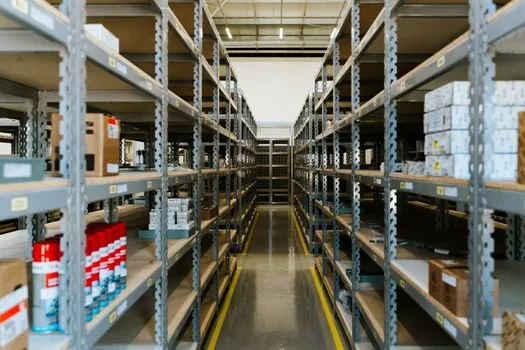
Remote copper, gold, and nickel projects in South America, Africa, and Southeast Asia typically pair mining storage rack systems with steel-structure storage factories because the clear-span design (often 30–60 m width, no internal columns) maximizes pallet-position density and forklift circulation. Chengdong Modular House's 2026-08 product brief lists the standard host-building functions: central warehouse, spare-parts store, equipment shelter, and combined warehouse-and-office buildings, with EPC camp integration for accommodation and utilities [S2].
Climate-ready design is not optional: desert oil and gas fields require enhanced roof and wall insulation, sealed joints, and durable external coatings to counter high solar radiation, large diurnal temperature swings, and dust infiltration that otherwise fouls roller-bearing conveyor and rack components [S2]. For sites in the snow belt or high-altitude operations, the single girder crane sizing for snow removal yards spec map covers the suspended-load integration that many fabric-roof and steel-structure warehouses now require, with cranes and conveyors hung from the primary frame to free floor area.
Comparison: Rack Type vs Selection Criteria
Across the four main rack families specified for mining MRO and spares duty, the decision matrix is: selective pallet rack (lowest cost, beam-adjustable, best for SKUs under 5,000 kg), drive-in/drive-through (highest density, FIFO/LIFO trade-off, used for homogenous consumables like grinding media), cantilever rack (mandatory for long stock such as drill rods, rails, and rebar), and heavy-duty pallet rack with 100×70 mm columns and 6,000–10,000 kg bay loads for crusher and mill spares [S3]. For stillage-based small-parts storage, steel stillages and storage cages outperform open shelving in impact zones, since the cage sidewalls absorb forklift contact that would otherwise tear standard rack uprights.
Material grade selection tracks environment: hot-dip galvanized steel (ASTM A123) for general C4 zones, duplex epoxy-plus-galvanizing for C5-M coastal leach pads, and 304/316 stainless for chloride-exposed underground sumps. A short verbatim insight from Palsatech: equipment selection for mining operations must prioritize durability, adjustability, and workflow integration, the three criteria that, when not met, drive the kind of mid-life racking failure that triggered the DAYWALK custom-retrofit project in August 2026 [S1][S3].
Failure Modes, Limits, and When Racks Are the Wrong Choice
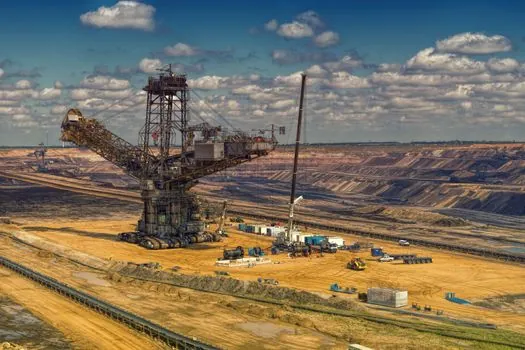
Racking is the wrong specification for anything in direct contact with slurry, concentrate, or process chemicals; for those services, containment vessels, not racks, are the correct asset class, and the 2026 industry pivot toward dry-stack and paste tailings in bolted steel tanks explicitly removes the need for traditional earthen dams while creating a much smaller containment footprint [S4]. Overhead crane-integrated warehouses also have hard limits: a fabric-roof or steel-frame structure suspended-load layout will not work if the host building lacks the engineered primary-frame capacity; Legacy Building Solutions' 2022 reference design recommends verifying column load paths before hanging conveyors or catwalks, since every square foot of floor occupied by a support column is space unavailable for racking [S5].
For power and control side, best soft starter for mining: 2026 spec-first selection map pairs with rack-and-warehouse electrical layouts where VFD-driven conveyors and stacker-reclaimers impose harmonics that the racking floor layout must accommodate. Underground storerooms with limited headroom and ventilation also fail under standard selective rack profiles; in those cases, compact mobile racking or vertical lift modules are the engineered choice.
Standards, Sourcing, and 2026 Procurement Signals
Engineers specifying mine-side racking should anchor designs to EN 15512 (adjustable pallet racking), RMI MH16.1 (U.S. specification for the design, testing, and utilization of industrial steel storage racks), and AS 4084 for Australian sites, with seismic bracing per ASCE 7 in North American jurisdictions. For coated steel, ASTM A123 governs hot-dip galvanizing thickness and adherence, while ISO 12944-2 defines the C1–C5 corrosivity categories that drive coating system selection. The 2026-04 Palsatech infrastructure guide frames these as a system, not a picklist: durability (coating plus steel grade), adjustability (beam pitch and frame modularity), and workflow integration (forklift reach, conveyor feeds, crane clearance) [S3].
Trackable signals to watch through the rest of 2026: the $250 billion waste management market continues to grow at roughly 2.7% annually, and miners are increasingly replacing earthen dams with engineered steel tank solutions [S4]. The DAYWALK August 2026 case study is one data point indicating that mid-life racking retrofits, rather than full warehouse replacement, are becoming the procurement norm at growing operations, and the Chengdong steel-structure storage factory model is extending into copper, gold, and nickel EPC scopes where remote logistics rule out conventional construction [S1][S2].