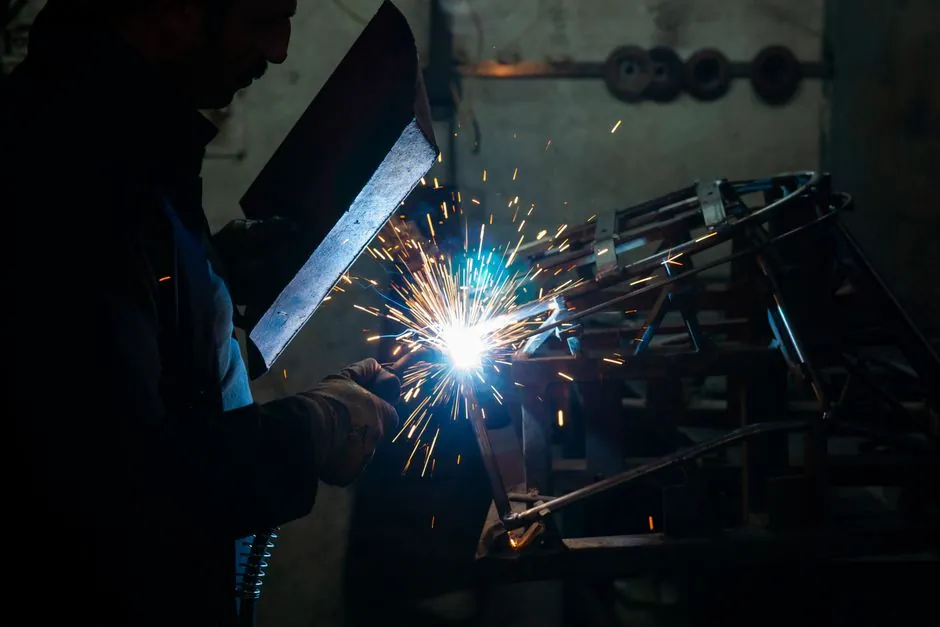
A plasma cutter does not always require a separate compressor, but a standalone unit can provide 1.5–2 times the cutter’s required airflow while improving air cleanliness and consumable life [S4].
Built-in compressors suit portable, intermittent work, while separate compressors support sustained cutting, greater material capacity and shop-wide pneumatic tasks [S1][S4][S5].
Separate compressor versus built-in air system
The plasma cutter determines the decision, not the compressor’s tank size alone. The connected compressor should deliver 1.5–2 times the cutter’s minimum airflow requirement to limit pressure drops [S4].
A standalone compressor gives the installer access to a larger receiver, serviceable air path and space for aftercooling and filtration. Built-in compressors are deliberately compact, and discussions of enclosed designs identify vibration, heat and size as practical engineering concerns [S1].
The comparison is straightforward. Built-in air improves portability and reduces the number of machines to transport, but limits sustained industrial capacity [S4]. A separate compressor increases floor-space requirements and adds hose and filter maintenance, yet allows the same air supply to serve pneumatic tools when cutting is not underway [S5].
Match the compressor to current and pressure
Plasma cutting depends on continuous airflow, so pressure alone is an inadequate selection criterion.
Use the cutter’s specified airflow as the baseline, then select a compressor rated at 1.5–2 times that demand [S4]. Tank capacity helps stabilize pressure between compressor cycles, but it does not replace compressor capacity. A large tank paired with an undersized pump can still allow pressure to fall during a long cut.
Standard oil-lubricated and oil-free compressors can serve as plasma-air sources once flow and air quality meet the cutter’s requirements [S4]. The receiver does not need to be dedicated to plasma cutting, but long hose runs, restrictive fittings and undersized regulators can reduce delivered pressure and flow.
Dry air protects electrodes and nozzles
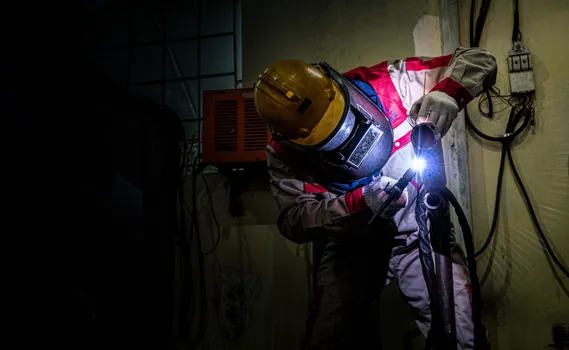
Moisture is a primary failure point for air-plasma equipment, and unfiltered damp air can rapidly degrade nozzles and electrodes [S4]. A suitable installation should remove compressed-water condensate and oil aerosols before the air reaches the torch, particularly when the compressor is oil-lubricated.
One practical air-path sequence is compressor, optional aftercooler, receiver, drying stage, water-separator filter, desiccant stage and a submicronic final filter before the plasma cutter [S3]. An automatic receiver drain helps remove accumulated condensate, while the aftercooler and separator pull out much of the water near the compressor [S3].
Filtering should be treated as part of the compressed-air system, not an optional accessory. An integrated compressor may already include some treatment, so the owner’s manual must be checked for filter type, replacement intervals and required final-filter specification. Adding an oversized external filter train can create additional pressure loss, so the complete system must be verified against the cutter’s specified inlet conditions.
Built-in compressors have identifiable constraints
Self-contained compressors can produce poor cuts and shortened consumable life when the machine cannot maintain the required flow or keep moisture below the torch’s tolerance [S4]. Enclosed compressor packaging also introduces vibration, heat and size problems because effective compressors are comparatively large and hot [S1].
Long-term users have specifically warned against internal compressors because of moisture concerns and severely reduced consumable life [S6]. Compressed air serves as the plasma-forming and torch-cooling agent, so continuous air purity is necessary to protect the torch head [S4].
Such a design can still cut effectively, but it should be assessed by rated output, material thickness and duty cycle rather than by comparison with a high-output standalone system.
Choose by duty cycle and shop use
A built-in compressor is defensible for mobile work, small jobs and intermittent sheet-metal cutting. Field guidance describes the Hypertherm PM30 air as a good, portable plasma cutter for small jobs, and one participant cited work up to 3/8 in [S5].
A separate compressor is the stronger choice for frequent production, thicker sections, longer cuts and any shop that already needs compressed air. It permits larger rated flow, more deliberate filtration and shared use of the receiver, while an integrated unit offers simpler transport and fewer external connections [S4][S5].
For buyers comparing the equipment categories in this market, the operating distinction between a compact portable plasma cutter and a full-size machine becomes clearer when the maximum cut thickness, required duty cycle and measured shop power supply are evaluated together.
Pre-purchase checks before the air system is fixed
Check the cutter’s required airflow, operating pressure and air-quality specification before purchasing a compressor. For sizing, use the compressor’s continuous CFM or L/min rating, not its tank volume or peak marketing figure, and maintain the 1.5–2 times airflow margin where practical [S4].
Confirm whether the compressor is oil-lubricated and what separator or dryer is included. Review the complete installation sequence from receiver to torch, including hose diameter, fittings, regulator, desiccant dryer and final filter [S3]. Test the assembled system under a full cutting load and verify stable pressure at the torch, not merely at the receiver.
A trackable purchasing signal is the measured SCFM or L/min at the required pressure after filtration. A second is the documented replacement interval for the filter and desiccant stages. Those two measurements determine whether the proposed air supply can sustain the cutter without pressure loss or moisture-related consumable failure.