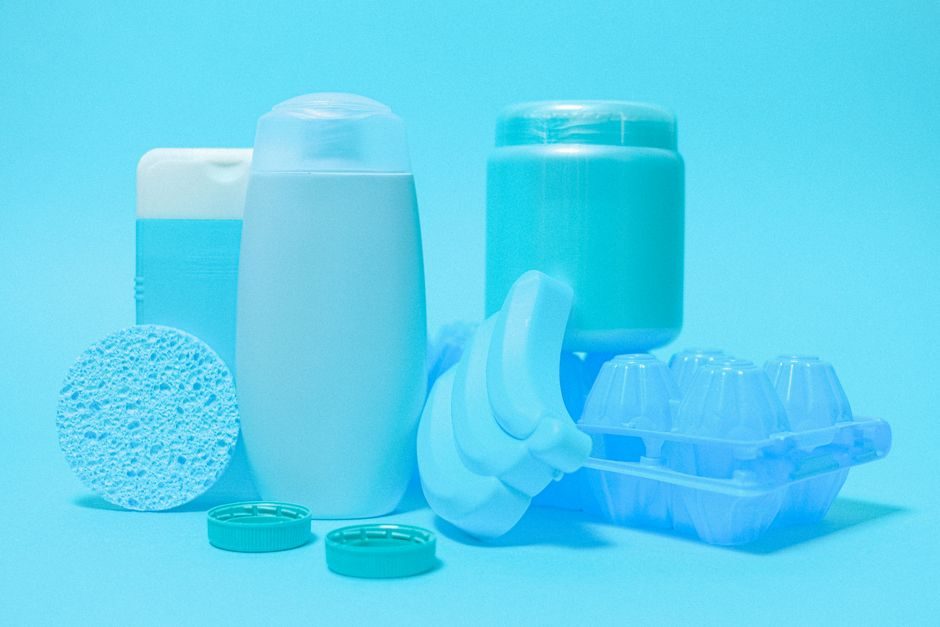
Plastic containers are moulded packaging vessels made from polymer resins such as polyethylene (PE), polypropylene (PP), polyethylene terephthalate (PET), polyvinyl chloride (PVC), polystyrene (PS) and styrene-butadiene copolymer (K-RESIN), with off-the-shelf sizes running from 30 mL lab jars to 30 L pails [S1].
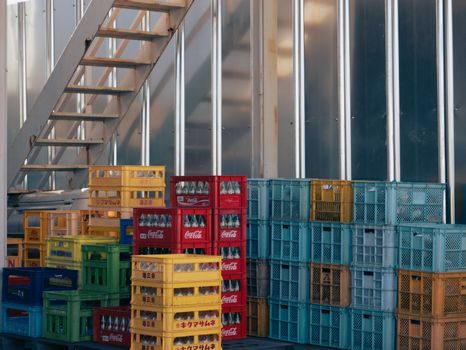
The category has displaced metal, glass, ceramic and wood in most packaging duties thanks to a low density (roughly 0.9–1.4 g/cm³ by resin), easy mould-tool changeover and high-volume repeatability [S6]. A 2026 industrial-supply snapshot of US bin-and-tote stock shows the structural side of the market now splits into stack-and-hang bins, giant stack containers, 24"–42" pallet-rack units, dividable grid boxes, collapsible bulk boxes, recycled bins and ESD-conductive bins — each engineered for a specific warehouse duty [S3].
Resin families, temperature ceilings and chemical behaviour
PP is the lightest of the commodity resins, retains physical strength under load, resists deformation and is routinely specified for food-contact containers because of its heat tolerance, though it is attacked by oxidising acids and is not a fit for concentrated nitric or chromic acid service [S1].
PE is the highest-volume general-purpose resin, white in colour, handles continuous service up to 70–90 °C, shows strong resistance to strong acids and alkalis, and adds good cold and water resistance — a profile that explains its dominance in jerry-cans, drums and chemical-shipment bottles [S1]. K-RESIN (SBC) is the clear-resin benchmark, with transparency close to glass, and is specified in medical settings where visual inspection of contents is required [S1].
For deeper material behaviour, see the engineering-plastic selection map — it complements the packaging-focused resin list above with the higher-temperature, glass-fibre-reinforced grades used in reusable industrial dunnage. PET rounds out the food/beverage duty with glass-like clarity and a moisture/CO₂ barrier, while PVC and PS still appear in cosmetic and disposable-food service where clarity and stiffness outweigh chemical-duty needs.
Form factors and the duty-cycle decision
Form factor follows duty. Stack-and-hang bins, 24"/30"/36" HULK stack bins, 42" pallet-rack containers, dividable grid boxes, attached-lid distribution containers and collapsible bulk boxes are each designed around a different pick-face or warehouse-flow pattern [S3].
Volumes concentrate in three bands: 30 mL to ~2 L for jars and bottles, 2 L to ~20 L for jerry-cans, pails and attached-lid totes, and 20–30 L for stackable industrial bins. A 2026 Alibaba/Goldsupplier listing for attached-lid totes (model TSN6435, origin Jiangsu, China) shows a price band of US$7.17–7.65 per piece at MOQ 200 — a representative procurement reference for reusable distribution totes [S5].
Wall design matters as much as resin: thin-wall PP and PE are fine for single-trip food and consumer use, while thicker-walled HDPE or PP bins, often with reinforced rib bases, are specified for repeated warehouse cycles in the 24"–42" size class [S3]. For high-temperature or chemical wash-down lines, plastic pallet selection follows the same resin-temperature logic and is a useful cross-check when standardising warehouse plastics.
Criteria comparison across the main resin types
Side-by-side, the four most-specified packaging resins line up against the four decision criteria that drive most 2026 spec sheets: heat resistance, chemical resistance, transparency and food-contact suitability.
PE: heat ceiling 70–90 °C, strong acid/alkali resistance, opaque white, food-safe grades available — best general-purpose pick [S1]. PP: higher heat tolerance than PE, susceptible to oxidising acids, semi-clear, food-contact approved — best for hot-fill or microwaveable containers [S1]. K-RESIN (SBC): low heat tolerance, limited chemical resistance, glass-like clarity, food- and medical-grade grades — best when transparency is the primary requirement [S1]. PET: moderate heat tolerance, good moisture/CO₂ barrier, glass-like clarity, food-contact approved — best for beverage and rigid food packaging.
For a procurement workflow that links the resin pick back to wall thickness, closure type and pallet pattern, the How to Choose a Plastic Container: Polymer, Duty, and Sourcing Map walkthrough is a useful companion.
Application fit: food, medical, ESD and bulk handling
Food and beverage remains the highest-volume duty, served by PP hot-fill tubs, PET bottles, K-RESIN clamshells and PE milk jugs. A 2026 retail-platform listing of consumer storage sets shows BPA-free 8-piece PP sets rated microwave- and freezer-safe with locking lids, sold at sub-US$1 promotional pricing — evidence that thin-wall PP remains the default consumer-grade food-container resin [S4].
Medical and laboratory settings use K-RESIN and clarified PP where visual inspection is required, plus PE for aqueous samples. Industrial warehousing uses HDPE/PP stack-and-hang bins, dividable grid containers, 24"–42" pallet-rack units and collapsible bulk boxes; the US 2026 catalogue still flags dedicated ESD-conductive bins for electronics lines, separate from the recycled-PP bins that target sustainability audits [S3].
For plants shipping liquids or reactive chemicals, tank container selection (stainless vs plastic-lined, single-trip vs ISO) is the duty next-door to jerry-can and drum selection, and the same chemical-compatibility matrix applies. On the fluid-handling side, plastic pipe and steel-plastic composite pipe extend the same PE/PP/PVC logic into process piping, so standardising resin families across containers and piping simplifies chemical-compatibility documentation.
Limitations, failure modes and what to watch in 2026
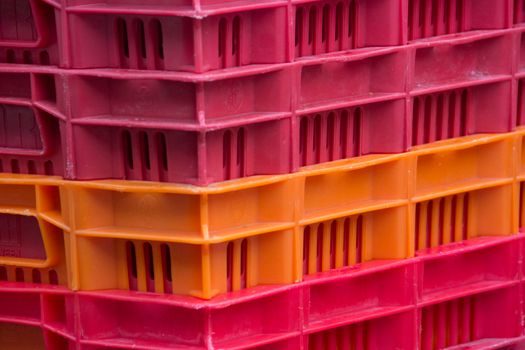
Every plastic container has a chemical Achilles heel: PP fails in oxidising acids, PE softens above ~90 °C, PS and PVC are brittle at low temperature, and K-RESIN has limited chemical and heat range. Container life also collapses fast if wall design is mismatched to duty — thin-wall PP in a 42" pallet-rack slot will rack-distort within cycles, while an HDPE bulk box spec'd for indoor-only use will UV-degrade outdoors inside a year. [S1]
Verification points for any incoming batch: confirm food-grade resin (FDA, EU 10/2011 or equivalent) where required, ask for stress-crack resistance data on HDPE jerry-cans, and check mould temperature uniformity on PP hot-fill containers because cold moulds cause sink marks and warpage. For 2026 sourcing, track two signals: (1) the spread between virgin-polymer and recycled-PP bin pricing as recycled content climbs, and (2) any tightening of food-contact migration limits in the EU and US that would force a resin switch on existing lines. [S1][S3][S5]