For high-throughput warehouses handling 2026 SKU volumes, 4-way entry plastic pallets are increasingly specified because forklift approach from all four sides removes the repositioning step that bottlenecks narrow-aisle and cross-dock lanes [S1][S2].
For low-handling, fixed-route lanes such as export container loading, conveyor-fed production lines, or static ground storage, 2-way pallets remain the pragmatic choice, with the typical 3-runner 2-way design carrying a price advantage of roughly 10-20% over equivalent 4-way plastic platforms [S1][S4].
Entry Geometry and What It Actually Changes
A 2-way plastic pallet uses solid stringers or runners running the full length of the pallet, which blocks forklift fork entry from the two short ends; a 4-way plastic pallet uses notched stringers, perimeter-base designs, or block supports that cut fork openings into all four sides [S3][S4]. On a standard 1200 x 1000 mm or 1219 x 1016 mm footprint, the practical effect is that the 2-way design requires the operator to align the truck to the pallet's long axis before every lift, while the 4-way design lets the driver commit from any approach angle [S2][S7]. The exception every specifier should know is "partial 4-way," where forklift entry is full but pallet-jack access stays limited to two sides, so a "4-way" label without a drawing is incomplete information [S2][S4].
Selection Criteria Mapped to Operation Type
Decision-makers should lock in entry type against four criteria: route variability, aisle width, rack interface, and handling equipment mix [S1][S2][S6]. Route variability is binary, fixed-direction lanes favor 2-way while cross-dock, multi-site pooling, and e-commerce fulfillment favor 4-way [S1][S4]. Aisle width under roughly 2.8 m turns every 2-way lift into a multi-point turn, while 4-way designs cut the approach from any angle [S3][S7]. For rack-loaded operations, the pallet must interface with the pallet rack beam face: notched 4-way stringers and block pallets both pass the rack test on most selective and drive-in systems, whereas some 2-way runner designs need an extra centering step on cross-dock racking [S2][S5]. Handling equipment mix matters because 4-way forklift entry does not always mean 4-way pallet-jack entry, which becomes a real constraint for retail back rooms using hand jacks rather than ride-on trucks [S2].
Head-to-Head: 2-Way vs 4-Way on Decision Criteria

Compared side by side against the criteria that actually drive throughput, the two entry types sit at opposite ends of the trade-off curve. On upfront unit cost, 2-way plastic pallets are generally priced lower than an equivalently rated 4-way platform, since 2-way designs use solid stringers without notches [S3][S4]. On dynamic handling speed, 4-way wins because the operator never has to re-orient the load: 2-way designs in narrow-aisle operations have been observed to reduce total ground stacks by 10-15% versus 4-way equivalents, since fixed entry direction caps stacking flexibility [S3]. On static load rating, 2-way continuous-runner designs spread weight along the full length and often rate higher than notched-stringer 4-way pallets, but 4-way block pallets match or beat them on concentrated racking loads [S3][S4]. On repairability, 2-way stringer pallets let a damaged section be swapped without scrapping the whole platform, while 4-way block pallets tend to be replaced as a unit [S3].
Where 2-Way Plastic Pallets Are the Right Fit
Two-way plastic pallets are specified for operations where every movement follows a fixed direction and extra entry points add no value [S2]. The textbook lanes are: ground-level static storage with extended dwell time, conveyor-based production lines with one-way flow, export container loading with linear trailer access, and dedicated shuttle or flow-rack systems that handle the pallet from one face only [S1][S6]. In these lanes the 3-runner, 2-way entry design remains widely used because the broad floor contact area keeps load distribution stable and the simpler geometry keeps the unit price competitive for high-volume, single-trip export pools [S1]. The procurement mistake to avoid is buying 2-way for a dynamic, multi-direction operation, where every shift then pays the repositioning tax [S1][S3].
Where 4-Way Plastic Pallets Are the Right Fit
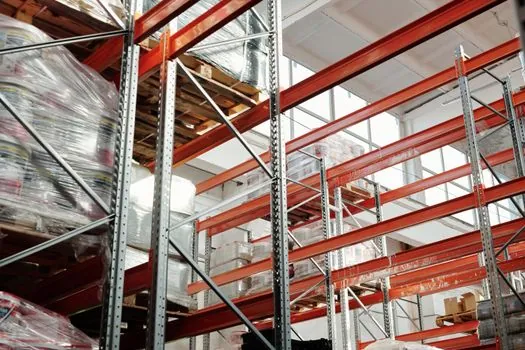
Four-way plastic pallets are specified for high-throughput, multi-site, or space-constrained operations where the operator cannot afford a 90-degree repositioning cycle [S2][S4]. Narrow-aisle warehouses under approximately 2.8 m, cross-dock facilities, tight trailer staging lanes, and any closed-loop pallet pool serving more than one site are the canonical use cases [S2][S4]. Plastic 4-way designs in particular add value because they retain the access advantage while cutting pallet weight, reducing splinters and nails that contaminate food and pharma lines, and surviving more cycles than wood [S1][S4]. For facilities using a mix of forklifts and electric pallet jacks, the electric pallet truck entry path must be verified against the pallet's underside clearance, since partial 4-way designs can block the smaller truck even when the forklift passes [S2].
Racking, Stacking, and Pallet-Jack Footguns
Three failure modes show up in real installations and each one ties back to entry type. First, racking mismatch: not every plastic pallet is rackable, and a 4-way rackable plastic pallet must be paired with a confirmed rack load rating rather than assumed, since block designs and perimeter-base designs rate very differently on selective rack beams [S2][S5]. Second, stacking density loss: fixed-direction 2-way entry can cut total stacks in a ground-stack block by 10-15% versus a 4-way equivalent, because the operator cannot rotate to fit the next bay [S3]. Third, pallet-jack blind spots: a 4-way forklift pallet is not automatically a 4-way pallet-jack pallet, so a label-only purchase can stall retail back-room receiving [S2][S4]. For buyers pairing these pallets with lift equipment, the pallet stacker entry path needs the same underside clearance check.
Cost Model: Upfront Price vs 12-Month Efficiency Gap
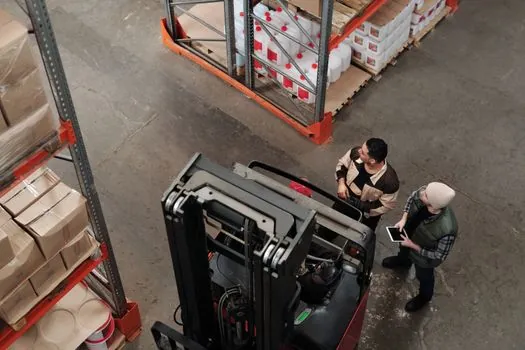
The procurement math is not the unit price, it is the 12-month efficiency gap. Two-way plastic pallets are cheaper on the purchase order because fewer mold cuts and fewer reinforcement ribs are required; the savings show up immediately on a high-volume PO [S1][S3]. The counterweight is that 2-way designs in dynamic lanes cost shift time: every extra forklift reposition, every blocked cross-dock slot, and every trailer cube left empty because the pallet could not be rotated to fill a corner, compounds across thousands of cycles [S1][S3]. Most modern operations that factor total cost of ownership rather than unit price tip toward 4-way once handling frequency exceeds a few cycles per pallet per week, while 2-way still wins on single-trip export lanes and static storage [S1][S4]. For buyers mapping this against a fleet of plastic pallet SKUs, the realistic move is to tier by lane, not standardize one entry type across the whole DC.
Sourcing, Standards, and What to Ask the Vendor
There is no single ISO or ASTM rule that mandates 2-way versus 4-way entry for plastic pallets, so the spec lives in the drawing and the data sheet, not in a standard number [S2][S7]. Buyers should request four things on every quote: a top-view drawing showing the actual fork openings, an underside clearance dimension for the pallet jack or electric pallet truck model in use, a confirmed rack load rating on the actual rack beam profile, and a written statement of whether the design is full 4-way or partial 4-way [S2][S4][S7]. Vendor claims of "4-way entry" without a drawing have been the single most common source of downstream pallet-jack failures in pooled operations [S2]. For sites standardizing across multiple facilities, locking the entry type, the base style, and the rack rating as a single spec line reduces pool-pool cross-site variability and the rework that comes with it [S4][S7]. For an overview of how these pallets compare with other measurement and handling test gear used to qualify them, see the measurement test reference.
Next tracking nodes: watch for vendor datasheets moving from "4-way" labels to explicit full-versus-partial 4-way declarations as pooled plastic pallet programs mature through 2026, and watch for cross-dock and narrow-aisle retrofit projects to keep pulling the spec mix toward 4-way block and perimeter-base plastic designs.
Background reading: EPDM molecular structure and crosslinking mechanism: a process-engineering reference.