
On a mechanical dock leveler, main-spring tension is controlled by a single adjustment nut at the spring paddle, and turning that nut clockwise is what raises stored energy to lift the deck [S1][S3]. A four-spring assembly can lose its lift capacity if even one coil cracks, so the symptom to look for is slow or incomplete rise on chain pull [S2].
Maintenance intervals are typically quarterly for spring check, monthly for hold-down pawl and ratchet inspection, and immediate for any visible coil fracture [S5]. Lip-latch and lip-actuator spring tension are set at the factory on units like the DA Series and should not be field-recalibrated without the OEM service manual [S7].
What the Main Spring Actually Does in a Mechanical Leveler
The main spring assembly stores the energy that raises the deck when the hold-down releases, and a snubbing spring separately cushions the lip as it extends onto the trailer bed [S1]. Mechanical safety legs limit free-fall to no more than 4 inches below dock level if a truck departs unexpectedly, which is why the hold-down and spring work as a paired system, not independent parts [S1].
There are two spring families in this mechanism: extension springs that stretch as the deck lowers and contract to lift it, and compression springs that compress on descent and push back to elevate the platform [S1]. For a deeper look at how stored energy and counterweight mechanics translate to other lifting equipment, see this crane selection breakdown for heavy lift foundation work, which covers a similar counterbalance design problem at a larger scale.
Tools, Gauge, and Pre-Work Blocking
The minimum kit for a tension check is a calibrated spring tension gauge, two large adjustable wrenches, a torque wrench for the adjustment nut, the manufacturer's maintenance strut, and a jack rated for the deck weight (commonly 20,000 to 30,000 lb. capacity on pit levelers) [S3]. PPE is a hard hat, cut-resistant gloves, safety glasses, and steel-toe boots because a stored main spring under full compression can release several hundred foot-pounds if the paddle slips [S3].
Block the deck with the OEM maintenance strut or a heavy hardwood block before loosening the adjustment nut, mark the position out of service with cones, and lock out the overhead door so no forklift, trailer, or pedestrian can load the leveler while it is in maintenance state [S2]. A tension gauge reading is meaningless if the deck shifts mid-measurement, so the strut is not optional.
Step-by-Step Tension Adjustment
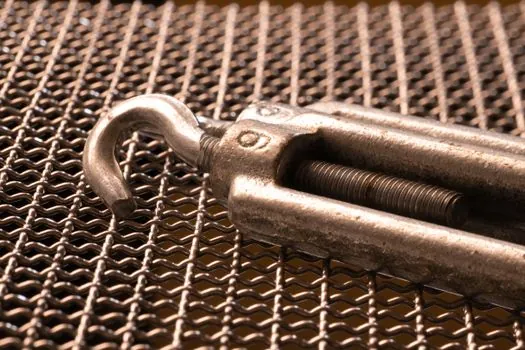
Relieve existing tension at the paddle by loosening the adjustment nut, then attach the spring tension gauge to the active coil and record the baseline reading in pounds-force [S2][S3]. Turn the nut clockwise in quarter-turn increments, re-tensioning and re-reading the gauge after each increment until the value matches the OEM chart for the deck width and rated capacity [S1][S3].
After adjustment, walk-test the leveler: pull the activation chain with no load and confirm the deck rises fully, the lip extends and latches, and the deck returns to the stored position under hold-down control [S3]. A correctly tensioned main spring will hold the deck in the raised position unaided for at least 10 seconds when the chain is released, which is the simple field acceptance check used by most service technicians [S3].
When Adjustment Is Not the Right Fix
Visible coil cracking, permanent set (a gap between coils when the spring is unloaded), or a deck that will not rise with three full turns of added tension all point to spring replacement, not further adjustment [S2]. A common rule on a four-spring unit is that one cracked spring degrades lift enough that the leveler will not rise to working height, so the failed coil must be replaced before the others are re-tensioned [S2].
OEM service guidance for several major brands is explicit: do not attempt to adjust or replace the springs yourself, because stored energy in a main spring assembly is high enough to cause serious injury if the paddle or adjustment nut fails under load [S4]. Call a trained technician for any spring replacement on units still under warranty, and document the gauge reading and number of adjustment turns in the maintenance log so the next technician can see the trend [S4][S5].
Hold-Down, Lip Springs, and the Parts That Get Blamed for Spring Problems
Many "spring tension" complaints are actually hold-down failures: worn paw springs, stretched pawl springs, or a damaged ratchet will let the deck pop up even when the main spring is correctly set [S4]. The temporary field fix documented for a leveler that will not stay down is to place a pallet weighing at least 300 lb. on the deck and close the overhead door against it, which holds the deck in the stored position until a repair visit is scheduled [S4].
Lip-latch and lip-actuator springs are a separate circuit on most levelers, factory-set, and adjusted only with the OEM service manual in hand; field-tweaking them is a common cause of the lip failing to extend or to stay extended [S7]. Insufficient spring tension, a failing lip assist assembly, or faulty hydraulic or pneumatic components will all produce the same "lip won't deploy" symptom, so the diagnostic step before any spring turn is to confirm which subsystem is actually at fault [S4].
Decision Map: Adjust, Repair, or Replace
The decision rule is straightforward: if the gauge reads low and the spring shows no cracks or permanent set, adjust; if one or more coils are cracked or the spring has taken a set, replace the affected spring and re-tension the assembly; if more than two springs in a four-spring bank are degraded, replace the full set and re-tension from the factory baseline [S2][S4]. Operators familiar with elastomer selection on rotating equipment will recognize the same replace-the-set logic, as covered in this 92A vs 98A shore coupling spider comparison: partial replacement on a wear system almost always returns as a repeat failure.
Track the number of turns and the tension reading at every adjustment; if the same spring needs more than two full turns of additional tension within a 12-month window, the spring is yielding and should be scheduled for replacement at the next planned downtime [S2][S5]. The maintenance log entry should record date, gauge reading, turns applied, technician name, and any coil condition notes, which is also the documentation OSHA inspectors expect under 29 CFR 1910.178(m) for powered industrial truck areas served by the dock [S5].
For component-level specifications, see dock leveler, spring washer, and pressure transmitter.