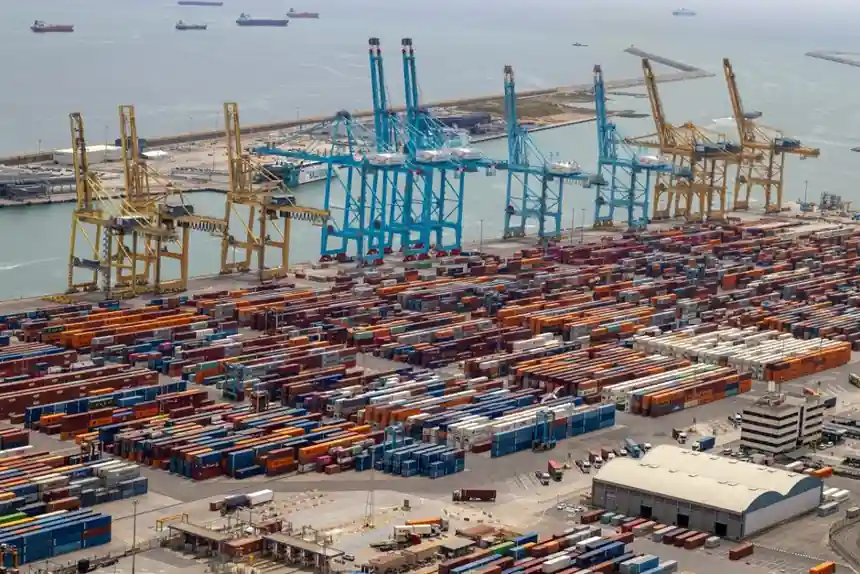
Plastic pallets weigh up to 30% less than wooden equivalents, a figure cited by the European Pallet Association and used by freight teams to cut tare on every container [S2]. For port operations moving export loads through ISPM-15-regulated borders, that mass reduction stacks directly against air-freight and truck payload capacity, and it sidesteps the heat-treatment mark that wood must carry on both faces [S2][S5].
Selection is not a single part number. It is a layered decision across material (HDPE vs PP), construction (injection-molded vs thermoformed), footprint (Euro 800x600, ISO 1200x1000, US 48x40 GMA), and load class (static, dynamic, racking). A wrong pick at the receiving terminal costs more in rejected containers and re-palletizing than the pallet itself.
Why Plastic Beats Wood at the Port Gate
ISPM-15 governs solid wood packaging thicker than 6 mm and requires heat treatment to a wood core temperature of at least 56 degrees Celsius for a minimum of 30 minutes, plus a visible compliance stamp [S5]. A missing, faded, or HT-incompatible repaired board is grounds for refusal at the importing port, and refusal means offload, re-palletization, or destruction at the exporter's expense [S2][S5].
Plastic is a non-organic material that cannot host wood-borne pests, so the same standard does not require treatment, fumigation, or stamps for plastic shipping platforms [S2][S5]. Beyond customs, plastic resists moisture absorption, mold growth, and splinter damage that compromise high-precision cargo such as medical devices, electronics, and food ingredients during long-haul marine transit [S2][S4]. Wood absorbs liquid, sheds splinters, and corrodes around nail fasteners, shortening service life in port rotation [S4].
Material Selection: HDPE vs PP for Port Conditions
High-Density Polyethylene (HDPE) and Polypropylene (PP) are the two polymers that dominate plastic pallet production for logistics and cold-chain applications, with HDPE typically chosen for impact resistance at low temperature and PP for higher stiffness and elevated operating temperature [S1]. HDPE grades generally keep useful impact performance down to roughly minus 20 degrees Celsius, while PP becomes brittle well above that threshold and is instead favored where rigidity and a higher heat-deflection temperature are required [S1].
For a port handler running reefer containers, HDPE is the default for cold-chain decks; for dry freight moving through tropical or sun-exposed yards, PP's higher softening point reduces sag on the top deck of stack-loaded containers. Material choice is also the leading driver of recyclability: both HDPE and PP re-grind cleanly in standard recycling streams, and many pooler fleets use 100% recycled-content pallets for non-food closed loops [S3][S6].
Construction Type and Load Class
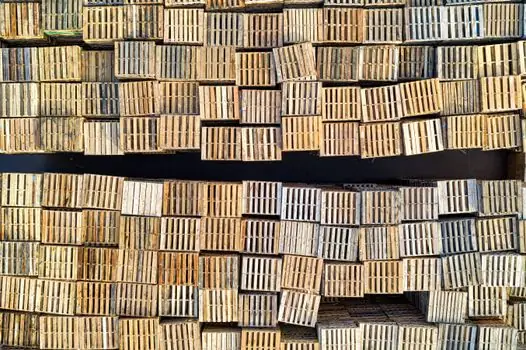
Plastic pallets fall into three construction families that map directly to port duty cycles: nestable (legs drop into the next pallet body for empty-return density), stackable (rigid columns for stable loaded stacks), and rackable (reinforced top deck and stringers for selective and push-back racking) [S4]. Molding process matters: injection-molded pallets give tighter dimensional tolerance and higher repeat load ratings, while thermoformed and structural-foam parts are lighter and cheaper but trade peak dynamic load.
Typical industrial ratings to verify on the data sheet, not in marketing copy: static load 4,000-5,000 kg, dynamic load 1,000-1,500 kg on standard 4-way fork entry, and racking load 800-1,200 kg for rackable designs [S4][S7]. Anything moving through a port block-stacking terminal should also confirm edge-rack testing per the manufacturer's published test method; a pallet that survives dynamic 1,000 kg but fails at 600 kg in a 2-month racking trial is a write-off. For guidance on how the racking side of this decision connects to warehouse storage, the pallet rack selection map covers beam, drive-in, and push-back options that interact with pallet deck stiffness.
Footprint, Automation, and Container Fit
Port terminals increasingly demand dimensional consistency for automated stacker cranes, container unloader clamps, and stretch-wrapping cells. Plastic's mold-controlled tolerance is one of the cited reasons retail and e-commerce supply chains are moving away from wood: it feeds repeatable performance in racked warehouse storage, automated cells, and distribution lanes without per-unit variance [S4].
Standard footprints to align with: ISO 6780 dimensions, including the 1200x1000 mm and 1200x800 mm modules common in European and Asian ports, and the US 48x40 inch (1219x1016 mm) GMA footprint dominant in North American retail. For marine container optimization, the 1200x800 and 1200x1000 footprints both fit two-wide across a standard 20 ft container interior, with the 800 mm depth giving a tighter cube utilization on certain pallet-load geometries [S2]. The handling equipment side of this choice, including manual pallet jack fork-spread, electric pallet truck turn radius, and pallet stacker mast clearance, must be checked against the chosen footprint before procurement, not after.
Compliance, Tracking, and Sustainability Economics
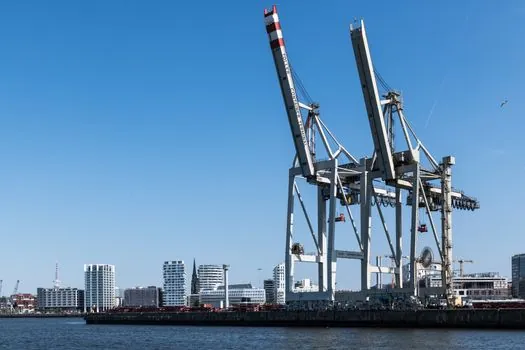
Plastic pallets are "inherently compliant" with ISPM-15 because the regulation targets organic wood packaging, not synthetic platforms, so no heat treatment, methyl bromide fumigation, or stamp verification is required at the port of entry [S2][S5]. This is the single biggest documentary simplification for exporters moving mixed-product containers, and it directly removes the inspection hold risk that costs days and demurrage fees per incident.
Total cost of ownership is where the case closes. Pooled plastic pallet programs, which lease rather than sell, shift capital expense to operating expense and let the supplier handle end-of-life recycling; rental is typically quoted against a usage duration of 1-3 years per trip, with quality-control inspections at every rotation [S6]. Track-and-trace via RFID or GPS is built into most new pooler fleets, supporting loss-rate reduction in large port networks [S4]. For packaging engineers also weighing the broader unit-load design, the logistics packaging reference covers strapping, stretch-film, and slip-sheet options that pair with the chosen pallet deck.
Decision Map: New, Used, or Rental for Port Operations
Three sourcing paths compete on cost, duration, and quality control: brand-new pallets (capex, longest life, full OEM warranty), used / refurbished pallets (lower per-unit cost, variable cosmetic condition, mixed lot performance), and rental pooler pallets (opex, fixed trip cost, audited quality at every cycle) [S6]. A high-volume port exporter with stable SKUs typically runs a hybrid: rental for the long-haul export lane to remove ISPM-15 paperwork and per-trip capex, and owned stock for internal yard moves where trip cost dominates.
For the procurement engineer writing the spec sheet: confirm ISPM-15 exemption in writing from the supplier, lock the footprint and tolerance to ISO 6780 or a named GMA standard, require a published static/dynamic/racking load test report (not a generic brochure), specify HDPE for cold-chain and PP for high-temperature or racking duty, and decide between pooler rental and purchase based on trip volume and capital posture. To put the wider handling context around the platform choice, the plastic pallet catalog entry and the pallet stacker reference cover the equipment interface that determines whether a technically correct pallet actually runs cleanly in the terminal.
Watch two signals over the next two quarters: any port authority update to ISPM-15 wording that re-classes composite or wood-plastic hybrid pallets, and the next revision of ISO 6780 flat-deck tolerance clauses. Both will reshape procurement specs for export lanes and are the kind of trackable change worth monitoring on national plant-protection feeds rather than on vendor blogs.
See also our earlier report, Shaft Coupling Selection for Cement Plants: A Spec-First Decision Map.