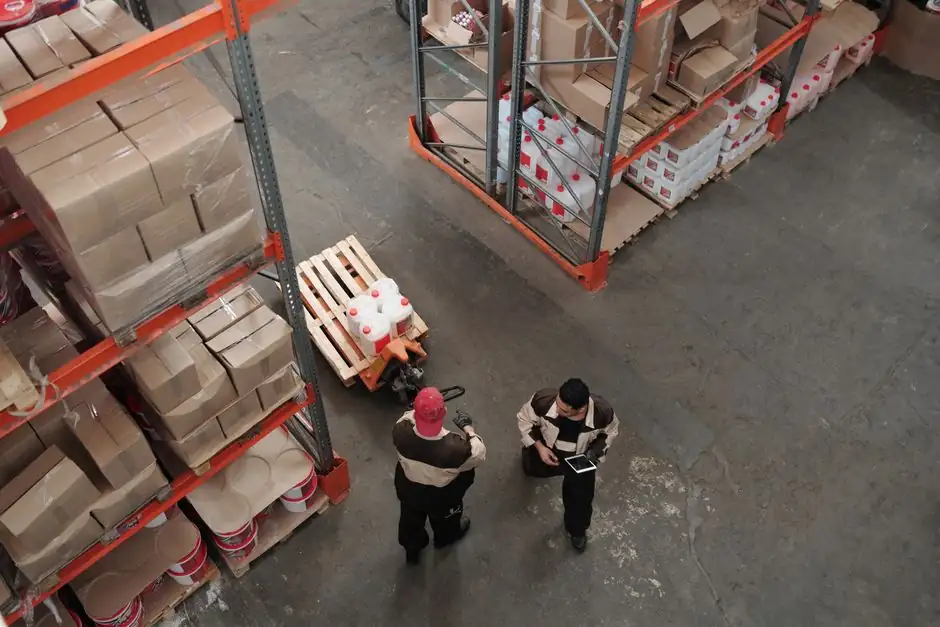
Plastic pallets now anchor high-velocity e-commerce fulfillment because they eliminate wood splinters, nail contamination, and ISPM-15 heat-treatment paperwork, while delivering service lives of up to 10 years versus roughly one year for typical Grade B wooden shipping pallets [S4]. They weigh about 50% less than comparable wooden platforms, which directly cuts empty-trailer mass and operator fatigue during pick-pack stages [S4].
Selection, however, is not a single part number. Footprint, load rating, deck style, molding process, and material grade must each line up with the SKU mix, the conveyor/AMR (Autonomous Mobile Robot) profile, and the outbound lane (domestic vs EU export). The plastic pallet decision tree below walks the spec gates a fulfillment engineer should clear before issuing a PO.
Footprint and Regional Standard Sizing
Two footprints dominate e-commerce distribution: the North American GMA (Grocery Manufacturers Association) 48 in x 40 in (1219 x 1016 mm) and the European EUR1 1200 mm x 800 mm or 1200 mm x 1000 mm [S1][S2]. GMA pallets remain the default for domestic U.S. shipping and slot cleanly into standard pallet rack beams and trailer cube patterns, while 1200 x 800 mm platforms are the regulatory baseline for cross-border EU flows under ISPM-15 without further treatment [S1].
For direct-to-store grocery, 30 in x 42 in (762 x 1067 mm) platforms are common because they fit narrower retail back-door dimensions and reduce empty pallet cube on return trips [S2]. Choosing the wrong footprint cascades into conveyor width, stretch-wrapper ring size, and trailer-loading software, so footprint must be locked before load and material are discussed.
Load Capacity: Static, Dynamic, and Racking Ratings
Load capacity is split into three distinct numbers that must be read from the same datasheet. Static load is the maximum weight while the pallet sits on the floor or in a stack; dynamic load is the maximum evenly distributed weight while the pallet is being lifted by a forklift or manual pallet jack; and racking load is the maximum weight the pallet can hold while supported only on its top deck between rack beams [S2].
A common spec failure on automated lines is a pallet with adequate static load (often 4,000-6,000 kg / 8,800-13,200 lb for HDPE racks) but insufficient racking rating, which causes beam sag or fork-entry cracking once a PIT (Powered Industrial Truck) drops the load onto a pallet rack [S2]. Spec the racking number against the heaviest SKU plus packaging, with a safety margin, and confirm with the rack OEM whether the system is supported (selective) or non-supported (push-back, drive-in), because racking capacity changes by beam type [S2].
Material and Molding Process: HDPE, PP, Injection vs Structural Foam
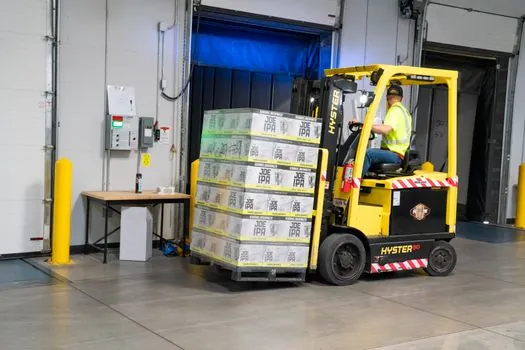
HDPE (High-Density Polyethylene) and PP (Polypropylene) are the two workhorse resins in injection-molded and thermoformed pallets, with food-grade and UV-stabilized variants specified for cold-chain or outdoor staging [S5]. Injection-molded HDPE produces a smooth, non-porous surface that resists pest infestation and bacterial growth, which is why these pallets dominate pharmaceutical and food-grade cleanrooms [S2].
Structural-foam pallets, by contrast, trap air pockets during molding, which makes the part lighter but also more brittle and susceptible to impact failure on high-cycle conveyor or AMR routes [S2]. For e-commerce lines that run AGVs (Automated Guided Vehicles) and pallet stacker cells, injection-molded HDPE typically outperforms structural foam on cycle life, even though it costs more per unit.
Deck Style, Entry, and Stacking Behavior
Solid-deck pallets give a continuous top surface for small-parcel e-commerce boxes, preventing item fall-through and easing washdown; open-deck pallets cut weight and allow drainage, which suits wet or cold-storage cells [S5]. Four-way fork entry improves flexibility for forklifts and pallet jacks, while two-way entry can be cheaper but forces a fixed fork approach in the rack.
Stacking behavior is a separate spec line. Stackable pallets carry finished cartons and packaged goods in fixed-height stacks during inspection and outbound staging; nestable pallets drop their legs into the pallet below to cut empty return cube by up to roughly 4:1 versus rackable pallets [S7]. Stackable designs are not interchangeable with nestable designs, and substituting one for the other is a common cause of warehouse rack collapse and stretch-wrapper jams. For high-rise pallet rack cells, only rackable pallets should be specified; non-rackable models will fail on unsupported spans [S5].
Export Compliance, Fire Code, and Cold-Chain Add-Ons
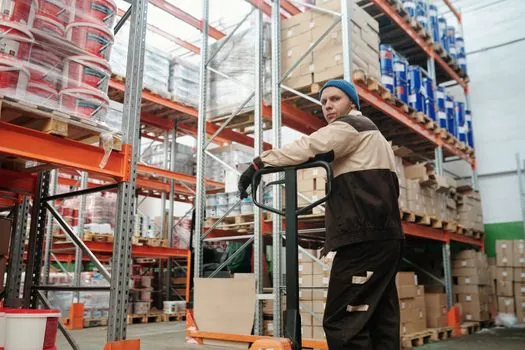
For any shipment crossing an ISPM-15 border (most non-EU lanes included), plastic pallets sidestep the heat-treatment or fumigation requirement that Grade B wood carries, removing a recurring documentation and rejection risk at the receiving DC [S1]. Within the EU, the same plastic pallet must still match the EPAL/EUR1 dimensional spec to ride standard logistics networks without surcharges.
Fire and chemical resistance are sometimes overlooked until audit time. HDPE and PP both burn, so storage height, sprinkler coverage, and commodity classification under NFPA 13 (or the local fire code) should be reviewed when switching from wood to plastic, because plastic commodities can reclassify the storage array [S5]. For cold-chain, pair the pallet spec with the engineering plastic cold-impact rating; standard HDPE becomes brittle near -20 degC unless a low-temperature grade is specified.
Total Cost of Ownership: Up-Front vs Cycle Cost
Plastic pallets carry a higher unit price than Grade B wood, but the lifecycle math usually flips over 3-5 years because plastic avoids fastener corrosion, splinters, repeated fumigation, and most product damage claims [S3]. A typical replacement cycle for a wooden shipping pallet can be under one year in pool rotation, while an injection-molded HDPE pallet is routinely rated for 8-10 years in the same service [S4].
Hidden costs to model in the TCO (Total Cost of Ownership) sheet include product damage from broken boards, downtime on conveyors when a cracked wood splinter trips a sensor, worker comp from nail punctures, and freight premium on outbound air shipments where a 50% lighter empty pallet reduces chargeable dimensional weight [S3][S4]. For a related downstream decision, see the stretch-film spec map for pallet loads at Stretch Film Selection for Food and Beverage: A Spec Map for Pallet Loads.
Inspection, Tracking, and Pooling Readiness
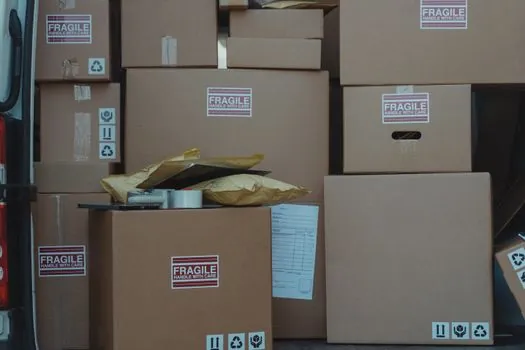
Plastic pallets should enter a documented inspection cycle: visual checks for cracks, warps, and damaged fork entries, with compromised units pulled before they reach a rack beam or conveyor [S5]. RFID (Radio Frequency Identification) or barcode tagging at receipt is now standard in pooled programs because it lets the operator track cycle count, location, and cleaning interval, and it supports closed-loop retailer pools where pallets must be returned to the owner [S3][S5].
Repair versus replace is a fork in the workflow. Some injection-molded HDPE pallets can be re-welded or have feet replaced, but most operators replace at end-of-life because the labor cost of repair exceeds the part cost on standard footprints [S5]. Plan replacement budget on expected cycle count, not calendar age, and document the cleaning chemical compatibility, because some industrial detergents degrade PP and HDPE faster than hot water and neutral soap.
Next nodes to track on the 2026 horizon: any update to ISPM-15 language that re-classifies plastic pallet recyclate streams, EPAL rulings on racking-rated plastic entrants in the European pool, and AMR vendor certifications (Locus, Geek+, AutoStore) listing specific plastic pallet part numbers for Greenfield fulfillment builds. For facilities layering stretch film over these pallets, the Stretch Film Selection for Food and Beverage: A Spec Map for Pallet Loads piece pairs directly with the load and deck choices above.