
Food and beverage palletizers most commonly specify LLDPE-based stretch film in thicknesses from roughly 12 to 30 micrometers, applied cold by hand or machine without a heat tunnel [S2].
For fresh, frozen, or warm-load applications, vented die-cut films such as Air-Flow reduce condensation and can cut blast-chill cycle time from two hours to one hour in dairy operations [S3]. Beverage and water-bottle pallets rely on strong machine-grade films to prevent shifting under high stack weights, while frozen-food and bakery lines prioritize tear and puncture resistance at low temperatures [S4]. Across the segment, the same PE chemistry is used in conventional and recycled-content grades, letting buyers trade off cost against sustainability targets [S10].
Three Pallet-Packaging Methods and Where Stretch Film Fits
Spiral stretch-wrapping, heat shrink-hooding, and stretch-hooding are the three recognized pallet-packaging methods in food and beverage end-of-line operations [S1]. Spiral stretch-wrapping is the most common and the lowest-cost route, using cast or blown LLDPE stretch film pre-stretched 60 to 400 percent depending on equipment, with automatic rotary-arm machines reaching around 100 pallet loads per hour [S1].
Stretch-hooding uses a clear, single-layer stretch-hood film that delivers stronger vertical holding force and a more uniform, shelf-ready appearance than spiral wrap, which is critical as warehouse-club retailers move pallets directly onto the sales floor [S1]. Heat shrink-hooding uses a different film family altogether and is typically chosen when the goal is tight 360-degree weather protection for outdoor storage or open flatbed transport [S1]. Buyers evaluating these methods should compare consumable cost per pallet, vertical holding force, weather protection, and appearance, because spiral wrap's multi-layer narrow band delivers lower stability and higher pilferage risk than either hood method [S1].
Cast vs Blown vs Pre-Stretched: Machine-Grade Film Comparison
Machine stretch film is available in three principal constructions, and each behaves differently on a palletizer running 30 to 100 loads per hour [S6]. Cast machine film is produced by extruding molten LLDPE onto chilled rolls, giving high clarity, quiet unwind, and consistent gauge, which suits high-speed automatic wrappers and printed or colored branding film [S2][S6]. Blown machine film is made by air-cooling an extruded bubble, producing a tougher, higher-puncture-resistance film with a hazy appearance, preferred for irregular or sharp-edged loads and cold-store environments [S6].
Pre-stretched film is manufactured already oriented near its working elongation, so the wrapper does less mechanical work and the operator applies a more consistent, lower-gauge film with less neck-down and fewer tears [S2]. The right pick depends on four decision criteria: load profile (uniform vs irregular), wrap speed (manual vs 100 pph automatic), environment (ambient vs cold-store vs outdoor), and required film gauge for the holding force target [S2][S6]. For food and beverage plants, cast film typically wins on clarity and speed for case packs of dry goods, blown film wins for beverage bottles and frozen cases, and pre-stretched film wins where labor safety and consistency matter more than absolute holding force [S6].
Vented and Specialty Films for Fresh, Hot, and Frozen Loads

Vented stretch films, exemplified by die-cut Air-Flow grades, are engineered to move air through the pallet load and are the standard answer for fresh produce, plants, hot-fill dairy, and frozen cases [S3]. Air-Flow is offered in both hand and machine grades, shortens blast-chill and de-frost cycle time, prevents condensation that delaminates labels, and keeps fresh produce firmer during transit [S3]. In a documented dairy operation, switching from standard stretch film to vented film cut the chilling step from two hours to one hour for cream cartons loaded at 68 to 86 degrees Fahrenheit, eliminating the re-cool and re-wrap loop [S3].
Beyond venting, food and beverage buyers should evaluate films against the four headers below, each of which maps to a verifiable spec or behavior: high stretchability with reduced film consumption, strong load retention through vibration and stacking, excellent tear and puncture resistance for case edges and bottle caps, and reliable performance at low temperatures for frozen-food logistics [S4]. Premium food-grade stretch film is also produced in clean manufacturing environments to support hygienic secondary packaging of fresh fruits and vegetables, dairy, beverages, frozen foods, bakery products, and boxed meat and poultry [S4]. For spec-first procurement, request a film data sheet that lists gauge, pre-stretch ratio, holding force in newtons per wrap layer, cling side, and cold-temperature performance.
Stretch Film vs Food Cling Wrap: Scope Boundary
Stretch film and food cling wrap are both PE-based films, but they are not interchangeable, and mixing them up is a common sourcing error [S5]. Stretch film (also called pallet wrap or stretch wrap) is a thicker LLDPE or PVDC film used cold to unitize cartons, beverage multipacks, and palletized loads in industrial packaging, and is chosen for strength, elasticity, and load holding [S2][S5]. Food cling wrap, also called plastic wrap, food wrapper, or catering cling film, is a thin, self-cling PE film used at retail and in kitchens to seal dishes, sandwiches, and produce for hygiene and moisture retention, and is not rated for pallet-load holding force [S5].
The decision is straightforward: choose stretch film when the requirement is transport and storage of heavy or bulky palletized items, and choose food cling wrap when the requirement is direct food-contact sealing at portioning, prep, or retail-overwrap stations [S5]. For a packaging engineer specifying a stretch film line for a beverage plant, the relevant comparison points are gauge, pre-stretch percentage, holding force, cling type, and food-contact compliance, none of which apply to cling wrap [S5]. This scope split also informs the wider packaging spec: stretch film is a secondary packaging layer, while food cling wrap is primary or direct-contact, so they sit in different supply chains, different vendor qualifications, and different regulatory buckets [S4][S5].
Application Matrix: Matching Film Type to Food and Beverage Segment
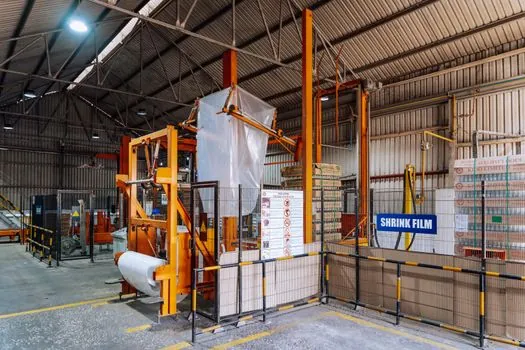
Selection by segment reduces to a short rules table that any operations manager can apply on the floor. Fresh fruits, vegetables, plants, and flowers need vented film to keep air moving and condensation off the produce [S3][S4]. Dairy products, especially cream and yogurt going into blast chill, also benefit from vented film to cut chilling time and prevent label failure from condensate [S3].
Beverage multipacks of water, juice, soft drinks, and energy drinks need strong machine-grade stretch film on heavy, dense pallets where shifting and pallet stretch cause the most damage [S4][S7]. Frozen foods, bakery products, packaged snacks, and boxed meat and poultry need cold-tolerant film with high tear and puncture resistance to survive low-temperature handling without cracking [S4]. Across all segments, a single high-performance grade often covers multiple SKUs with similar load profiles, which simplifies inventory for distributors and 3PLs running mixed food and beverage pallets [S2]. A useful internal benchmark, used by many food and beverage buyers, is to pair each segment with a target gauge and a target pre-stretch ratio rather than picking a brand, then letting qualified vendors prove in on a pallet test rig before scale-up.
Sustainability, Recycled Content, and Downgauging
Stretch film is typically a mono-material PE construction, which makes it easier to collect and recycle than multi-material laminates, and many food and beverage buyers are now specifying downgauged, high-performance films that hold the same load with less plastic [S2]. Manufacturers such as DUO PLAST explicitly offer food-contact stretch films in both conventional PE and sustainable versions with high recycled content, giving buyers a direct lever on packaging mass and Scope 3 reporting [S10]. Downgauging works when the film is run on equipment that delivers consistent pre-stretch, typically in the 200 to 300 percent range for modern wrappers, and when the holding force spec is written in newtons per wrap layer rather than in gauge alone.
Recycled-content food-contact film, however, must be qualified against the same food-safety and migration rules that govern virgin food-grade film, and not every jurisdiction accepts the same recycled feedstock; buyers should request documentation rather than assume parity [S10]. For procurement, the practical sustainability comparison is film mass per pallet at a fixed holding-force target, with a secondary check on recycled content percentage where the buyer has a published target.
Sourcing, Standards, and What to Verify with the Vendor

Food and beverage stretch film sits between two standard systems: food-contact material rules and pallet-load testing practice. On the material side, a stretch film that touches food-contact packaging, or is used in environments where migration is possible, must meet the applicable food-contact regulations in the destination market, and the vendor should provide a compliance statement per lot [S4][S10]. On the load side, the practical spec is holding force, stretch percentage, tear and puncture resistance, cling side, and unwind noise, with the numbers written into the purchase specification rather than left to a brand name [S2].
For a clean RFQ, request a film data sheet listing gauge (typically 12 to 30 micrometers for hand and machine grades), pre-stretch ratio, holding force per wrap layer, cling configuration, cold-temperature rating, and recycled content percentage where applicable [S2][S4][S10]. Then validate on a wrapper at production speed over a 24-hour shift before committing to volume, because film behavior under your specific turntable, rotary-arm, or ring wrapper differs from the lab sheet. Trackable signals to watch over the next procurement cycle include: a wider shift to vented films in dairy and produce, broader availability of recycled-content food-contact grades from European suppliers, and continued downgauging of cast machine film for beverage multipacks as pre-stretch equipment standardizes on 250 to 300 percent [S1][S3][S10]. For related packaging-engineering reference material, see this pharma carton box selection spec map for secondary-packaging thinking, this food-grade caliper and micrometer spec map for the QC instruments used to verify film gauge at incoming inspection, and this bench scale spec map for warehouse automation for the in-line weighing that often pairs with stretch-wrapping stations.
For component-level specifications, see stretch film, construction machinery and equipment, and lamps and light fittings.