
The plastic pallet and the plastic turnover box (also called a plastic pallet box or logistics turnover container) both ship on the same fork-truck / pallet rack interface, but they solve different unit-load problems: the pallet is a flat deck for packaged SKUs, while the turnover box is a walled HDPE bin for bulk, wet, or high-value parts in closed-loop distribution.
Documented 2026 OEM datasheets show pallet boxes ranging from 202 L (Carttec R90468, 800x600x635 mm, 11.0 kg, nestable and stackable) [S1] up to 1,400 L (Cabka Pallet Box 2.0 6R, 1,300x1,150x1,250 mm, six runners, closed walls) [S3], with mid-volume units like the ELKOPLAST BBG Series at 535 / 670 / 900 L on 1,200x800 / 1,000 mm footprints [S2].
Footprint, Capacity and Mass: How the Two Formats Compare on Paper
Standard EUR-format plastic pallets sit on 1,200x800 or 1,200x1,000 mm footprints with 4-way fork entry and a typical static load of 4-6 t, while a turnover box on the same base adds 535-1,400 L of enclosed volume and roughly 25-50 kg of tare mass in HDPE [S2][S3]. The Carttec R90468 mini-bin breaks that mould with a 800x600x635 mm / 202 L / 11.0 kg HDPE shell designed to nest when empty and stack when loaded [S1].
A useful rule of thumb: a 1,200x800x790 mm BBG-format box at 535 L weighs about 30-36 kg empty and is rated for roughly 200-500 kg payload depending on the wall and runner spec; a 1,300x1,150x1,250 mm / 1,400 L Cabka 6R box is the bulk-handling end of the catalogue, with six runners giving racking compatibility similar to a pallet of the same footprint [S2][S3].
Material, Wall and Runner Construction
Documented turnover-box bodies are injection-moulded HDPE (high-density polyethylene), with the Carttec R90468 explicitly listed as HDPE and offered in nested-stack and bottom-support variants [S1], and the Cabka Pallet Box 2.0 6R using closed walls plus six injection-moulded runners for forklift and pallet rack engagement [S3]. HDPE is specified because it survives -20 to +60 deg C service, resists most acids and detergents, and tolerates the steam-cleaning protocols used in meat, dairy, and pharmaceutical lines [S1][S3].
Plastic pallets on the same lines are typically HDPE or PP (polypropylene) in blow-moulded, injection-moulded, or structural-foam formats; Guangdong Weitian Environmental Materials Technology (the only listed public company in the large-format plastic-product segment, stock code 834153, ISO 9001 / ISO 14001) catalogues both plastic pallets and turnover boxes on parallel production lines [S5]. Changzhou Linhui lists the same pairing under its main products, confirming the two formats are commonly produced by one moulder [S6].
Application Fit: Pallet for Packaged Loads, Turnover Box for Bulk and Closed Loops
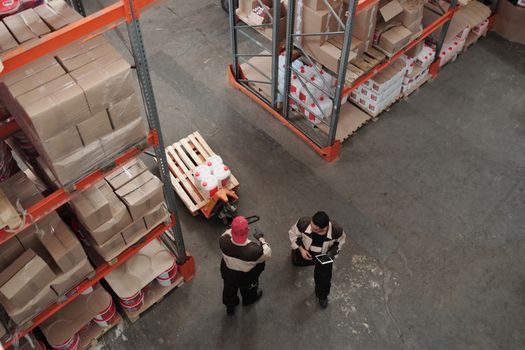
Spec a plastic pallet when the load is a stack of sealed cartons, sacks, or bag-in-box units that need four-way fork or pallet jack access and no containment - this is the standard block-palletised format feeding ASRS, conveyors, and export palletising. Pallet selection on five spec gates (load, hygiene, rack compatibility, footprint tolerance, and temperature) is covered in the 2026 plastic-pallet buyer's cut Plastic Pallet Selection: 5 Spec Gates for 2026 Warehouse and Cold-Chain Buyers. [S1]
Spec a turnover box when the load is loose, oily, wet, or high-value: bulk grain, frozen meat, automotive sub-assemblies, fresh produce, or pharmaceutical APIs that must stay covered, sealed, and traceable in a closed-loop pool. The ELKOPLAST BBG Series is explicitly marketed for bulk materials on a 1,200x800 / 1,200x1,000 mm pallet-compatible base with 4-wheel runner geometry [S2], and the Cabka 2.0 6R is described as a "giant rigid plastic container" for storage, transport, handling, and protection at 1,400 L closed-wall capacity [S3]. Carttec markets the 202 L HDPE mini-bin as a stackable industrial storage basket with optional bottom support [S1].
Stackability, Nesting and Empty-Trailer Economics
Turnover boxes win on empty-return density. The Carttec R90468 is documented as both nestable and stackable: empty units collapse into a fraction of their working height, and full units stack on matching top-and-bottom interfaces [S1]. Rigid-wall boxes like the Cabka 6R do not nest, but they stack securely on six runners at high bay heights, which is the trade-off a buyer takes for closed-wall rigidity [S3].
Pallets never nest. A 1,200x800 plastic pallet is always 1,200x800 mm in the return truck, so any closed-loop pallet pool is a non-nesting problem; turnover boxes either nest (Carttec-style [S1]) or stack 4-6 high in a sleeve-stack pattern, which is why automotive and grocery pools standardise on rigid-stackable boxes for line-side delivery and nestable boxes for the back-haul leg.
Who the Turnover Box Is For (and Who Should Stay on a Pallet)
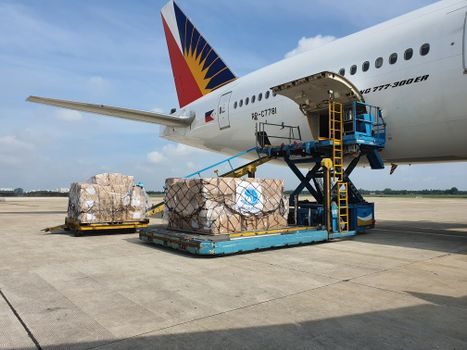
Pick a turnover box if you handle: bulk free-flowing product, parts that must be covered in transit, wash-down food or pharma lines, returnable-loop pools with cleaning stations, or any payload over ~500 kg that needs a rigid 4-wall bin. Documented 2026 datasheet capacity bands (202 / 535 / 670 / 900 / 1,400 L) [S1][S2][S3] and HDPE wash-down compatibility [S1][S3] are the engineering reasons.
Stay on a pallet if you ship sealed cartons at high throughput, run stretch-wrap or shrink-wrap palletisers, need a 4-way block format for ASRS, or want a deck that is cheaper per cycle than a walled bin. Pallets also remain the right choice when the load is not containerised at source (e.g. bagged cement, FMCG multi-pack). China-side moulders such as Guangdong Weitian, Changzhou Linhui, and Cabka supply both formats on shared tooling, so a buyer can run a mixed fleet from one supplier [S5][S6].
Selection Criteria: Pallet vs Turnover Box, Four Decision Gates
Use four gates in order. (1) Containment: do you need walls? If yes, the answer is a turnover box. (2) Volume per unit load: above ~300 L, pallet-box formats (535-1,400 L documented) dominate; below that, a stackable tote or a pallet box is the lower-tare choice [S1][S2][S3]. (3) Rack and stack height: a 1,250 mm-tall Cabka 6R in a 2,700 mm-clearance bay leaves roughly 1,400 mm of usable headroom for the next beam [S3]; a flat pallet in the same bay takes a full 1,200-1,400 mm load build. (4) Cleanability: HDPE turnover boxes tolerate hot-water and detergent washdown; pallets do, too, but with crevices around the deckboards that trap debris.
Cross-check against your electric pallet truck and pallet stacker fleets: a 1,300x1,150 mm Cabka 6R footprint is wider than a standard EUR 1,200x800 base, so confirm aisle width and stacker reach before specifying [S3]. For material-handling fleets that move both, the Pinch Valve 2026 Buying Guide: Sleeve, Port, Cycle and Cost Levers and Sand Blasting Machine 2026 Buying Guide: Delivery, Cabinet, Abrasive, Cost read alongside this cut share the same OEM-data, datasheet-driven spec discipline.
Standards, Sourcing and Lead-Time Signals
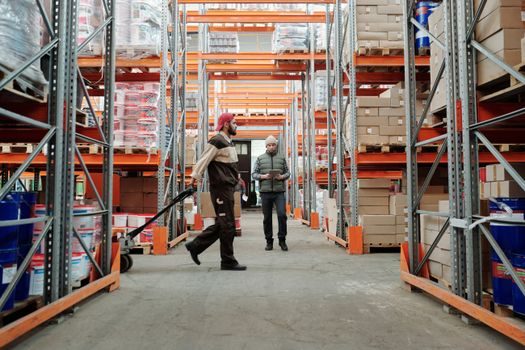
Plastic pallets and pallet boxes in European pool service are typically built to ISO 6780 dimensional envelopes (1,200x800 / 1,200x1,000 mm EUR) so they engage standard pallet racks and fork-truck interfaces; HDPE raw material is generally food-contact compliant under EU 10/2011 and FDA 21 CFR 177.1520 for the food and pharma tiers [S1][S2][S3]. Gold-supplier channels list plastic logistics turnover boxes from Chinese moulders with MOQs around 500 pieces and 500-piece-per-day supply ability (Changzhou Linhui) [S6], and Guangdong Weitian catalogues both pallets and turnover boxes with ISO 9001 / ISO 14001 certification [S5].
Trackable signals to watch in the next procurement cycle: Cabka's 2.0 6R generation closing the 1,300x1,150 mm bulk-container slot [S3], ELKOPLAST extending the BBG range with 535 / 670 / 900 L three-capacity options on 1,200 mm bases [S2], and Carttec's 202 L nestable mini-bin validating small-parts closed-loop pools below the standard EUR 220 L tote size [S1].