Buying a pinch valve in 2026 is fundamentally an elastomer-and-port problem, not a brand problem: a 1" manual DN25 unit lists at USD 162.69 [S4], a 50-series electrically-actuated screw-in industrial model sits in the Ho-matic catalogue [S1], and Keyto's 1224-1 solenoid-pinch platform is rated for more than 2 million switching cycles on pure-water and particulate-laden sample lines [S2].
The geometry is fixed: a flexible elastomer sleeve is closed by a mechanical actuator (manual lever, pneumatic piston, electric motor, or solenoid plunger). Because the process fluid only ever touches the sleeve, corrosion, scaling and contamination are addressed by changing a polymer, not a metal body — which is why pinch valves dominate mining slurries, cement, wastewater, abrasive powders, and sterile biopharma sample lines. For a wider perspective on how pinch fits into the broader industrial valve landscape in 2026, pinch sits at the low-maintenance, low-pressure end of the spec tree.
Pinch valve types: manual, pneumatic, electric, solenoid
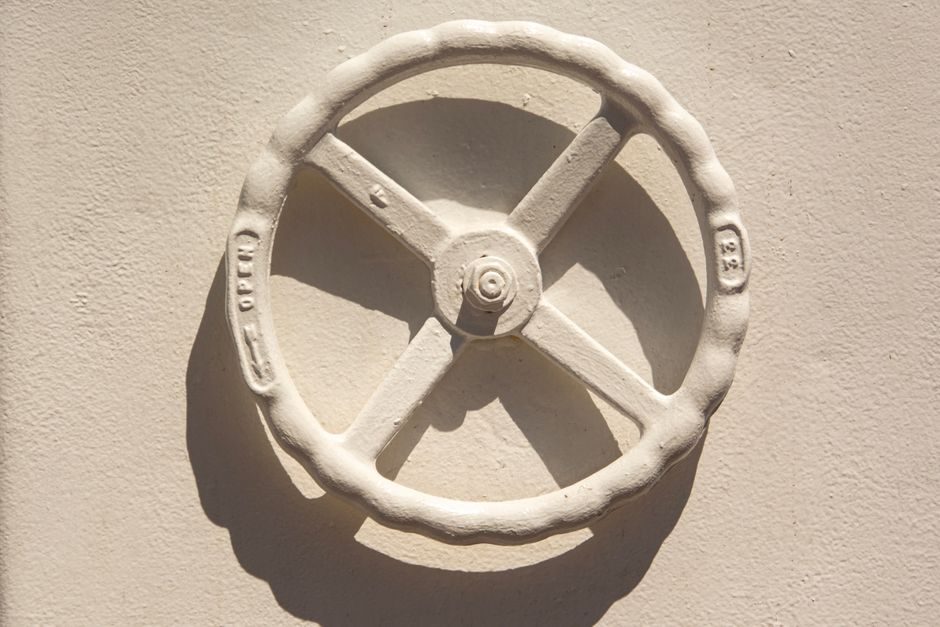
Manual (lever/handwheel) units are the entry point and the cheapest: ATO's 1" DN25 manual pinch lists at USD 162.69, marketed explicitly as a low-maintenance valve for tubing in light industrial service [S4]. Pneumatic and electric actuators dominate the process industry, with the 50-series Ho-matic electric actuator positioned for industrial applications and a sleeve that the manufacturer lists as "as selected" — meaning the elastomer is a build option rather than a fixed spec [S1]. Electric actuation adds position feedback and HART/Modbus integration but pushes unit cost roughly an order of magnitude above a manual lever.
Solenoid-pinch is its own category, used in analytical and IVD instruments rather than plant piping: Keyto's 1224-1 directly compresses a replaceable elastomer tube with a solenoid plunger, isolating the wet path from the coil for cross-contamination-free sample handling on liquids carrying impurities and particulate matter [S2]. Lee Company breaks industrial pinch valves into two primary families (sleeve-and-barrier and direct-acting tube compression), which broadly maps to the manual/pneumatic/electric process segment and the solenoid-pinch instrument segment covered above [S5].
Sleeve elastomer: the actual selection decision
The sleeve is the wetted part, so material selection drives chemical compatibility, temperature, abrasion life and cost. Natural rubber (NR) gives the best abrasion resistance for mining slurries but poor chemical and temperature range. EPDM handles dilute acids, caustics and steam within roughly -40 to +150 °C. FKM (viton-class) fluoroelastomer extends chemical resistance to hydrocarbons and higher temperatures, at a clear unit-cost premium. Keyto's 1224-1 platform is offered with multiple tubing options selected per fluid, with the elastomer tube being the only wetted component [S2] — a design pattern that turns the sleeve into a consumable spare rather than a service item.
For abrasive service, sleeve wall thickness and reinforcement (fabric or wire-backed) typically drive cycle life more than the polymer itself. ATO's manual pinch ships as a complete assembly targeted at tubing service with a low-maintenance design [S4], which implicitly trades maximum abrasion life for replacement simplicity. In contrast, Ho-matic's industrial 50-series leaves the elastomer as a configurable option, so the buyer is responsible for matching NR/EPDM/FKM to chemistry, temperature and duty [S1]. Treat the sleeve as a separately quoted line item; comparing two pinch valves on body price without sleeve material specified is a common buying error.
Port size, pressure class and flow capacity
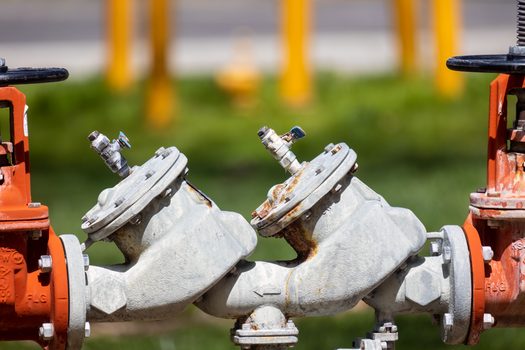
Port size is the single biggest driver of price and of physical envelope. ATO's catalogue entry is a 1" (DN25) manual unit at USD 162.69 [S4]; Ho-matic's 50-series is offered in a range of port sizes as a screw-in cartridge for industrial skids [S1]. Keyto's solenoid-pinch family is explicitly split into three series distinguished mainly by port size, sized to match the flow path of analytical sample streams rather than main process lines [S2].
Pinch valves are inherently low-to-mid pressure devices; most elastomer-sleeve designs are limited to roughly 10 bar or less, with larger diameters dropping further. Vacuum service is possible on reinforced sleeves but should be confirmed case by case. Cv values scale with port area and sleeve travel, and because the sleeve is the only restriction, a fully open pinch valve typically delivers a smoother, less turbulent flow path than a globe or ball valve of the same nominal size — useful for slurries and fibrous media where cavitation and seat damage are the failure modes seen in metal-seated valves.
Cycle life, actuation method and total cost of ownership
Cycle life separates the categories. Manual lever service is essentially unlimited in cycles; pneumatic and electric industrial pinches are typically rated in the hundreds of thousands to low millions of cycles before sleeve replacement. Keyto's 1224-1 solenoid-pinch is specifically rated at more than 2 million cycles, with the tube described as a deliberately simple, easy-to-clean replaceable element [S2] — implying that end-of-life is a planned tube swap, not a valve rebuild.
Total cost of ownership therefore depends on whether the buyer is paying for a metal-body valve with a sleeve (sleeve replacement at planned intervals) or a tube-and-plunger solenoid pinch (tube is a consumable in the same sense as a peristaltic-pump head). For high-cycle OEM instruments, solenoid-pinch and peristaltic architectures are often the lower TCO option despite higher unit cost; for plant-piping service on slurries, a heavy-duty industrial pinch with a thick, reinforced natural-rubber sleeve is usually the cheapest cost-per-tonne-handled.
Where pinch beats other valves, and where it does not

Pinch wins on three service profiles: abrasive slurries (mining tailings, mineral concentrates, cement, fly ash), corrosive chemicals where the only wetted part is a chemically resistant elastomer, and sterile or particulate-laden fluid handling where the process stream must never contact metal. In all three, the alternative is typically a butterfly valve or a lined ball valve with rubber or PTFE seats — both of which have higher unit cost and more failure modes tied to seat wear. [S1]
Pinch loses where high pressure, high temperature, tight shutoff under vacuum, or fire-safe metal-seated performance is required. For those services, a metal-seated ball or butterfly valve is the correct fit, and a pinch valve should be screened out at the spec stage rather than forced into service. Standardisation is also thinner than for metal valves: there is no single equivalent of API 6D for pinch, so buyers rely on manufacturer pressure/temperature curves and on-site cycle testing rather than a universal rating.
Buying checklist, China sourcing and 2026 market signals
A 2026 pinch-valve RFQ should specify, at minimum: port size and end connection (threaded, flanged, weld, or tube-barb), actuation type and supply (manual, 24 VDC electric, 24 VDC/110 VAC solenoid, pneumatic 4-10 bar), sleeve elastomer (NR / EPDM / FKM / silicone / PTFE) with temperature and chemistry justification, pressure class and temperature limits, expected cycle count per year, and the desired wetted-parts list. Without those seven items, quotes are not comparable — the same "DN25 electric pinch" can vary by 5–10× on price depending on sleeve and actuator [S1][S2][S4].
Trackable signals for the rest of 2026: a measurable shift of Chinese distributors and trading companies into pinch and related commodity valves, mirrored by 2026 catalogue activity around Banjo-style pinch and solenoid valves on platforms such as chem17 [S3]; continued OEM emphasis on the tube-as-consumable model for analytical instruments [S2]; and steady manual-pinch pricing in the USD 150-200 range for 1" DN25 commodity units [S4]. A senior engineer will spec the sleeve first, the actuator second, and the body last — in that order.
For component-level specifications, see pinch valve.