
A platform scale with 600 kg capacity, IP68 stainless construction, and 0.1% accuracy class is not the same instrument as a 200 N·m reaction torque sensor with 0.2% precision — the two measure orthogonal physical quantities, and confusing them is one of the most common RFQ errors in 2026 industrial purchasing.
Both product families rely on metal-foil strain gauge load cells as the underlying transducer, but the mechanical packaging, calibration chain, and signal conditioning are different enough that a torque sensor will not read a weight correctly and a platform scale will not resolve a rotary moment [S4][S7]. For engineers writing procurement specs, the first 60 seconds of selection should be: do you need mass in kilograms, or moment in N·m?
Definition and Physical Scope
A torque sensor is a strain-gauged transducer that quantifies twisting force applied to a shaft, fastener, or rotating assembly, with output expressed in N·m or ft·lb [S4]. A platform scale is a load-cell-based weighing instrument with a flat load-receiving surface, output in mass units (kilograms or pounds), typically paired with a separate indicator [S2].
The two product types occupy different chapters of any industrial catalog: platform scales live under "Weighing / Force Measurement — Compression" while torque sensors live under "Force Measurement — Rotary / Reaction." Capacities do not overlap in any practical sense — the AMETEK STS Series static torque sensor covers 0.35–20 N·m (0.26–14.75 ft·lb) [S1], while the Ascell MI series platform scale covers 3–600 kg (6.6–1,322.8 lb) [S2].
Selection Criteria: Capacity, Accuracy, Output, and Environment
For torque sensors, the key decision nodes are measurement type (static vs dynamic/rotary), torque range, rotational speed limit, and overload margin. The Kistler 4507A200 reaction torque sensor runs 0–200 N·m (147.51 ft·lb) at 0.2% precision, flange-mounted, with supply voltages of 5/6/8/9/12 VDC, designed for through-shaft passage and dynamic or quasistatic moment measurement around the sensor axle [S3]. By contrast, the AMETEK STS static torque load cell is rated 0.35–20 N·m at 0.1% precision with a 150% overload limit and a full-bridge strain gauge output, paired exclusively with the DFS-R-ND torque gauge family [S1].
For platform scales, the critical parameters are capacity, platform height, protection rating, and material grade. The Ascell MI series offers platform heights of 5 / 10 / 12 / 15 mm in laser-welded stainless steel with IP68 load cells, available in AISI 316 for hygienic service, and ships with a separate indicator [S2]. Typical applications include hygienic washdown zones, food and pharmaceutical batching, and pallet-level floor weighing where the scale must survive chemical cleaning.
When the question is "which instrument do I specify for this RFQ," the decision matrix below covers the most common 2026 sourcing scenarios:
Who Needs a Torque Sensor (and Who Does Not)
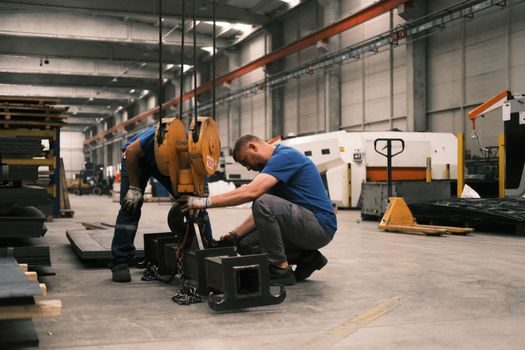
Specify a torque sensor when the application involves a rotating shaft, threaded fastener, clutch, spring torsion test, or screwdriver calibration — Kistler lists torque setting of rotary screwdrivers, checking screw connections, calibration of hand-torque keys, torsion testing from springs, measurement of starting moments on electric motors, and checking of rotary switches as the canonical use cases for the 4507A200 [S3]. Static torque measurement sensors with multiple installation configurations are also used on valves and torque wrenches where the rotation is discontinuous [S6].
Do not specify a torque sensor for weighing, batching, or any application where the load is purely compressive and non-rotating. The transducer is mechanically and calibration-wise incapable of resolving a static mass: its Wheatstone bridge is excited for torsional strain, not axial compression, and even if the bridge fires, the calibration factor maps volts to N·m, not kg [S4]. Engineers who try to "reuse" a reaction torque sensor as a weigh scale end up replacing both the sensor and the indicator.
Who Needs a Platform Scale (and Who Does Not)
Specify a platform scale for any vertical mass measurement: incoming goods receiving, in-process batching, checkweighing, pallet verification, and hygienic process weighing in food / pharma lines. The Ascell MI series with IP68 stainless and AISI 316 option is a typical pick for washdown and hygienic cells, and the separate-indicator architecture lets the load cell sit in a hostile zone while the display lives in a control panel [S2].
Do not specify a platform scale for torque measurement, rotational moment verification, or fastener QA. Even a 600 kg industrial platform scale cannot resolve a 0.35 N·m fastener preload; the geometry, bridge excitation, and calibration constant are all wrong. For hand-torque-key and screwdriver QA, use a dedicated torque sensor or a torque wrench tester instead, both of which are designed to accept a square-drive tool and read in N·m.
Limits, Failure Modes, and Integration Pitfalls

Static torque sensors like the STS series have a 150% overload limit and 0.1% precision, but they are paired exclusively with the DFS-R-ND family of gauges — swapping in a third-party indicator breaks the auto-recognition of capacity and calibration, and the displayed reading will be wrong even if the wiring is correct [S1]. Cable length on the retractable cord is limited to roughly 3 m (9 ft); longer runs require a signal conditioner with proper shielding or the millivolt signal degrades.
Reaction / dynamic torque sensors like the 4507A200 are flange-mounted with a center hole for shaft passage, and the design explicitly minimises the influence of axial forces and bending moments on the measurement element — but it does not eliminate them. Side-loads and axial thrust from the driven machine still leak into the reading and must be controlled by the mechanical installation [S3]. Supply voltage is constrained to 5/6/8/9/12 VDC; using 24 VDC, which is common in industrial cabinets, will damage the sensor.
Platform scales fail differently. IP68 ingress protection on the Ascell MI series is on the load cell, not the indicator — the separate indicator is typically IP65 at best, and the cable gland is the weak link in washdown service. Hygienic AISI 316 construction is mandatory in food / pharma lines, not optional: standard 304 stainless will pit in chloride cleaning chemistries and the load cell fails within 12–18 months.
Sourcing Signals and Vendor Landscape
The torque-sensor supply chain includes Kistler (reaction, dynamic, rotary, flange-mounted torque sensors), AMETEK Test (static STS series with voltage output), and FUTEK Advanced Sensor Technology (located in Irvine, Southern California, offering load cells, force sensors, torque sensors, pressure sensors, signal conditioners, digital displays, and portable sensor verification/calibration systems utilizing strain gage and thin film technologies). The platform-scale supply chain includes Ascell Sensor (Spanish hygienic stainless builds), plus the usual weighing-instrument majors — Mettler Toledo, Minebea Intec, Cardinal, Rice Lake — most of which now offer AISI 316 / IP68 variants for line-side hygienic service.
For 2026 RFQs, a useful next node is to pull the platform-scale selection-criteria article from this catalog (Platform Scale Selection Criteria: Capacity, Accuracy, and Duty-Cycle Match) before issuing a weighing-cap inquiry, and to read the broader electronic-scale guide (Electronic Scale Selection Criteria: Capacity, Accuracy, Duty, and Form Factor) if the application spans bench, floor, and pallet scales. For torque-sensor sourcing into automated / specialty-chemical lines, the Specialty Chemicals Smart Manufacturing: Sensor, Valve, and Automation Specs for 2026 reference lays out the surrounding instrumentation stack. Two trackable signals: (1) indicator-vendor consolidation — multiple weighing-scale makers are now OEMing the same indicator PCB, so RFQ-to-RFQ price variance is narrower than 12 months ago; (2) torque-sensor supply voltage standardisation is moving toward 5 VDC and 10 VDC excitation as default, with 12 VDC retained as legacy — new designs should not be specced to 24 VDC without a dedicated in-line conditioner.