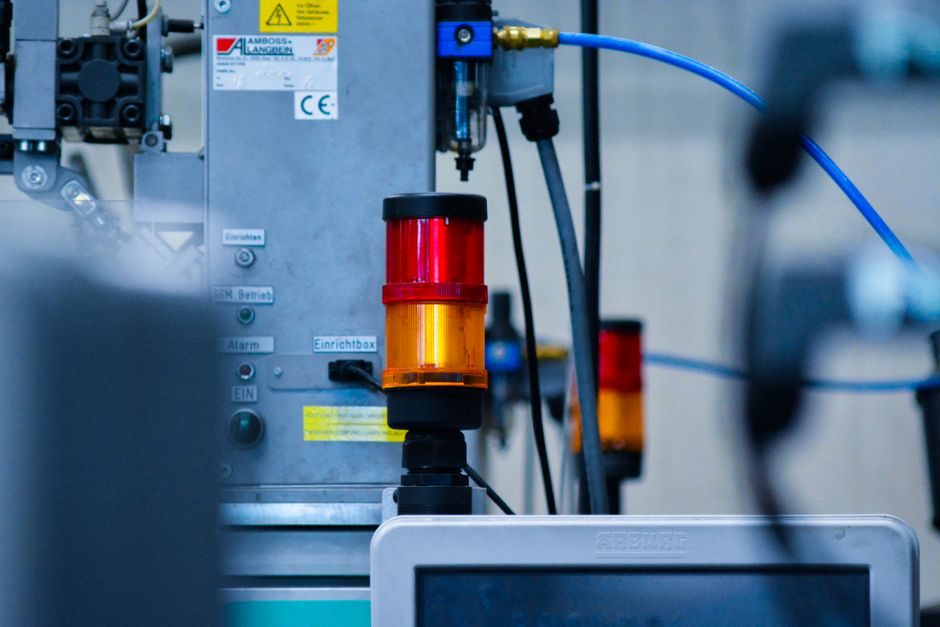
Specialty chemicals smart manufacturing pairs recipe-driven batch control with continuous in-line analytics, and the segment is scaling fast — the global market is projected to reach USD 953.9 billion by 2027 at a 5.0% CAGR off a 2019 base of USD 711.0 billion [S6].
Demand drivers in 2026 include concrete admixtures (USD 22.63 B in 2026 → USD 31.99 B by 2031, 7.17% CAGR) and PEEK (USD 1.67 B in 2026 → USD 2.29 B by 2031, 6.4% CAGR), both of which require tight lot-to-lot repeatability that only automated process control can deliver [S1]. Producers like 3V Sigma (60-year-old Italian polymer specialist) and IRO Group (biocides, chelating agents, surfactants) now compete on formulation repeatability, not just chemistry [S2][S4].
Scope: What "Smart" Actually Means in a Specialty Chemical Plant
Smart manufacturing in this segment covers four functional layers: ISA-95-style batch/digital recipe control (ISA-88/ISA-95), in-line process analytics (pH, conductivity, FT-NIR, Raman), closed-loop final-product QA, and plant-floor data historian plus MES integration — vendors in adjacent commodities (Sika, MAPEI, Chemours, Shell) are explicitly building around this stack to defend margins [S1][S2].
The 2026 batch specialty plant is multi-product, multi-SKU, and runs campaigns of 2–200 tonnes; Element Chemicals (energy and water-treatment chemicals) and Specialty Chemicals Inc. (industrial water treatment in Rochester, NY) operate this mode, running 10–40 SKUs per site with shared reactors and shared utilities [S5][S7]. Process control must therefore reconfigure quickly: a reactor train that changes from a cationic surfactant to a biocidal formulation in the same shift demands recipe-driven setpoint switching, not manual valve resets.
Critical Sensor and Instrument Specs
Corrosive chemistries (strong acids, alkalis, organic solvents) drive material selection: wetted parts in PTFE, Hastelloy C-276, or PFA-lined stainless are the workhorses, and process connections are predominantly flanged ANSI 150# / 300# with PTFE envelope gaskets to ASME B16.5 dimensions. Inline pH sensors rated for HF or hot caustic use must include specific reference-junction designs — a generic "general-purpose" pH probe fails in weeks under those conditions. [S2]
Flow measurement is dominated by Coriolis meters for mass-flow-critical dosing (USD-precision batch charging of expensive actives), and magnetic flowmeters for slurries and conductive aqueous streams; see the flow meter reference for selection detail. Reactor pressure and differential-pressure control is handled by HART-enabled pressure transmitters, which are now baseline for ATEX/IECEx Zone 1 reactor service and let calibration, ranging, and diagnostics run over the same 4–20 mA loop. Dosing of high-value additives (biocides, catalysts, scale inhibitors) uses smart valve positioners with integrated pneumatic position feedback — these are the most failure-prone components in a batch plant, and digital positioners cut the typical 2–3 unscheduled valve events per year per loop to a fraction of that.
Closed-Loop Quality: NIR, Raman, and Inline Titration
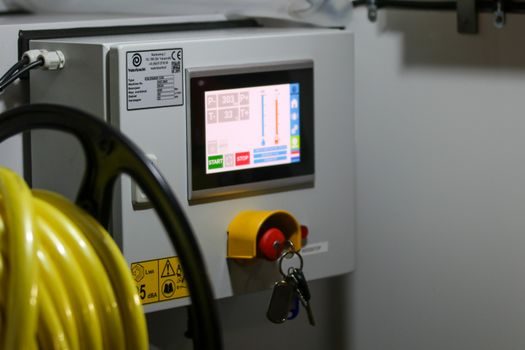
Inline FT-NIR and Raman probes feed concentration models into the DCS, allowing a reactor to hit endpoint on composition rather than time or temperature; this typically cuts batch time 8–15% and reduces off-spec material to a single-digit percentage of lots, the metric that defines a "smart" reactor in 2026. For aqueous processes, in-line conductivity + pH + temperature compensation drives neutralization endpoints without grab-sample lag, and is the default loop for the water-treatment and oilfield-chemistry side of the business [S5][S7].
The biggest engineering mistake in 2026 specialty plant retrofits is still under-specifying the analyzer probe's wetted materials: a Raman or NIR insertion probe in chlorinated solvents or hot strong acids demands sapphire or PFA windows, and a generic stainless probe fails within weeks. Probe retraction hardware (isolated ball-valve assemblies rated to the line pressure) is mandatory for any analyzer that has to be serviced while the line is live, since batch specialty plants rarely have spare reactors to swap in.
Batch vs Continuous: Which Plant Architecture Fits Which Chemistry
Specialty chemical plant architectures split into three patterns, and picking the wrong one costs 30–50% in capex: [S3]
1) Multi-purpose batch (SBR / fed-batch, 2–50 m³ reactors): best for SKUs with annual volume < 5,000 t and 20+ recipe variants — this is the dominant 3V Sigma, IRO, and Element Chemicals model [S2][S4][S5].
2) Semi-continuous (CSTR plus batch finishing): common for surfactants, water-treatment polymers, and emulsion products where the reaction runs to a fixed conversion but finishing and dilution are batch [S4][S7].
3) Fully continuous (plug-flow or CSTR cascade): justified only at annual volumes above ~20,000 t per SKU and tight specifications (PEEK polymerization, some concrete admixture chemistries where Sika, Saint-Gobain, MAPEI, and Arkema play at scale) [S1].
For the batch pattern, ISA-88 recipe structures (Procedure → Unit Procedure → Operation → Phase) are the lingua franca; for the continuous pattern, model-predictive control on temperature and composition has become standard. The specialty chemicals manufacturing process: specification, plant layout, and reference lays out the layout and utility-side spec for each pattern.
Networking, Data, and Cybersecurity

Fieldbus migration has been slower than in oil & gas: HART on 4–20 mA is still the majority of installed loops, with Foundation Fieldbus and PROFIBUS PA clustered in larger continuous plants; wirelessHART covers the tank-farm and rotomolded-vessel instrumentation where cable runs are uneconomic. Field data is being aggregated by IIoT gateways (OPC-UA over MQTT or AMQP) into MES and cloud historians, where the practical 2026 target is end-to-end batch genealogy from raw-material lot to finished-goods certificate — the regulator and customer audit requirement driving that upgrade. [S2]
Cybersecurity must follow IEC 62443 zone-and-conduit models because specialty plants are now part of critical-infrastructure supply chains (pharma, electronics-grade chemistries); PLC/DCS networks sit in Zone 1 with strict conduit controls to the corporate IT/OT boundary. Air-gapped historian mirrors are still common as a belt-and-braces measure against ransomware, but the trend is hardening of converged IT/OT networks rather than separation.
Common Failure Modes and Spec Pitfalls
Three failure modes dominate post-commissioning: (1) smart positioner air-supply contamination, mitigated by coalescing filters + regulators rated for the chemical plant ambient; (2) Coriolis meter zero drift on slurries or polymerizing streams, mitigated by periodic auto-zero cycles scheduled into the batch recipe; and (3) analyzer window fouling in viscous or particulate-bearing streams, mitigated by automated cleaning cycles (solvent flush + air wipe) sequenced into the phase logic. A 2026 smart plant runs these mitigations automatically; a "smart" nameplate on legacy hardware is not the same thing. [S1]
Spec pitfall: under-sizing the pressure transmitter span. A 0–100 bar transmitter ranged to 0–10 bar to chase resolution will fail in a single thermal cycle from over-ranging during exotherms; ratio-of-turndown must be kept under 10:1 for stable performance in batch reactors where runaway events are credible. The RO membrane smart manufacturing: automation, materials, and spec boundaries reference carries the same pressure-spec discipline across to a neighboring process industry.
Standards, Compliance, and Sourcing in 2026
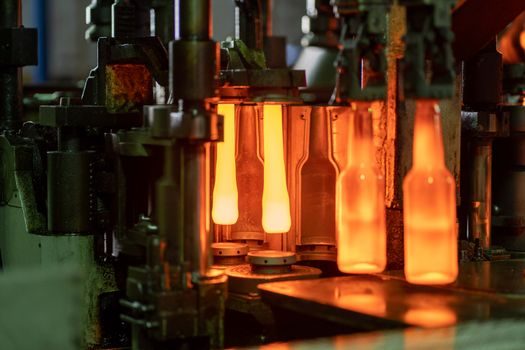
Equipment and process compliance pulls from several standards bodies in parallel: API 682 mechanical seal selection for pumps handling hazardous intermediates; ASME B16.5 / B16.34 for valve and flange ratings; IEC 61511 / ISA 84 for the safety instrumented function layer (typical SIL-1 on dosing loops, SIL-2 on reactor temperature and pressure interlocks); and ATEX 2014/34/EU plus IEC 60079 series for Zone 1/2 area classification. Water-treatment and oilfield chemistry players (Specialty Chemicals Inc., Element Chemicals) additionally conform to NACE MR0175 for sour-service exposure and to NSF/ANSI 60 or 61 where drinking-water products are involved [S5][S7].
Sourcing in 2026 remains split: European and North American buyers (industrial water treatment, coatings additives) prefer Sika, Arkema, Saint-Gobain, MAPEI, Shell, Chemours, Castrol, and Inventec [S1]; Asian buyers (organic intermediates, catalysts, coenzyme Q10 CAS 303-98-0, 1,3-cyclohexanedimethanamine CAS 2579-20-6) work through Guidechem-style supplier directories and contract manufacturers [S3]. The additive manufacturing material and smart camera references describe parallel material-handling and vision-side standards that apply when specialty chemical products are packaged or finished in 3D-printed or vision-inspected formats.
Trackable 2026 signals to watch: ISA-88 batch recipe libraries moving into cloud MES as IEC 62443-certified SaaS; Foundation Fieldbus and wirelessHART continuing to displace point-to-point 4–20 mA loops in greenfield batch plants; and the concrete-admixtures and PEEK segments (both with 6–7% CAGR) pushing tighter inline analytics because their end customers (infrastructure, medical, aerospace) demand per-lot certificates that only in-line analytics can economically generate [S1].