A plug valve installs correctly only when orientation matches the service, and the dominant split is between clean media and suspended-solids media. For clean liquids and gases, the valve can sit in most positions; for slurries, sludge and dirty gas, the seat end, plug-rotation direction and body-cavity drainability are non-negotiable, per orientation guidance published in 2026 [S1].
The four common designs (lubricated, sleeved, lift-type and eccentric) all rotate 90 degrees for shutoff, but the orientation rules that work for an eccentric PEC valve do not automatically transfer to a lubricated plug valve. Taper angles on tapered plugs run 1:6 to 1:7, with body taper matched within roughly 0.05 degrees for face contact rather than line contact [S2].
Clean Service vs Solids-Bearing Service: The Decision Split
Clean liquids and clean gases tolerate flexible orientation because the risk of settled material jamming the plug is low; eccentric plug valves in clear water can usually be installed in any position, with direct pressure preferred when practical [S4]. Direct pressure means line pressure acts on the plug from the side opposite the seat end, which keeps the plug seated against its machined land.
Solids-bearing media invert that rule. In a horizontal pipe carrying sludge, grit, abrasive slurry or dirty gas, the plug axis must stay horizontal, flow must enter from the seat end, and the plug must rotate counterclockwise to open, with the goal of keeping the plug in the upper half of the body cavity and out of settled solids [S4]. The same logic applies to clean vertical service: if the seat end points up, any debris that does enter the body cavity can fall back into the line rather than packing against the seating surface [S1].
Horizontal Pipeline Installation: Shaft Position and Solids Control
For clean media in horizontal lines, a 90-degree upward rotation to open is the preferred handle position because it lifts the port above the body cavity floor and away from any condensate pocket [S8]. That same 90-degree upward-open orientation is also recommended for the basic lubricated and sleeved designs, where gravity drainage of the body cavity is the main concern.
For dirty gas or suspended solids in horizontal lines, the eccentric design is the typical choice, and the shaft sits horizontal with the plug lifting off the seat during the first degrees of rotation before seating at the end of stroke [S2]. The lift-before-seat kinematic is what protects the resilient plug facing from grit drag, and it is the reason AWWA C517 eccentric plug valves are specified for wastewater and raw-water lines rather than standard lubricated patterns [S3].
Vertical Pipeline Installation: Seat End Up and Settling Solids
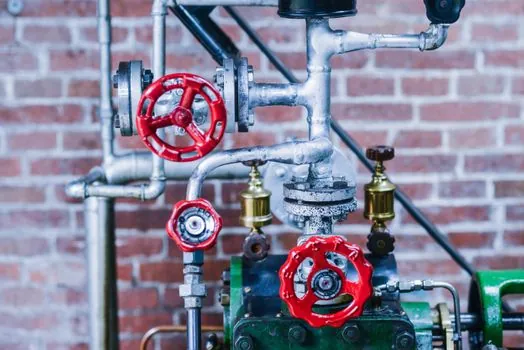
Plug valves can be installed vertically, and seat-end-up is the preferred direction whenever the line may carry sediment or when the body cavity could collect moisture. With the seat end pointing up, any debris that bypasses the seat falls back into the downstream pipe instead of building up under the plug face [S1].
For clean vertical service, the seat-end preference is weaker, and a high-quality resilient-faced eccentric plug valve such as the DeZURIK PEC tolerates vertical mounting at sizes from 1/2 to 72 inch, temperatures to 450 degrees Fahrenheit, and CWP ratings of 125-450 psi [S3]. The same catalog also lists 3-way and 4-way plug valves (PTW/PFW) at 2-16 inch for diverting clean, dirty, viscous or corrosive liquids, with 125 psi CWP bodies in cast iron, ductile iron or 316 stainless steel [S3].
Flow Direction, Pressure Side and Pump Isolation
Installation orientation (which way the body is mounted) is a different question from flow direction (which way the media enters). The two should be specified separately, because a bidirectional line still benefits from a preferred mechanical orientation: pump-isolation duty, for instance, calls out flow-to-close versus flow-to-open, not just any rotation that lines up the port [S1].
Downstream head pressure on pump-discharge lines can hold a flow-to-open plug off its seat during shutoff, so the manual for eccentric pump-check service typically specifies flow-to-close, with line pressure pushing the plug onto the resilient seat [S7]. Actuator position, position indicator visibility, and stroke check before tightening the valve into the line are the three pre-commissioning items that catch most reversed installations, and they apply equally to ball valve retrofits where the seat geometry is different but the access logic is the same.
Buried Service: Coating, Access and C517 Selection
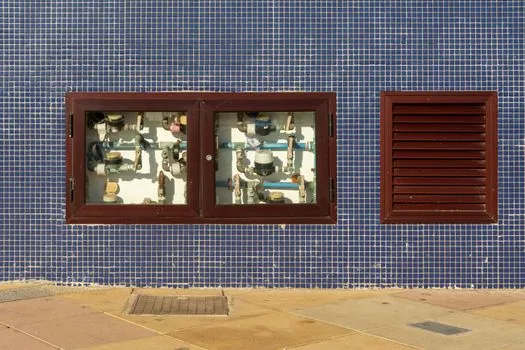
Buried plug valve installation is feasible when the valve is selected for buried service, mounted in the correct orientation, protected against external corrosion, and given a valve box or vault for operation. AWWA C517 covers resilient-seated cast-iron eccentric plug valves for waterworks, and the supporting AWWA coating and installation standards typically referenced in the same datasheets include C213, C214, C222, C224, C225, C229, C550, C600 and C604 [S4].
External corrosion is the dominant buried-service failure mode. PHMSA guidance states that external corrosion on underground steel equipment can be reduced through material selection, protective coatings and cathodic protection, with the exterior surface typically coated to keep soil, air and moisture off the steel body [S4]. For solids-bearing buried service, the same orientation rules used above ground still apply: plug axis horizontal in a horizontal pipe, seat end at the inlet, and counterclockwise-to-open rotation so that grit exits the seat area on every stroke [S4].
Acceptance Criteria and When to Stop Troubleshooting
A correctly installed plug valve should turn from full open to full closed in roughly 2 seconds on a typical 4-inch lubricated pattern, seal to ANSI Class VI shutoff at up to 720 psi WOG, and hold pressure without visible weep at the stem packing [S2]. If the valve holds pressure on day one but starts seeping after a few hundred cycles, the typical root cause is stem-packing wear allowing the plug to shift axially under line pressure, which loosens the tapered seat.
Stop repairing and replace the valve when the plug face has galled against the body, when the taper contact has worn past 0.05 degrees of mismatch, or when the resilient plug facing on an eccentric design has lost its bubble-tight shutoff below 175 psi (the standard resilient-seated shutoff floor) [S3]. For buried valves, any coating damage found during a vault inspection is grounds to excavate and re-coat before re-burying, because in-situ repair of external corrosion under soil is not reliable, and the same coating-driven logic shows up in knife gate valve buried-service notes.
RFQ and Pre-Installation Checklist
Before shipment, the buyer should send service data (medium, solids content, temperature, pressure, flow direction, duty cycle) and receive installation data (preferred orientation drawing, IOM, actuator clearance, position indicator location) from the maker, and the IOM always overrides any general rule [S1]. Drawing review before site work should confirm pipe support, joint alignment, and a valve box or vault large enough to operate the handle or gear operator without transferring soil load into the actuator.
On site, the pre-tightening checklist is short: confirm seat-end direction, confirm plug-rotation direction (90 degrees upward to open for clean service, counterclockwise to open for solids service), confirm actuator and indicator clearance, and confirm flow-to-close versus flow-to-open against the pump or vessel schematic. For complementary isolation in a parallel line, an eccentric butterfly valve is a frequent pairing, but the orientation rules for the two valve families are independent and must each be checked against the relevant IOM rather than assumed from a shared habit.
Trackable signals for the next planning cycle: AWWA standards updates for C517 and the C213/C214/C222 coating family, and any site incident where a buried plug valve is excavated for reasons other than external corrosion. Both would justify a re-spec of the corrosion-protection package on the next procurement round, and the same monitoring habit applies to linear guide installation audits in adjacent equipment skids.