
A plug valve is a quarter-turn rotary valve in which a cylindrical or tapered plug with a bored passage rotates 90 degrees to align with, or block, the body port; the full-open and full-closed positions are reached in a single hand-lever stroke, which is why plug valves are specified where fast isolation matters more than fine throttling [S1][S5].
The structural family breaks into four primary constructions (lubricated, sleeved/non-lubricated, eccentric, and DBB/expanding), the port pattern into straight, 3-way, and 4-way, and the body materials range from carbon and stainless steel through ductile iron, PVC, and CPVC to suit fluid, temperature, and corrosion profiles [S4][S5]. Lubricated plug valves are commonly manufactured from DN 15 to DN 900 and are used in applications with pressures over 2500 psi [S3].
Lubricated Plug Valves: Sealing by Sealant Injection
Lubricated plug valves inject a plastic sealant between plug and body, building a continuous grease film that seals the gap, lubricates the rotation, and protects the metal interface from corrosion; effective sealant must combine proper elasticity, chemical resistance, and the ability to form an impervious film around the sealing interface [S3].
Construction is four sub-families: a standard lubricated plug valve, a pressure-balance lubricated design, a multi-port lubricated design, and a steam-jacketed lubricated design for viscous or waxy media where the body must be heated to keep product flowing [S4][S5]. Above 3 in (DN 80), the breakout torque climbs steeply because of the larger plug/seal contact area plus any process pressure or temperature swing, and hand-levers are usually replaced with geared handwheels to drop the required operating torque [S3].
Operating envelope: lubricated units are routinely used in high-temperature, high-pressure, and corrosive services, and are the preferred plug-valve type when the line pressure exceeds 2500 psi [S1][S3]. The trade-off is that the sealant can be washed out by certain media, contaminate the process, and require periodic re-injection through an integral sealant fitting [S3].
Non-Lubricated, Sleeved, and Eccentric Designs
Non-lubricated plug valves replace the grease film with a non-metallic sleeve (PTFE or similar) that surrounds the plug, which lowers operating torque and eliminates lubricant contamination of the process stream; the sleeve is the wear part and is selected to match temperature, chemical compatibility, and the solids content of the medium [S5].
Eccentric plug valves move the plug axis off the body seat centreline, so the plug only contacts the seat at the moment of closure; this offset seating cuts rubbing during opening, reduces seat wear in dirty, sludge-bearing, or fibrous service, and is widely used in wastewater, pulp/paper, and raw-water systems [S5]. A related eccentric variant is the ball plug valve, in which the plug is spherical and rotates between concave circular seats [S3].
Lift-type plug valves (soft- or metal-seated) separate the lift from the rotation: the plug lifts 2-5 mm off the seat first, then turns 90 degrees, and descends back onto the seat after rotation. This cuts sealing friction in the open stroke and avoids scoring the seat during cycling, extending service life in abrasive or high-cycle duty [S1].
DBB, Expanding, and Forged-Body Plug Valves for Pipeline Isolation
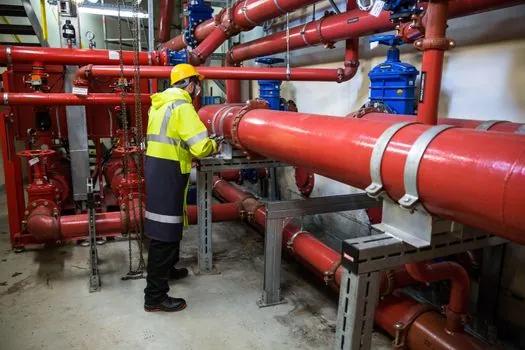
DBB (double block and bleed) plug valves provide two independent seating surfaces plus a bleed port between them, allowing the operator to verify zero leakage from the line side before opening a downstream connection; this configuration is common on transmission pipelines, manifold isolation, and any service where positive isolation has to be proved [S5].
Expanding plug valves mechanically expand a sleeve or plug against the body seat at the closed position, generating a metal-to-metal seal on both the upstream and downstream sides without relying solely on line pressure; they overlap with DBB on pipeline isolation but use the mechanical expansion as the sealing energy source [S5].
Forged-body plug valves are used in high-pressure class piping (typically ASME Class 600 and above) and in process lines where the body must be forged to meet the material and impact-test requirements of the piping specification; the body end connections (flanged, butt-weld, or socket-weld) must match the line class and the relevant ASME B16.34 valve specification [S5].
Port Configuration: Straight, Three-Way, and Four-Way
Straight plug valves have an inlet and outlet in line, with a full-bore rectangular port through a cylindrical plug or a trapezoidal port through a tapered plug; full-area cylindrical plugs minimise pressure drop by matching the pipe ID, while tapered-plug straight bodies keep a compact face-to-face [S3][S6].
Three-way plug valves route flow between three ports: diverting (one inlet to two outlets) or combining (two inlets to one outlet); three-way designs in petrochemical and tank-farm service often need a 180 degree plug rotation between functional positions, not the usual 90 degree stroke [S3]. Four-way plug valves extend this to four ports for more complex flow-switching logic [S1].
Multi-port arrangements let one plug valve replace several isolation valves plus associated fittings, simplifying the line, cutting leak paths, and reducing installed cost; the trade-off is that the body, the plug machining, and the seat layout grow in complexity, so multi-port units are usually justified on a process-logic basis rather than as commodity spares [S1][S6].
Seat and Sleeve Material Selection
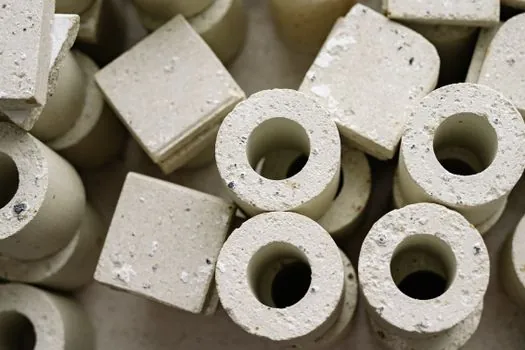
Soft-seat plug valves use elastomer or polymer seats (typically PTFE, RPTFE, PEEK, or FKM) for low-pressure, near-ambient-temperature service on corrosive media, and give the lowest seating torque and the tightest shutoff class; metal-seat plug valves use alloy or ceramic seats for high-pressure, high-temperature, and abrasive media, accepting higher torque in exchange for temperature and wear capability [S1][S5].
Body and trim material selection covers carbon steel, stainless steel, cast iron, ductile iron, PVC, CPVC, and special alloys, matched to the fluid chemistry, temperature window, pressure class, and any NACE MR0175 sour-service requirement; ceramic seating inserts appear where severe abrasion is expected, while PTFE/RPTFE sleeves remain the default for clean chemical duty [S4][S5].
Seat and sleeve temperature limits are polymer-driven: PTFE-family seats are usually capped around 200-260 degC depending on grade, PEEK extends that envelope, and metal/ceramic seats cover the rest of the plug-valve operating window. The temperature ceiling of the valve is therefore set by the seat, not by the body [S5].
Selection Criteria and Comparison Matrix
Selection starts with the service condition, not the valve name: match the design to the pressure class, the temperature window, the cleanliness of the medium, the cycle frequency, the shutoff verification requirement, and the port pattern. The matrix below compresses the trade-offs a process engineer has to make on a single line. [S5]
Type vs criterion: Lubricated plug valve scores high on pressure/temperature capability (2500 psi and above), medium on cleanliness (sealant washout is a real risk with some media), low on contamination tolerance (grease can enter the process), and high on cost-per-rating [S3][S4]. Sleeved/non-lubricated plug valve scores high on cleanliness (no grease), medium on pressure (sleeve pressure/temperature rating caps it), high on contamination tolerance, and medium on torque [S5]. Eccentric plug valve scores high on dirty/sludge service, low on throttling precision, high on seat life in solids-bearing media, and high on cost-effectiveness for wastewater [S5]. DBB/expanding plug valve scores high on isolation verification, high on installed cost, medium on pressure class (limited by seat design), and high on footprint versus two separate block valves [S5]. Multi-port (3-way, 4-way) plug valve scores high on piping simplification, high on body cost, and medium on spare-parts availability, and is best justified when the process logic genuinely needs flow switching in one body [S1][S3].
Plug valve vs ball valve: ball valves are the default where bubble-tight shutoff, low torque, and high cycle count are required, while plug valves (especially lubricated and eccentric) remain competitive in slurry, multi-port, and high-pressure chemical service; for a broader comparison with rising-stem isolation valves and the trade-off between linear and quarter-turn actuation, see knife gate valve advantages, disadvantages, and spec limits.
Operating Limits, Failure Modes, and Sourcing Signals
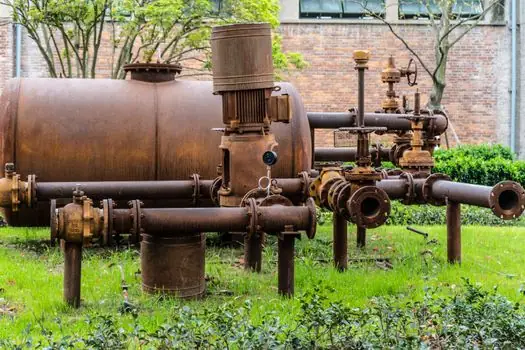
Plug-valve failure modes cluster around three areas: differential thermal expansion across the plug when fluid temperature swings widely, which can lock the plug or break the seal; sealant washout in lubricated designs when the medium is incompatible with the chosen grease; and seat/sleeve wear in dirty service when a soft seat is specified for an abrasive line [S3][S5].
Operationally, plug valves are best run fully open or fully closed; throttling puts the plug in a double pressure drop (inlet restriction plus outlet restriction) with a pressure recovery between them, which raises erosion, vibration, and seat wear, and should be reserved for designs specifically rated for modulating service [S3]. Sourcing signals to track are the rise of DBB/expanding designs in pipeline-class projects, the continued shift from lubricated to sleeved in clean chemical service, and steady eccentric-plug adoption in wastewater and mining slurry duty. Related sourcing context for adjacent valve families is covered in balancing valve TCO: cost drivers, lifecycle math, and sourcing reality, and a deeper look at the plug valve family is the natural next step for engineers building a full valve specification map.
For component-level specifications, see construction machinery and equipment, and lamps and light fittings.