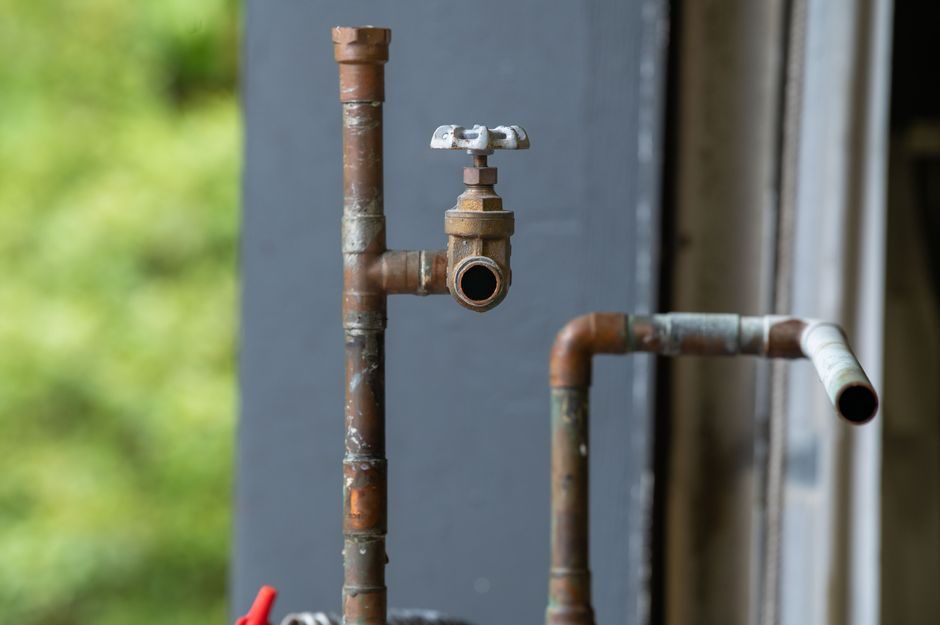
Plug valves commonly meet seat leakage Class IV through Class VI under ANSI/FCI 70-2-2006, with soft-seated PTFE or elastomer variants achieving Class VI in clean, low-temperature service and metal-seated or lubricated plugs landing at Class III–IV once solids, temperature or wear are factored in [S3].
The interface that decides "fit" is layered: mechanical (face-to-face, flange class, end connection), material (body/liner, plug coating, seat elastomer), pressure-temperature rating, and the test fluid/test pressure that proves the leakage class — miss any one layer and the seat leakage call on paper does not survive commissioning.
Seat leakage class definitions engineers actually quote
ANSI/FCI 70-2-2006 defines six leakage classes for control-valve seats, each with a maximum allowable leakage rate in bubbles per minute, cc per minute, or drops per minute depending on seat size and test fluid [S3].
API 598 and API 6D are the parallel standards most process plants actually invoke on plug-valve purchase orders; API 6D defines A through F categories for ball-and-plug valves, where categories A and B are zero-visible-leakage, C and D are rate-based, and E and F are softer commercial rates. Specifiers writing a plug valve data sheet must declare which standard, which class, which test fluid (water, air, nitrogen) and which test differential pressure — a Class VI on air at 50 psid is not equivalent to a Class IV on water at full body rating.
Plug-valve construction vs the leakage class the seat can actually hold
A lubricated plug valve with a metal-to-metal seat historically lands in API 598 Class III–IV territory; the lubricant film is what fills the micro-gap, so the leakage class is partly a function of how often the operator re-greases the sealant system, not just the plug geometry [S5]. Once abrasive service (slurries, coke fines, polymerized hydrocarbons) strips that film, on-site leakage drifts upward one or two classes, which is why operators in FCC, coker let-down and mining service typically accept Class IV as the design floor and stop trying to buy Class VI on a metal seated plug.
Soft-seated plug valves — PTFE, R-PTFE, PEEK, FKM, NBR or UHMWPE liners or seat inserts — can hit FCI 70-2 Class VI on clean, low-temperature, non-cavitating service [S3]. The hard limits are temperature (PTFE caps near 260 °C in non-load conditions, PEEK ~250–300 °C, elastomers well below), pressure class (soft seats usually stop at ASME Class 600 because extrusion creep begins to dominate), and chemical compatibility (sodium, bromine, molten alkali, and strong oxidizers attack fluoropolymers). When any of those three lines is crossed, the leakage class on the data sheet is a fiction.
Sleeve-lined plug valves (fully PTFE or PEEK sleeve between plug and body) are a different mechanical story: the sleeve is the seat, and Class VI is routinely published by vendors on 150# and 300# bodies. The compatibility pitfall is vacuum / thermal cycling — cold flow can relax the sleeve and a once-Class-VI valve becomes a Class IV after a year on a hot-oil line that cycles 200–300 °C daily.
Selection criteria that actually move the class number
Four decision gates line the main plug-valve options up against the leakage class you can defend on site: (1) service cleanliness — clean gas, clean water, hydrocarbon, slurry, polymerizing monomer; (2) operating temperature band; (3) pressure class and cycling rate; (4) regulatory driver — fugitive-emission rule, EPA leak detection (Method 21), TA Luft, or simply API 598 acceptance. [S1]
Lined or soft-seated plugs win on (1) clean service and (4) tight leakage class (Class V–VI) but lose on (2) above ~260 °C and on (3) above ASME 600# continuous. Lubricated metal-seated plugs win on (2) up to ~600 °C with graphite packing and on (3) up to ASME 900–1500# but concede (4) — typical published rates are Class III–IV. Eccentric-plug and lift-and-turn plug designs add a packing-loaded shutoff that buys back one class on dirty service because debris is pushed off the seat on opening, reducing the "blown-back" accumulation that hurts long-term sealing [S5]. For the highest tight-shutoff duties — chlorine, oxygen, vacuum, catalyst-fines-laden hydrocarbon — ball valve or double-block-and-bleed assemblies are usually the more honest spec because ball geometry under uniform seat load scales more predictably to Class V–VI on metal seats than a plug's line-contact seat does.
Pressure class, temperature and the seat-test pressure pitfall
FCI 70-2-2006 leakage rates are determined with a defined test pressure differential — typically the maximum operating pressure differential or a fraction of it, not the full cold working pressure [S3]. A plug valve rated ASME Class 600 and tested at 100 psid air for Class VI is not the same valve, on paper or in service, as the same body tested at 1,480 psid (Class 600 rating) — the higher differential closes the seat harder and usually improves the rate, but it also loads the seat elastomer at a level the running service never sees. Conversely, a 150# soft-seated plug with a published Class VI on air at 50 psid can fail Class IV silently when the line swings to 285 psig on a pump-discharge event.
Temperature derates the class the same way. A PTFE soft seat tested at ambient may pass Class VI on nitrogen, then drift to Class V at 180 °C and Class IV at 220 °C because PTFE's modulus drops and its thermal expansion fills the seat pocket unevenly. Specifying control valve and plug valve leakage classes only at ambient is the single most common audit finding on European and US refinery projects reviewed against ISO 15848 fugitive-emission checklists.
Standards, test media and what a vendor test certificate really proves
ANSI/FCI 70-2-2006 (reaffirmed as an American National Standard by FCI) sets the leakage classes and the test method, but it allows the buyer to declare test fluid (air, water, nitrogen, kerosene) and test pressure differential — both of which change the rate [S3]. API 598 specifies the hydrostatic shell test, the seat leakage test (high-pressure closure, low-pressure closure, and optional drainage-cavity test) and references rates per category, again with a defined test fluid. API 6D (latest edition, "Specification for Pipeline and Piping Valves") covers ball and plug valve categories A–F with the same rate-vs-test-fluid convention. For sour service, NACE MR0175/ISO 15156 restricts the metal alloys and hardness ranges that can be exposed to H₂S, which constrains the plug-and-stem material set independently of the seat leakage call.
On a practical purchase order the four fields that lock the seat leakage call down are: (a) standard and revision, (b) class or category, (c) test fluid, (d) test pressure differential. A line that reads "seat leakage per API 598" is not a specification — it is a placeholder that lets the vendor choose the easiest path. A line that reads "seat leakage API 598 Class VI, test fluid dry nitrogen, test ΔP 50 psid, ambient 20–25 °C, duration 5 min per port" is something a QA inspector can verify and an operations engineer can defend at the next PHMSA or OSHA audit.
When the class number is not the right question
Two real plant failures keep showing up in incident reports: (1) a Class VI-certified soft-seated plug installed in monomer service with periodic temperature excursions to 240 °C, where the PTFE seat cold-flowed and the leakage class drifted to Class IV within nine months; (2) a lubricated Class IV plug in a slurry service where the operator suspended the lubrication cycle during a turnaround, then re-started without re-greasing, and the line failed a Method 21 screening at 22,000 ppm VOC. In both cases the seat leakage class on the data sheet was correct — the operating envelope was not. [S3]
For tight shutoff on dirty, hot or cyclic service, the engineering question is usually "what is the lowest steady-state leakage rate we can hold for 12–24 months between turnarounds", not "what is the best class we can publish on a certificate." That question pushes the spec toward ball valve with metal or soft seats, butterfly valve with high-performance seats, or check valve and plug valve combinations in double-block-and-bleed — and away from single plug valves alone.
Trackable next nodes: re-confirm FCI 70-2 current revision status with FCI; cross-check API 6D and API 598 latest editions for the rate tables cited above; verify NACE MR0175 / ISO 15156 alloy restrictions before fixing a material set in a sour-service H₂S plug. Standards revision dates and forthcoming changes were not pulled in this pass and should be verified against the issuing bodies before being written into a purchase order.
Background reading: Self-Priming Pump Certification Checklist for Cooling Water Loop.