For abrasive or viscous media, frequent cycling, or applications requiring double-block-and-bleed in a compact body, select a plug valve [S8].
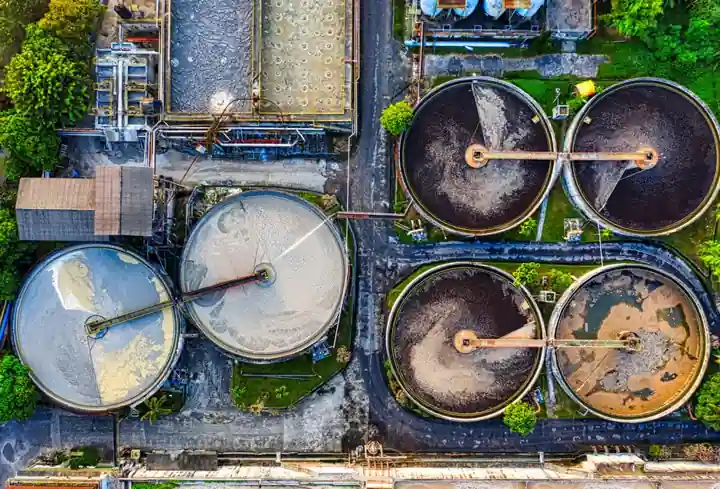
Water-treatment applications include raw-water isolation, sludge withdrawal, return-activated-sludge and waste-activated-sludge control, filtration sequencing, chemical-feed regulation, and wastewater isolation; the correct variant depends on solids, corrosion, pressure, temperature, and leakage requirements [S1][S3][S5].
Define the service before selecting the valve body
Plug valves use a cylindrical or tapered plug to block or permit flow, and their body arrangement determines whether the plug is mechanically offset from the seat centerline [S2][S3]. A conventional plug valve provides compact isolation, while an eccentric plug valve is commonly listed among options for water-treatment applications [S5].
The water-treatment design basis should record the fluid composition, maximum and minimum operating pressure, operating temperature, solids concentration, particle size, duty cycle, required leak tightness, and whether throttling is involved. The same valve description is not valid for clean filtered water, chemical dosing, and grit slurry: a product identified as a plug valve for wastewater, such as the PG3100 round-port model, is specifically aimed at slurry, sludge, and sewage applications [S7].
For water-treatment applications, knife gate valves are used for on/off isolation in abrasive, solids-laden flow, butterfly or globe valves provide flow control and isolation in large-diameter pipes, and plug valves are used for sludge-withdrawal and RAS/WAS flow control [S3].
Match plug geometry to solids and flow control
Round-port plug valves are suited to wastewater duties where the valve must pass slurry or sludge without forcing the flow through a restricted bore; the PG3100 is a documented AWWA-compliant round-port plug-valve platform for those applications [S7]. Plug valves are used for modulating sludge-withdrawal flow and for RAS/WAS flow control [S3].
The material path must be selected from the actual water chemistry rather than from a generic “water” label. Wastewater may contain solids, sludge, slurry, and chemicals, while potable-water service requires materials that are safe for human consumption and resistant to corrosion; NSF 61 is identified as the primary certification for potable-water contact, and AWWA requirements govern water-distribution valves in that context [S4].
The supplied research identifies PTFE-lined ball valves for aggressive chemical-feed shutoff, but it does not establish a universal plug-valve lining or material grade for every chemical, so the procurement datasheet must identify the seat, plug, body, stem, and exposed fasteners separately [S3].
Compare the main water-treatment valve options
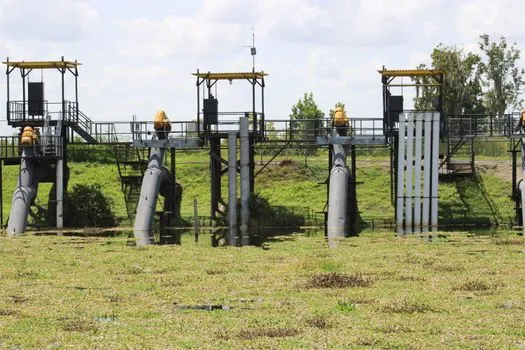
No single valve type wins every water-treatment duty. The decision should be made against four measurable criteria: solids tolerance, throttling capability, shutoff leakage, and physical footprint, rather than by selecting the most common body style. [S3]
Set the shutoff, actuation, and maintenance criteria
For normal isolation, specify the required seat leakage class and test direction rather than relying on the word “tight shutoff.” For maintenance or chemical containment, double-block-and-bleed capability in a compact body is a recognized reason to select a plug valve, but the bleed arrangement must be validated for the installed orientation and piping layout [S8].
Actuation selection is a functional decision, not an accessory choice. Hand, lever, gearbox, pneumatic, and electric operators should be checked against the required torque, cycle frequency, fail position, control signal, and available installation space. Plug valves are identified as suitable for frequent cycling, which makes actuator cycle life, stem or plug wear, and maintenance access part of the initial sizing exercise [S8].
For a manually operated valve, verify that the exposed operating mechanism is appropriate for the installation environment and that the valve can be reached for lubrication and inspection. For automated duty, define whether the actuator is required to modulate, open or close on instrument-air failure, or provide a fixed fail-safe position. The supplied research materials provide no universal torque or cycle-life rating for plug valves [S7][S8].
Match materials and operating limits to the water chemistry
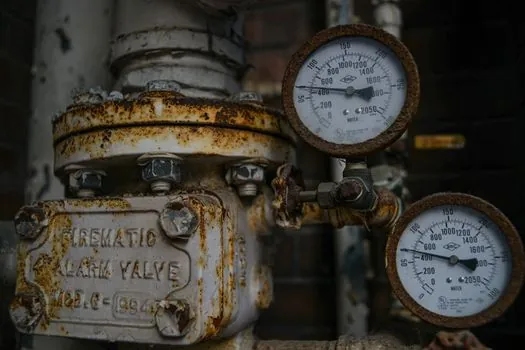
Water-treatment valves are mechanical control devices that govern fluid flow, pressure, and volume in filtration and chemical-treatment systems [S2]. For potable applications, the valve and its contact materials must satisfy the applicable drinking-water certification, with NSF 61 identified for this purpose [S4].
For abrasive service, the plug, seat, and body need enough hardness and wear resistance for the expected solids. For chemical service, elastomers, fluoropolymer linings, stainless steel, nickel alloys, or coated components may be candidates, but the supplied sources do not provide a universal material grade for plug valves. Specify each wetted grade and verify compatibility with concentration, temperature, oxidant exposure, and cleaning chemicals rather than accepting a generic “stainless steel” description [S2][S4].
Pressure and temperature are equally important. RO applications can involve service above 60 bar and concentrated brine, so a plug valve used on RO concentrate must be selected from the project-specific pressure and corrosion envelope rather than from ordinary low-pressure treatment-service data [S2]. The same rule applies to chemical-feed and disinfection lines: verify maximum system pressure, minimum opening pressure, maximum temperature, and chemical concentration with the valve manufacturer [S3][S4].
Use the valve where it fits, not as a universal isolation device
Plug valves are a poor default for every water-treatment service. They are not the best choice when the duty is large-bore clean-water isolation and capital or weight dominates, because butterfly valves, gate valves, and ball valves can provide more appropriate full-bore isolation arrangements [S4][S5]. A knife gate valve may be preferable where the principal requirement is cutting through solids and full-line isolation rather than controlled sludge modulation [S3][S4].
They are also unsuitable as an unqualified throttling valve. A plug must have a profile and seating arrangement designed for the required control duty, and the pressure drop at the intended operating point must be included in actuator sizing. For dosing and fine chemical regulation, a control valve selected for the chemical, pressure drop, and control range should be evaluated instead; the related comparison of water-treatment control valves by duty provides the correct functional distinction between isolation and regulation.
For wastewater projects, establish the process train first: screen and grit handling, clarification, aeration, secondary clarification, filtration, disinfection, sludge thickening, and dewatering each impose different solids and chemical conditions [S1][S3]. Plug valves are most defensible where the service contains solids or sludge and the valve must either isolate the line or regulate sludge flow in a compact package [S3].
Build a procurement-ready data sheet and shortlist

A defensible plug-valve data sheet should identify the valve type, port arrangement, size, body and trim materials, seat material, closure direction, pressure class or allowable pressure-temperature rating, operating temperature, end connection, actuator type, control function, seat-leakage requirement, and required tests [S7][S8]. For the PG3100-type reference, the relevant verification points are AWWA compliance, round-port construction, and suitability for slurry, sludge, and sewage service [S7].
Shortlist the design against four gates. First, confirm that the plug and body can handle the solids or chemical duty [S2][S3]. Second, confirm the pressure and temperature envelope for the specific treatment stage, including the greater-than-60-bar condition associated with RO service where applicable [S2]. Third, confirm isolation or modulation performance through leakage, torque, and actuator-duty requirements [S4][S8]. Fourth, confirm product-specific compliance, such as AWWA for a wastewater plug-valve platform or NSF 61 for potable-water contact [S4][S7].
Before purchase, request the manufacturer’s current project submittal covering drawings, materials of construction, dimensional data, torque, allowable pressure-temperature ratings, seat-leakage test results, coating or lining details, actuator data, and installation orientation. Track two engineering signals before releasing the order: confirmation that the selected drainability and bleed arrangement suits the piping layout, and confirmation that the stated solids, chemical concentration, temperature, and pressure all fall within the manufacturer’s published operating envelope [S2][S8].