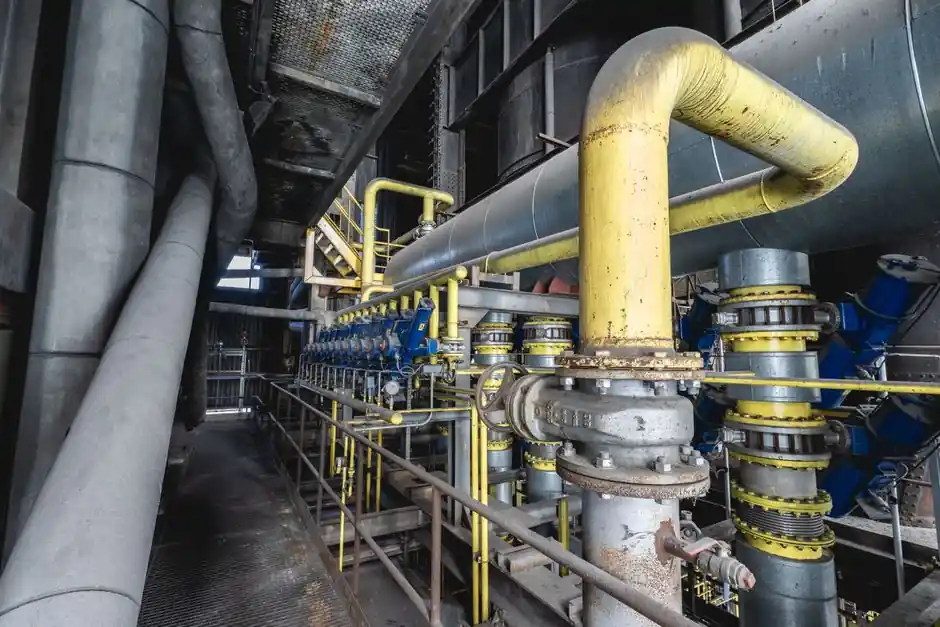
A standard swing check valve is suitable for water and treated-wastewater service when the line has low surge risk, forward velocity is approximately 5–15 ft/s, and closure can be managed with an appropriate accessory [S1][S3].
A ball check valve has a full-bore passage that minimizes headloss and has no external parts, while a swing check valve relies entirely on flow and pressure to open. Selection must still cover solids, corrosion, installation orientation, pressure rating, pump-stop behavior, and maintenance access.
Define the water-treatment duty before selecting the valve
A swing check valve is an automatic non-return device that opens under forward flow and closes to prevent reverse flow when a pump stops [S1]. It is traditionally the most common check-valve category in water and wastewater pumping systems, principally because it is readily available and does not require external power [S1][S2].
It is not one universal product. A conventional swing design has a flat disc that pivots about a hinge and may travel through as much as 90 degrees while closing [S1][S3]. Typical arrangements include a plain gravity-closing valve, lever-and-weight closure, lever-and-spring closure, and accessories that provide controlled or monitored closure [S2][S3].
Use the term swing check valve for the pivoting-disc family, not for every non-return valve. A lift check valve, ball check valve, and dual-plate design use different closure principles and should be compared when solids, slam, or installation constraints dominate.
Match the design to flow, solids, and installation conditions
Treat these values as a warning to verify the manufacturer limits, not as universal ratings for every swing valve.
Raw wastewater, sewage, and solids-bearing recycled water require more scrutiny than clean or treated water because debris can interfere with disc motion and seating [S2][S5]. For dirty service, consider the self-cleaning action of a ball check valve before fixing the configuration.
Compare the realistic closure options

A conventional gravity-closing swing valve provides low headloss and simple passive operation, but its longer disc movement leaves it more exposed to slam than short-stroke designs [S1][S2][S3]. It fits low-surge applications where reverse flow will not damage the pump and controlled closure is unnecessary [S3].
Protect pumps and piping from reverse flow and water hammer
Rapid valve closure can protect upstream equipment from reverse-flow damage, but it does not prevent all surges caused by pump start-up or shutdown [S2]. A swing check valve is susceptible to slamming, and different closure devices are available.
Neither range replaces a transient analysis of pump, pipe, and relief capacity.
Water hammer can occur when a sudden increase or decrease in the rate of flow and pressure of a fluid in a piping system is caused by an abruptly closed valve stopping the flow of liquid. Check-valve selection should therefore be coordinated with line length, system head, pump characteristics, discharge piping, and any surge-analysis results rather than treated as an isolated valve purchase.
Verify materials, pressure class, and installation orientation
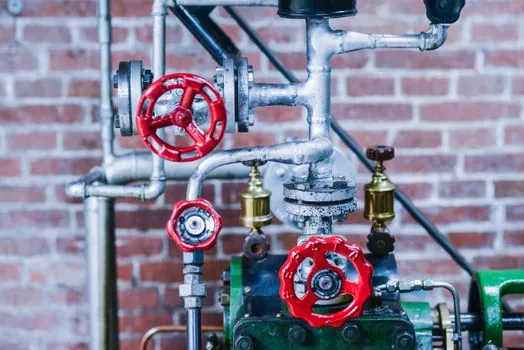
Material selection must cover fluid composition, temperature, corrosion, and contamination rather than relying on a generic “ductile iron” description [S5]. Check-valve options include cast iron, ductile iron, carbon steel, stainless steel, and plastic constructions, but the research does not establish a universal material-to-service allocation [S4].
Match the valve size, pressure class, end connection, and flow capacity to the specific line. Check-valve selection should account for headloss and costs.
Specify the required sealing performance rather than using an undefined “watertight” note. Applications may require gas-tight, bubble-tight, or drop-tight sealing, and the required performance depends on the consequence of leakage [S5]. Verify whether an open/close indicator is needed because ball check valves do not have one.
Choose closure accessories by operating consequence
Lever-and-weight accessories alter closure force without introducing a powered actuator [S2]. They are useful when the required closing characteristic is known, but the owner still needs an inspection route because external accessories add points that can be tampered with or damaged [S2].
Lever-and-spring closure provides a more defined closing action than gravity alone, while dashpot assistance is the relevant choice when controlled slow closure is required [S1][S2]. Fast-closure accessories suit reverse-sensitive pump systems; controlled slow closure suits systems that can tolerate some backflow and need reduced slamming [S3].
The swing design remains a sound choice for water treatment when the project values full-port flow, low headloss, simple passive operation, and straightforward service. It is a poor default for long pump-discharge lines with severe water-hammer exposure, highly contaminated service without a proven debris path, or installations that cannot accommodate the required orientation and maintenance clearance.
Build a defensible procurement shortlist
A water-treatment swing check valve should leave the specification sheet with at least five measurable entries: nominal size, flow range, working and test pressure, allowable temperature, body and trim materials, closure accessory, fluid condition, orientation, sealing class, and end connection [S2][S5].
The shortlist logic is straightforward. Choose a conventional swing valve for low-surge, relatively clean service; add controlled closure where reverse flow is tolerable and slam must be reduced; choose a dashpot-assisted design for controlled velocity change over roughly 5–30 seconds; and move to a fast-closing lift valve when immediate pump protection outweighs the slightly greater headloss [S1][S2][S3].
Before purchase, confirm whether the intended fluid contains solids, whether operating velocity can remain within the selected disc’s verified limits, and whether downstream transients require simulation. For a related comparison, Select Check Valves for Seawater Desalination Duty extends the material and corrosion review to a different water-treatment duty.
The final procurement check should document the selected closure device, expected reverse-flow condition, inspection access, and the basis for rejecting alternative check-valve types. That record turns “swing valve” from a generic line item into a defensible engineering decision.