
Pneumatic conveying is the dominant bulk-transfer method in food and beverage plants because it moves dry powders and granules through fully enclosed pipelines, limiting exposure to airborne contaminants, moisture, and operator contact [S1][S3].
Commonly conveyed ingredients include flour, sugar, milk powder, cocoa, salt, coffee, infant formula, and spices, with conveying distances ranging from a few metres at single-machine feeds to over 100 m on cross-plant routes [S1][S5].
Why Pneumatic, Not Mechanical, in Most Food Plants
Pneumatic conveying is the preferred method in food and beverage, pharmaceutical, and plastic/polymer plants because the air stream keeps product inside sealed stainless piping, while mechanical conveyors typically run as open belts, screws, or bucket units [S4].
The trade-off is direct: pneumatic systems use a smaller footprint, give excellent dust control, and route around obstacles via overhead or in-wall piping, but they consume more energy per tonne and are not well suited to heavy, wet, or non-free-flowing materials, where belts, chains, or screws still win [S4]. For a single-machine creamery or bakery feed, a flexible screw is often the right call; for a 60 m transfer of flour from bulk silos to a packaging line, pneumatic is the default. Pneumatic is generally specified for dry, free-flowing materials over long distances, while mechanical conveying is preferred for heavy, wet, or non-free-flowing materials over shorter distances [S4].
The Four System Types and Where Each Fits
Pneumatic conveying systems are typically split into dilute phase pressure, dense phase pressure, vacuum (negative pressure), and combined pressure-vacuum configurations, and the foremost selection factor is the physical and chemical properties of the material being conveyed [S6].
Dilute phase pressure systems use a blower to suspend light, non-fragile materials such as talc-like fine powders at high velocity through the line, and are the simplest and lowest-cost option for non-abrasive food powders over moderate distances [S4]. Dense phase pressure systems move heavier or more abrasive materials, such as plastic pellets or friable agglomerates, in waves or slugs at lower velocity, with high air pressure applied so the product travels in pulses rather than being fully suspended, which reduces particle degradation and pipeline wear [S1][S4]. Vacuum systems pull material from a feed point to a central receiver using a vacuum at the end of the line, which makes them well suited to dusty loading points where leaks would contaminate the room [S4]. Combined systems use a vacuum pickup from multiple sources and then pressurise the line to a single delivery point, common in larger bakeries and dairies receiving from several silos [S4].
Selection Criteria: Material Properties Drive the Decision

Bulk density, particle size distribution, moisture content, abrasiveness, and friability together decide which conveying mode, line diameter, and air velocity are safe for the product [S6].
In practice, food engineers start from a checklist: is the material free-flowing or cohesive, friable or hard, hygroscopic or stable, abrasive or soft, and is it fat-bearing or non-fat [S6]? Fat-bearing powders such as cocoa or milk powder are both hygroscopic and prone to smearing on pipe walls, which means low-velocity dense phase is typically preferred to limit both pickup of ambient moisture and product build-up [S1]. Hard, abrasive crystalline materials such as sugar or salt tolerate dilute phase well and are usually the easiest to specify; cohesive fine powders such as flour or whey permeate can fluidise and need higher air-to-solids ratios to keep the line moving [S6]. Conveying air velocity must be high enough to keep the product in suspension but not so high that particle degradation, dust generation, or pipe erosion becomes unacceptable [S5].
Food-Grade Design, Hygiene, and Containment
Food and beverage plants depend on gentle material transfer with a focus on plant cleanliness, and pneumatic systems support this with closed conveying, sanitary stainless contact surfaces, and dense phase options for fragile powders [S1].
The practical hygiene requirements fall into three layers: contact-surface finish (typically 304 or 316L stainless, mechanically polished to a defined Ra, with sanitary Tri-Clamp or DIN 11851 joints), cleanability (piping layouts that allow wash-in-place or disassembly without dead legs, plus quick-release elbows), and contamination control (sealed receivers, dust-tight filters, and dust collection at every pickup and discharge point) [S1][S2]. Enclosed pipelines prevent contamination from ambient humidity as well as from airborne particles, which matters for moisture-sensitive products such as milk powder, infant formula, and instant coffee [S1][S3]. For allergen segregation, dedicated lines and colour-coded piping are common so that a gluten, dairy, or soy line cannot cross-contaminate an allergen-free run [S2]. Dynamic Air has engineered tailored pneumatic conveying systems since 1969, with over 15,000 systems installed worldwide across chemical, food, pharmaceutical, and plastics plants [S1].
Components, Sizing, and System Boundaries
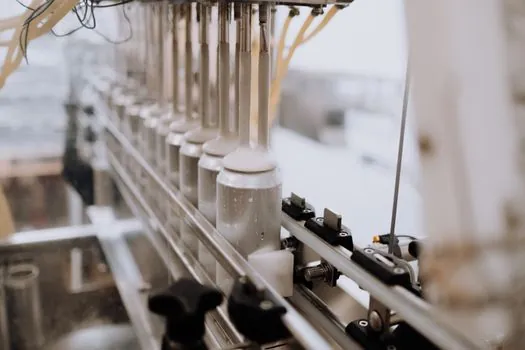
A complete pneumatic conveying line includes a material feed device, an air source, the conveying line, bends, an air-material separator, and a receiving point, all of which must be sized as a single system rather than picked piece by piece [S4][S5].
Upstream of the line, rotary valves, venturi feeders, or screw feeders meter material into the air stream, and the choice depends on whether the system runs under positive or negative pressure [S4]. Rotary valves are the standard for pressure systems handling non-fragile powders, but they are not the right feed for vacuum systems, which use venturi or blow-through tanks instead [S4]. The air source is typically a positive displacement blower for low-pressure dilute phase and a screw or piston compressor for high-pressure dense phase, sized against the calculated pressure drop across the longest route, including all elbows and elevation changes [S5]. At the receiving end, filter receivers or cyclone separators separate the product from the air stream before the conveying air is vented or, for nitrogen or dehumidified applications, returned to the source [S4]. Pneumatic elbows are wear items, particularly on abrasive products, and are typically specified as long-radius, replaceable, and self-cleaning in food-grade stainless [S4].
Limitations, Failure Modes, and Common Pitfalls
The most common failure modes in food pneumatic conveying are line pluggage from cohesive powders, particle attrition of fragile ingredients, and product degradation at the receiver when filters clog or back-pressure spikes [S1][S6].
Pneumatic systems have higher energy consumption than mechanical conveyors and are not suited to heavy, wet, or non-free-flowing materials, where mechanical conveying still wins on efficiency and simplicity [S4]. Over-speeding the line to push higher throughput is a classic mistake: it works briefly, then accelerates pipe wear, breaks friable particles, and lifts fines into the filter, where the resulting high differential pressure can starve the system of conveying air and trigger a plug [S5][S6]. A second pitfall is under-sizing the receiver filter or running it without routine pulse-clean cycles, which raises back-pressure and degrades product at the discharge point [S4]. For facilities running ingredient transfer lines daily, expect filter media replacement, elbow inspection, and rotary valve rotor clearance checks on a documented interval rather than after a failure.
Vendor Range, Standards, and Procurement Signals
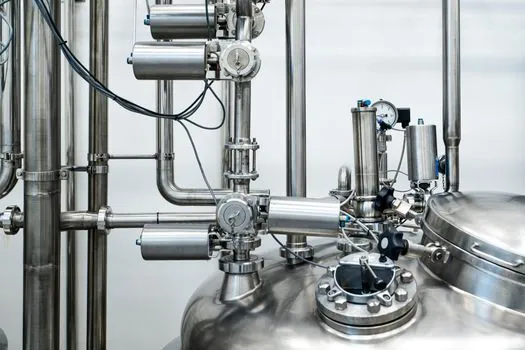
Major food-grade pneumatic conveying suppliers offer dilute phase pressure, dense phase pressure, vacuum, and combined systems, all custom engineered to the application rather than sold as standard catalogue units [S7].
Coperion K-Tron, for example, builds food material handling systems custom designed for the application, with options including dilute phase pressure and dense phase configurations for safe food transfer [S7]. The technology base is shared with the wider pneumatic conveying family of equipment, so engineers can also review a broader pneumatic actuator reference for component-level sizing data. Hygienic execution typically references EHEDG Doc. 2 for cleanability of open process equipment, 3-A Sanitary Standards for closed equipment, and FDA 21 CFR materials of construction, with ATEX or IECEx zone classification required only if a combustible dust hazard exists [S2]. On the buyer side, trackable signals over the next planning cycle are: (1) any new build specifying a combined vacuum/pressure system across multiple silos, and (2) any retrofit replacing open belt conveyors with enclosed dense phase on allergen-sensitive lines, which is the dominant replacement pattern documented across food and beverage plants.
For the relevant spec sheets and selection criteria, see conveying.
Background reading: Locking Assembly Selection for Material Handling Drums and Pulleys.