
A sorting system is a goods-classification machine that measures volume, shape, weight, color, image, and label data on a central transport line, then routes each unit to a destination chute or bin [S1]. In 2026 industrial practice there is no single standard type: every installation is configured around item size, throughput, available footprint, and the number of required discharge points [S1].
Sorting equipment is used across intralogistics, food processing, parcel hubs, and waste recovery, with the global parcel sorting system market projected to grow from $3 billion (2022) to $6.70 billion by 2029 [S5]. This breadth is why classification schemes are organised first by product load, then by mechanical morphology, then by sorting principle.
Primary Classification by Product Load
The first cut is the load tier the machine physically handles: unit product sorters, box or container sorters, and pallet sorters [S1]. Unit sorters are designed for eaches and polybags, box sorters move cartons and totes through 30-60 mm gap diverts, and pallet sorters handle full-pallet loads with real-time pallet profile data for load verification and invoice correction [S1].
Within each load tier, morphology defines the layout. Common types include tray sorters, shoe sorters, vertical sorters, and cross-belt sorters, with shoe sorters available in both full-size bulk-pick and "shoe sorter mini" formats for compact unit-picking cells [S2]. Picking the wrong morphology for the load tier is the most common specification error on new DC builds.
Parcel and DC Sorter Morphologies and Throughput
Cross-belt and sliding-shoe sorters dominate high-throughput DC applications, while narrow-belt and 90-degree transfer units cover mid-volume parcel work. 90-degree sorters are rated 10-60 cartons per minute and are designed primarily for mid-sized parcels, with the narrow belt variant often specified where small packages and polybags must be moved without gap-induced jams [S5].
For higher throughput, the Divert and Transfer Roller Belt Sorter uses a transfer belt plus a separate divert belt to push parcels left or right, and is rated 35-50 parcels per minute; its modular frame drops into existing conveyor runs without a greenfield conveyor rebuild [S5]. Throughput ceiling, gap geometry, and divert count per linear metre are the three numbers to lock before vendor selection, not after.
Food and Washdown Sortation
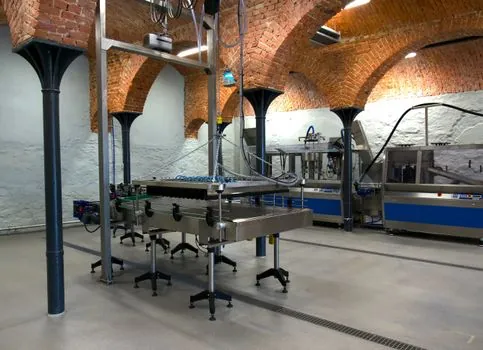
In food plants, sortation systems are built around NTEP-approved in-motion conveyor scales that weigh each primals, steak, ham, or cheese block and then divert by weight, grade, count, or camera-driven visual characteristic into bins, pack-off stations, or downstream conveyors [S3]. Stainless steel or aluminum construction is selected to match industry washdown standards, and diverts are realised by pull, push, drop, tip, plow, air-blow, or shoe-sort mechanisms sized to product fragility [S3].
Stability and fragility drive the upstream infeed: spacing conveyors are used to singulate and to control orientation before the weigh point, because misaligned product produces both weighing error and mis-divert [S3]. Distance-based encoding, where the controller tracks each unit's belt position rather than relying on a fixed timer, is preferred for divert accuracy on variable-length product, since timer-based systems lose calibration whenever the belt stops and must be cleared before restart [S3].
Waste and Recycling Separation Principles
Industrial waste sorting lines are usually combinations of distinct separation principles, not one machine. The six common types are manual picking lines, air separation, magnetic separation, eddy current separators, trommel screeners, and density separators, each exploiting a different physical property: sight/touch, airflow density, magnetism, electrical conductivity, particle size, and bulk density respectively [S4].
A typical flowsheet runs manual picking first to pull bulky contaminants, then air classification to lift film and paper, magnetic separation to lift ferrous metals, eddy current separation to lift aluminium and copper, and trommel or density separation to grade the remaining fines [S4]. More than half of EU waste was treated in recovery operations as of 2018, and combining these principles is what pushes both recovery rate and recovered-material quality upward [S4].
Selection Criteria and Side-by-Side Comparison
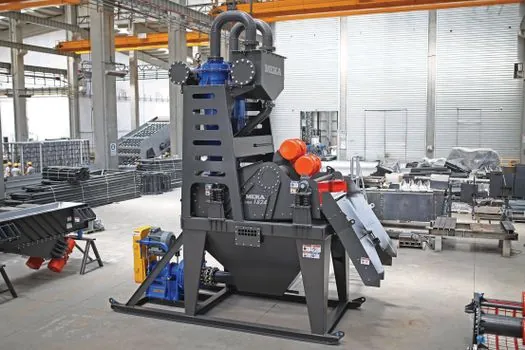
For an engineer comparing options, the decision matrix comes down to four axes: load tier (unit, box, pallet), physical separation principle (divert, weigh, density, magnetic, eddy current, air), throughput band (10-60 cartons/min for 90-degree units, 35-50 parcels/min for roller-belt diverters, much higher for cross-belt loops), and environment (dry DC versus stainless washdown) [S1][S3][S5].
A cross-belt loop is the right pick for high SKU count and high divert density; a shoe sorter suits apparel and flat goods; a 90-degree or narrow-belt sorter suits mid-volume parcels with mixed sizes; a weight-based washdown line suits protein, dairy, and cheese plants; and an eddy current plus magnetic plus air flowsheet is the baseline for any non-ferrous recovery line [S1][S3][S4][S5]. Specifying without locking all four axes is the usual reason a sorter underperforms in the first 12 months.
Limitations, Failure Modes, and Sourcing Signals
Three failure modes dominate the field: gap jams on small parcels and polybags, timer drift on belt-stop-restart cycles, and database loss on network outages. Narrow-belt and roller-belt diverters mitigate the first by closing the divert gap; distance-based encoding mitigates the second by tracking each unit's true position; and on-controller local storage that uploads after network restore mitigates the third [S3][S5].
Trackable signals to watch on 2026 sourcing: demand for shoe sorter mini cells tied to micro-fulfilment, more NTEP-approved in-motion weighing modules in washdown spec sheets, and modular roller-belt diverters retrofit into existing conveyor runs rather than rip-and-replace. For deeper mechanical context, the conveyor sorting line and sorting system encyclopedia pages lay out the underlying transport and divert primitives used across the morphologies above. Adjacent warehouse topics worth cross-reading include forklift failure modes and prevention when sizing the receiving end of a sorter line.
For component-level specifications, see construction machinery and equipment.