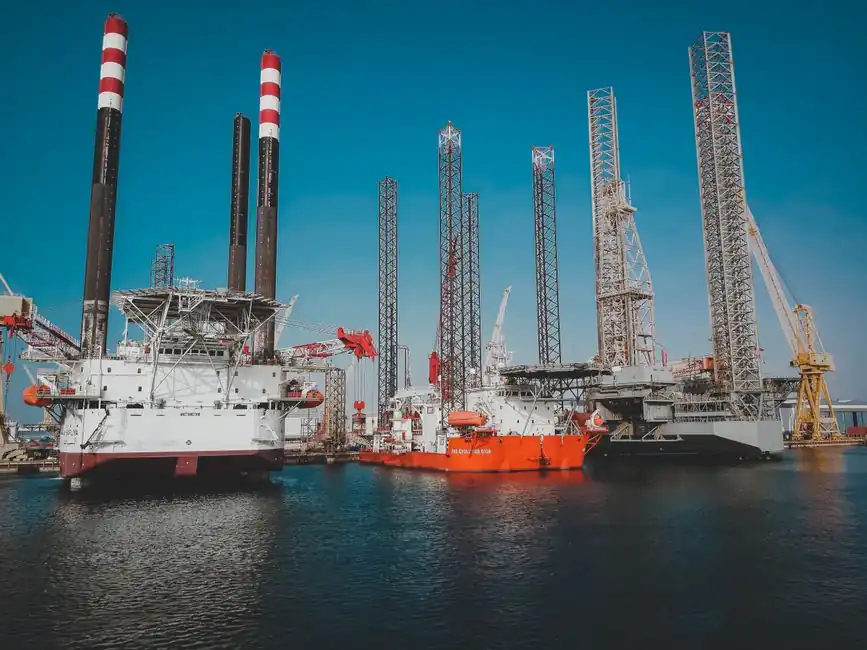
Polyurethane (PU) seals, O-rings, wear liners, rollers, and pipeline pigging components are widely specified in oil and gas equipment where drilling mud, slurry, sand, and high-pressure dynamic duty would shred conventional rubber, with abrasion loss commonly running well below NBR or natural rubber in head-to-head tests [S1][S4].
The qualifier that controls everything else is the polyol backbone: polyester PU offers higher tensile strength (15-25 MPa), better oil resistance, and higher abrasion; polyether PU delivers hydrolysis resistance and low-temperature flexibility but weaker oil and chemical resistance, which is why most offshore drilling elastomer specifications route wet-service parts to polyether and dry, oil-saturated parts to polyester [S2][S5].
Why Polyurethane Reaches for Oil and Gas in the First Place
Cast polyurethane elastomers deliver a unique property stack for upstream and midstream service: load-bearing capacity, impact strength, resilience, abrasion resistance, and resistance to petroleum oils and greases, all in a single polymer family, which is why oilfield designers reach for PU before considering FKM, HNBR, or FFKM in dynamic wear positions [S6].
The economic argument is just as concrete. A polyurethane component that lasts twice as long as a rubber equivalent produces substantial lifecycle savings through reduced maintenance interventions and increased uptime, which is the metric procurement and reliability engineers actually measure when comparing PU to NBR or HNBR in mud-pump fluid ends, pipeline scrapers, and wear sleeves [S4].
Standard oil and gas deployments span mud pumps, pipeline scrapers, drilling platforms, protective sleeves, pigging systems, hydraulic equipment, and wellhead support systems exposed to abrasive fluids, high pressure, vibration, and aggressive operating environments, with the polyurethane hardness range from Shore A 20 to Shore D 75 covering everything from cushion pads to rigid backup rings [S1][S2].
Polyester vs Polyether: Pick the Backbone Before the Durometer
Polyester polyurethane gives the higher tensile and best oil and chemical resistance but degrades under constant moisture and high-humidity service, which is why hydrocarbon-saturated dynamic seals, wipers, and rod packings for upstream equipment tend to be specified in polyester grades [S2].
Polyether polyurethane is the standard choice for wet offshore environments and steam, hydrolysis-resistant service because the ether linkage resists water attack far better than the ester linkage, although its oil and solvent resistance drops measurably against the same polyester compound [S1][S2].
For millable polyurethane (MPU) the soft segment is built from poly-ε-caprolactone diols with molecular weights from 1,000 to 5,000 Da and tightly controlled polydispersity (Mw/Mn 1.0 to 1.5) so the glass transition stays below -20°C and crystallinity is suppressed, giving consistent rubber-like behavior from -40°C to +120°C and protecting dimensional stability under thermal cycling on the wellhead [S5].
A useful comparison frame for the decision room: polyester PU wins on tensile strength (15-25 MPa) and oil swell (under 20% weight change in IRM 903 lubricating oil), polyether PU wins on hydrolysis resistance and low-temperature flexibility, and the practical rule is to default to polyether anywhere free water or steam is sustained, and to polyester in dry, oil-rich dynamic service [S2][S5].
Hardness, Modulus, and How to Read the Durometer for Seal Duty
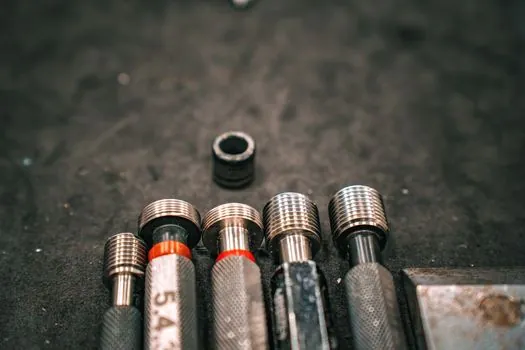
Shore A and Shore D durometer selection drives seal behavior more than most engineers admit. Soft Shore A 70-85 compounds are common for O-rings and wipers where conformance to surface finish matters; mid-Shore A 90-95 fits general-purpose wear parts; Shore D 50-75 grades replace metal in bushings, rolls, and load-bearing sleeves where compression set must be minimized [S2].
Hardness is not a free upgrade. As crosslink density rises through the addition of small-molecule chain extenders such as 1,6-hexanediol or neopentyl glycol at 2-10 phr, tensile strength climbs from roughly 8 MPa to over 15 MPa, but elongation at break falls from 600% to about 400%, so specifying a stiffer PU without checking the elongation budget can swap a wear failure for a tear failure [S5].
A common mistake is to read "higher durometer equals longer life" without checking the application. For pipeline pigging, where the part must conform to internal bore geometry and pass wye branches, a Shore A 80-90 compound typically outperforms a Shore D 60 part on both wear and pressure-tightness metrics, so hardness selection is a duty-cycle decision, not a quality decision [S2].
Standards, Sour Service, and When to Walk Away from PU
Materials for sour (H2S-bearing) service on production equipment are governed by NACE MR0175 / ISO 15156, which restricts elastomer families and hardness ranges based on partial pressure of H2S and free-water exposure; polyurethane is not a default-qualifying material in many MR0175 tables, and any PU specified for sour duty must be qualified on a case-by-case basis with documented H2S exposure limits [S3].
Valve and wellhead elastomers are pulled in under API 6A / API 17D and ISO 10423 for performance verification, while NORSOK M-710 and ISO 23936-2 set accelerated-aging protocols for elastomeric seals in oilfield environments, and these documents together define the qualification envelope that any PU candidate must clear before it can replace HNBR or FKM in a spec [S3].
The honest limits: standard polyurethane materials have lower maximum temperature resistance than FKM, HNBR, FFKM, or PTFE-based sealing materials, and certain aggressive hydrocarbons, solvents, amines, and acids will degrade PU depending on formulation. Long-term exposure to extreme heat and aggressive sour-gas conditions will push the spec back to HNBR, FKM, or FFKM, with PU reserved for the wear and dynamic position, not the static pressure boundary [S1][S3].
Comparison Frame: PU vs HNBR vs FKM for Oilfield Sealing
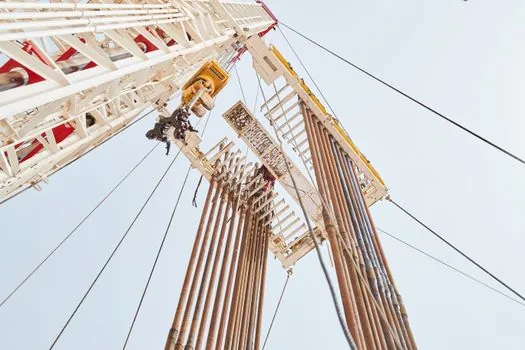
For procurement and reliability engineers lining up candidates, the structured comparison reads: polyurethane wins on abrasion resistance and load-bearing per unit cost; HNBR (hydrogenated nitrile) wins on high-temperature compressed set, sour service qualification under NACE MR0175, and resistance to petroleum-based hydraulic fluids; FKM (fluoroelastomer) wins on chemical resistance, high-temperature ceiling, and aggressive hydrocarbon duty; FFKM and PTFE win the high-end, all-chemical, high-temperature envelope but at multiples of the cost [S1][S3][S4].
The cost-to-temperature-to-abrasion ranking is therefore: pick PU for dynamic wear positions where abrasion is the dominant failure mode, pick HNBR for hydraulic rod and piston seals operating at moderate temperature in oil-based fluids, pick FKM for chemical and high-heat static service, and reach for FFKM/PTFE only where the process stream leaves no other option [S3][S4].
Designers building around polyurethane elastomer and oil seal selection should also size hardware for construction machinery and equipment service when the same PU part is mounted on rig skids, mobile pumps, or workover units, because the mechanical load and vibration envelope there differs from a fixed pipeline skid and often derates a Shore A 90 compound faster than the elastomer lab data predicts.
Real Use Cases and Failure Modes Worth Pre-Morteming
Mud-pump fluid-end parts, pipeline pig cups, sand-management hydrocyclone liners, and BOP elastomeric wipers are the four oilfield positions where polyurethane has the deepest track record, typically in Shore A 85-95 polyester grades with hydrolysis-resistant variants for warm-water muds [S1][S6].
The three failure modes that most often disqualify a PU candidate are: hydrolysis-driven reversion in ester grades exposed to hot water and steam above ~80°C continuous, oxidative and chemical attack from amine-based corrosion inhibitors and certain acidizing blends, and compression-set creep in static seal grooves when the Shore A is too low for the gland design, all of which show up as either hardening-and-cracking or permanent extrusion rather than classical wear [S1][S2][S5].
For ESG-sensitive projects, bio-based castor-oil polyurethanes are being trialed as bitumen modifiers and as soft-segment replacements in polyurethane elastomer synthesis, and although oilfield sealing qualification is still early, the chemistry is moving from road construction into elastomer R&D and worth tracking on the next 12-18 month horizon [S8].
Trackable signals through the end of 2026: revised elastomer sections in NACE MR0175 / ISO 15156 amendments covering bio-based and millable polyurethane candidates, additional API 6A elastomer PR2 qualification data for high-Shore-D PU bushings on subsea Christmas trees, and continued polyurethane specification growth in the Brazilian pre-salt elastomer demand profile where seals and hoses must withstand heat, fuels, and aggressive chemicals [S7].
Background reading: Safety Fence Specs for Confined Space Entry: Retrieval, Hard Barrier, and Post Load.