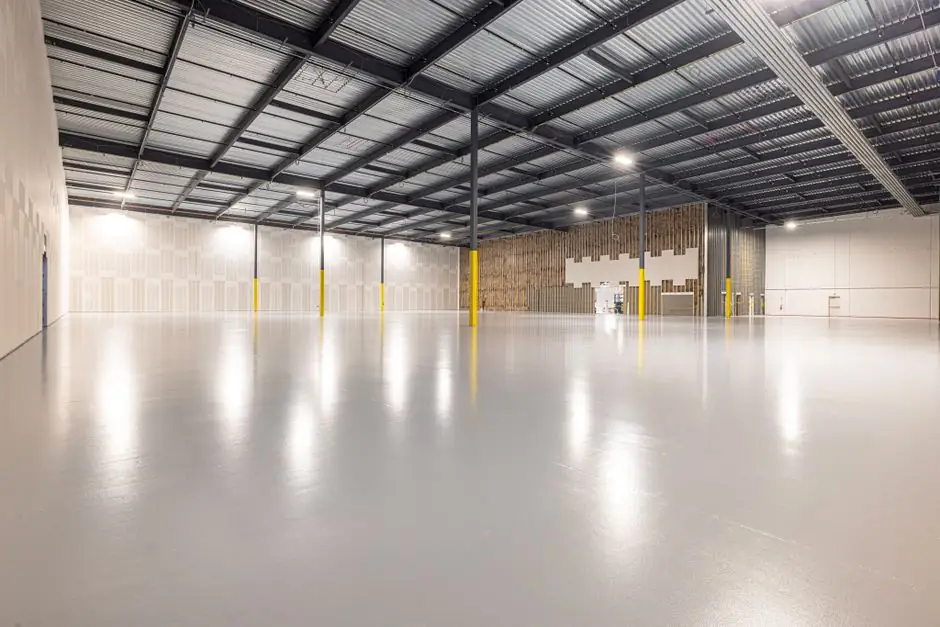
Rigid closed-cell polyurethane (PUR) and polyisocyanurate (PIR) foam panels dominate modern cold storage construction, delivering thermal conductivity of 0.018-0.024 W/(m·K) at a core density of 38-42 kg/m³, a roughly 2x efficiency advantage over rock wool and EPS at 0.035-0.045 W/(m·K) [S4][S3].
For cold storage warehouses operating between -40°C and +10°C, panel thickness scales with the design temperature: 50-100 mm for fresh storage above 0°C, 100-150 mm for -18°C freezers, and 150-200 mm for quick-freeze and ultra-low-temperature rooms below -25°C [S4][S5]. Selecting a panel without anchoring thickness to operating temperature is the most common under-specification error in the field.
What Counts as Polyurethane Insulation in Cold Storage
Polyurethane insulation in this segment means factory-laminated sandwich panels: a rigid closed-cell PUR or PIR foam core bonded between two metal facings, typically 0.4-0.6 mm pre-painted galvanized steel, with stainless steel (commonly 304 grade) specified for food and pharma rooms [S3][S5].
The closed-cell rate is the structural property that drives thermal performance: industry-grade panels target a closed-cell ratio above 95%, which blocks convective heat transfer inside the foam and keeps long-term thermal drift low [S4]. When the closed-cell rate falls, water absorption creeps up and the effective R-value degrades within a few seasons, which is why polyurethane insulation panels are graded on closed-cell content, not just initial lambda value.
Selection Criteria: Lambda, Density, Thickness, Fire, Facing
Five criteria drive a defensible cold storage panel spec, and the order matters: (1) thermal conductivity, target 0.018-0.024 W/(m·K) for PUR/PIR, (2) core density, 38-42 kg/m³ is the published sweet spot for cold storage, (3) thickness matched to design temperature, (4) fire rating matched to the building code, (5) facing material matched to hygiene and corrosion exposure [S4][S3][S2].
Compressive strength must clear 150 kPa (≥0.15 MPa) to carry shelving, evaporators, and ceiling-suspended refrigeration lines without creep, and premium panels reach 0.3 MPa [S2][S4]. On fire, mainstream Chinese-produced panels meet GB 8624 Class A or B1/B2 ratings, with European-spec options reaching Euroclass B-s1, d0 [S6][S2]. Water absorption under 3% by volume is the practical moisture-resistance threshold for cold rooms that see defrost cycles and door-area condensation [S2].
Panel Type Comparison: PUR vs PIR vs EPS vs XPS vs Rock Wool

PUR and PIR are functionally similar for cold storage: both deliver 0.018-0.024 W/(m·K) at 38-42 kg/m³, with PIR offering slightly better fire performance at a small cost premium. EPS and XPS foams sit at 0.030-0.040 W/(m·K), forcing 1.5-2x the thickness to match PUR U-values, and they absorb more water over service life [S4][S2].
Rock wool is non-combustible and stays in the spec for firewall and high-temperature zones, but at 0.035-0.045 W/(m·K) it cannot match PUR on envelope thickness and adds significant structural load [S4]. For a like-for-like R-value, the practical comparison on four decision criteria looks like this, drawn from the published ranges in [S4] and [S2]:
Material, lambda W/(m·K), typical core density kg/m³, panel thickness for -25°C room, fire behaviour: PUR/PIR, 0.018-0.024, 38-42, 150-200 mm, B1/B2 (Class A achievable); EPS, ~0.035-0.038, 15-25, ~250-300 mm, B1 with treatment; XPS, ~0.028-0.034, 25-40, ~220-260 mm, B1 with treatment; Rock wool, 0.035-0.045, 80-180, ~250-320 mm, A1 non-combustible. PUR/PIR wins on thickness and moisture weight but trails rock wool on raw fire rating, which is why hybrid builds (PUR envelope, rock wool firebreaks at compartment lines) are common.
Who This Is For, and Where It Is the Wrong Choice
Polyurethane sandwich panels are the right envelope for new-build chill and freezer warehouses, blast cells, food processing plants, pharma cold rooms, and modular cold-chain containers operating between -40°C and +10°C, exactly the range most modern logistics and vaccine facilities sit in [S2][S5].
They are the wrong choice for very high-temperature process lines above +120°C (where mineral wool or calcium silicate outperforms), for applications requiring A1 non-combustible certification throughout the envelope, and for renovations on substrates that cannot carry the 10-15 kg/m² panel load of a 100-150 mm PUR build [S4]. Specifying PUR over an existing structure without checking the load path is a recurring failure mode in older cold-store retrofits.
Use Cases: Fresh, Frozen, Blast Freeze, Pharma, and Modular

Fresh-produce and dairy rooms (0°C to +10°C) use 50-100 mm panels, often with aluminum-foil or kraft-paper facings for cost control [S4][S2]. Standard frozen storage at -18°C to -25°C takes 100-150 mm panels with color-steel facings, the most common spec in third-party-logistics warehouses [S5].
Blast-freeze and quick-freeze cells at -25°C to -40°C step up to 150-200 mm, and pharma or vaccine stores often add stainless-steel facings to simplify clean-in-place sanitation [S3][S4]. Modular containerized cold rooms (40 ft high-cube ISO containers) cap panel length at 11,800 mm to clear the inner 12,032 mm container envelope, a real shipping constraint, not a marketing line [S5].
Limitations, Failure Modes, and Cold-Side Engineering Risks
Below -30°C, PUR foam becomes susceptible to brittle fracture, and the published lambda rises; standard cold-storage panel spec lines are typically validated down to -40°C, with cryogenic LNG-class work shifting to specialized PUFF systems rated -80°C to +200°C but with much higher density (24-40 kg/m³ across sheet/pipe formats) [S1][S8].
Long-term failure modes in service are dominated by four issues: moisture ingress at panel joints (driven by poor cam-lock or tongue-and-groove sealing, not the foam itself), thermal bridging at fastener penetrations, facer delamination when adhesion drops below the design bond strength, and fire-spread where the B-rating was specified but never tested in the as-built configuration [S2][S4]. Cold-storage electricity bills run 30-40% of total operating cost for food processors, so a 5% lambda drift from any of the above reads directly on the meter [S8].
Sourcing, Standards, and What to Ask the Supplier
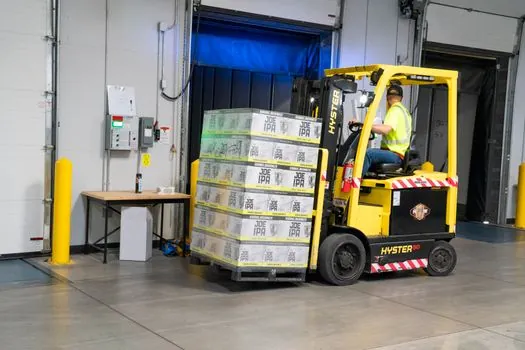
Spec sheets should disclose five non-negotiables: declared lambda value and test standard (look for EN 13165 or GB/T 21539 alignment), closed-cell rate (target ≥95%), core density (38-42 kg/m³ for cold storage), compressive strength at 10% deformation (≥150 kPa), and fire-rating certificate number with issuing body [S4][S2].
For storage and handling around installation, pair the panel spec with the project's cold chamber machine refrigeration capacity and the storage rack loading plan; a panel that meets lambda and compression but cannot be sealed against the rack base will still leak. Buyers comparing residential and commercial PUR should also cross-reference the lighter-density spec range used in housing, covered separately in Polyurethane insulation selection for residential construction: density, R-value, and, because the 30-35 kg/m³ residential densities trade structural strength for cost and are not interchangeable with cold-storage 38-42 kg/m³ cores.
For a 5,000 m² -25°C warehouse, expect 150 mm PUR panels as the baseline spec with 200 mm on the ceiling and north-facing walls, request a third-party lambda test report dated within 12 months, and confirm the fire certificate covers the exact facing combination ordered, not just the foam. Track next: the closed-cell-rate disclosure on supplier datasheets (still inconsistent across Chinese exporters as of January 2026) and the trend toward PIR-hybrid cores in European-spec pharma builds documented through 2025-2026 [S4].