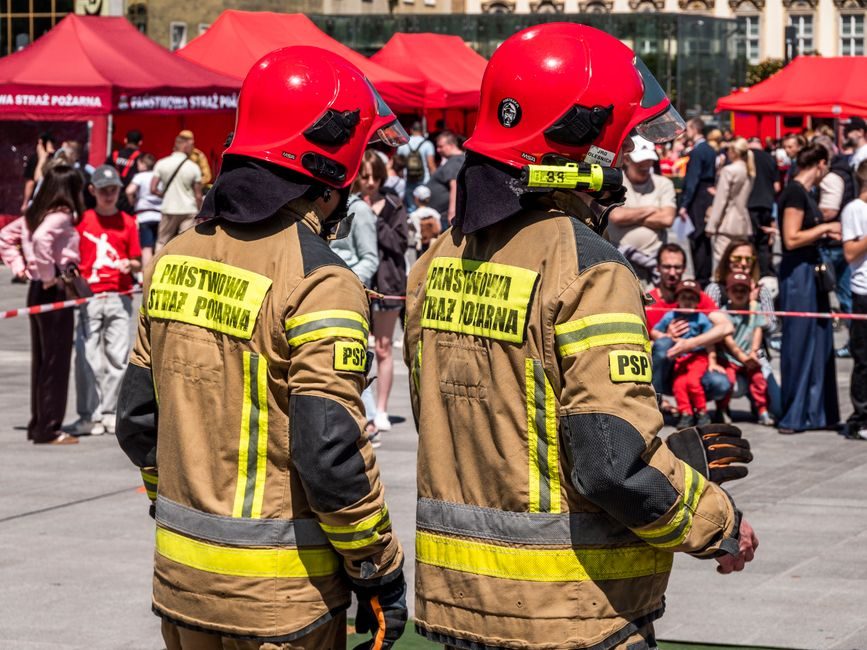
A four-sensor portable portable gas detector carrying LEL, O2, CO, and H2S cells, certified to ATEX/IECEx for Group IIC or Group IIB atmospheres, and sealed to at least IP66, is the working baseline for structural firefighting entry teams in 2026 [S3][S5].
Selection for fire and rescue diverges sharply from confined-space industrial use: the threat set includes pyrolysis CO, oxygen depletion in basement or tank fires, explosive vapour above pooled fuel, and H2S from sewage or decomposition, while the duty cycle is shorter, hotter, and wetter than a plant worker would ever tolerate [S3][S6].
Sensor Stack: What the Crew Must Carry In
Structural overhaul demands LEL, O2, CO, and H2S as the non-negotiable four; suppliers on the 2026 export channel consistently market this configuration as the "confined space / fire entry" bundle [S3]. Hanwei's 2026 product line offers single-cell LEL/O2/H2S/CO portables plus a six-gas simultaneous model for hazmat and post-fire monitoring [S7].
For IDLH overhaul after a structure fire, a photoionization detector (PID) for low-ppm VOCs and a dual-beam infrared LEL cell are the two upgrades that materially extend a standard 4-gas rig into hazmat or waste-fire territory; the dual-IR cell resists poisoning from silicones and combustion residues that a pellistor LEL will absorb and drift on [S6][S7]. China-origin PTM600-S-class multi-gas units on the 2026 export catalogue bundle wireless interconnection so a safety officer can monitor entry-team gas readings without a tether [S6].
Certification: ATEX, IECEx, and the Fire-Rig Reality
ATEX Zone 1 (Group IIB/IIC, T4 or T5) plus IECEx equivalents is the minimum flammable-atmosphere certificate; fireground selection should also confirm the cell and instrument ratings separately, because many Chinese-export rigs carry ATEX on the instrument but the LEL cell itself is not separately certified for the same group [S5].
Manufacturer listings for 2026 explicitly market ATEX- and SIL2-certified LPG leak detectors as the high-end reference point for China-made portable gear, with general approvals listed as SGS, ISO 9001, and ATEX [S5]. For US municipal fire departments, dual certification to UL 913 (intrinsic safety for Class I Div 1 Groups A-D) is normally specified alongside ATEX so the same rig can deploy to a refinery mutual-aid call without re-papering [S4].
Mechanical Specs: Heat, Water, and Drop
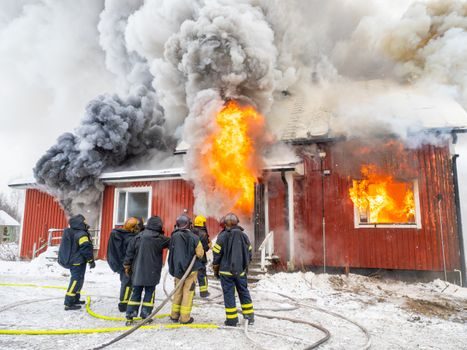
Fire entry exposes instruments to thermal shock, hose-stream water, and 1.5-2 m drops onto concrete; the practical minimum is IP66/67, an operating temperature window that spans at least -20 °C to +50 °C, and a rubber overmould that survives repeated drops onto asphalt [S6].
Multi-gas units shipping out of China in 2026 are routinely listed with IP66 housings, lithium battery packs rated for 8-24 hour shift life depending on sensor count, and Type-C charging so the station can share cables with radios and thermal imagers [S6][S7]. A common field failure mode in fireground service is a flooded sensor faceplate; specifying a field-replaceable sensor module rather than a factory-sealed cartridge cuts depot turnaround from weeks to minutes and is now offered as standard on most export-channel 4-gas rigs [S6].
Alarm and Comms: What the Entry Officer Needs to See
Three alarm tiers (low, high, TWA/STEL), a 95-100 dB audible at 30 cm, and 360° visible red strobes are the standard for fireground portables; without a top-mounted strobe the entry officer cannot tell from across a room whether a unit has alarmed [S6][S7].
Wireless linked portables (PTM600-S class) feed real-time readings to a command tablet so the incident commander can pull a crew the moment a H2S or LEL reading crosses threshold, without waiting for a shouted radio call over a SCBA mask [S6]. A short data-logging window of at least 30 days at 1-minute resolution is also a 2026 buyer expectation for post-incident exposure reconstruction and firefighter cancer-presumption claims [S6].
Single-Gas vs Multi-Gas vs RAE-Style 5-Gas
Single-gas CO or H2S clip-on detectors are appropriate for rehab-sector monitoring and overhaul patrol but cannot substitute for an entry-team 4-gas rig, because they leave LEL and O2 coverage to the team's radio calls and a single missed reading becomes an unrecoverable error [S7].
A four-gas LEL/O2/CO/H2S portable is the workhorse for engine companies; a 5- or 6-gas unit (adding PID and/or SO2/NO2) is justified for hazmat, waste-water, and post-fire overhaul where combustion VOCs and acid gases persist; higher-end rigs like the RAE Q-RAE family continue to appear on the 2026 export listings as a 5-6 gas reference point rather than as the volume choice for municipal fleets [S1][S6].
Sourcing and Lead Time in 2026
China-origin ATEX-marked 4-gas portables dominate the export listings in mid-2026, with PTM600-S-class wireless units, single-gas CO/H2S clips, and intrinsically safe sniffer probes all shipped from a small set of integrated suppliers who also sell fixed and open-path detectors [S6][S7]. Domestic Indian suppliers (gasdetectors.co.in) continue to manufacture portable, fixed, infrared point, and open-path detectors to BIS and CCE standards for the South Asian municipal market, with active agent recruitment in the Gulf [S4].
Lead times for ATEX/IECEx-certified 4-gas rigs in mid-2026 run 4-8 weeks ex-works China, with calibration-gas kits, motorised bump-test stations, and Type-C spares typically quoted as separate line items; a department spec'ing 50+ units should treat the calibration-gas and bump-test station as part of the same procurement line, not as a post-delivery accessory [S6][S7].
Limits and Failure Modes
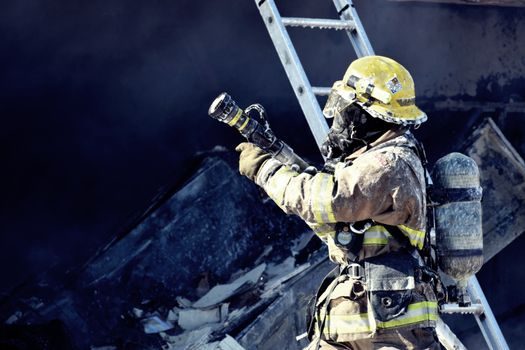
A pellistor LEL cell will under-read in oxygen-deficient post-fire atmospheres because catalytic beads require O2 to oxidise the fuel; dual-infrared LEL cells do not have this limitation and are the safer cell choice for basement and tank-fire overhaul [S6][S7]. CO sensors cross-react with H2 and with high concentrations of certain solvents; for hazmat and landfill fires, an electrochemical CO sensor should be paired with a separate H2-compensated cell or a filter, otherwise a synthetic reading will trigger an unnecessary withdrawal [S7].
PID lamps drift in humid overhaul atmospheres and need field-zero discipline; the 2026 generation of export multi-gas units now bundles automatic sensor-self-test on charge, but that is not a substitute for a daily bump test with traceable calibration gas, and procurement language should require both [S6].
Trackable signals into late 2026: whether more municipal tenders require wireless-linked entry-team readings (the mining-portable spec map shows the same trend underground) and whether dual-IR LEL cells migrate from hazmat specials to engine-company standard issue; cross-reference the food-processing portable map for sensor-stack rationale that overlaps with the hazmat upgrade path.
The underlying component specifications are covered under gas detector, and combustible gas detector.