
Specifying a power quality analyzer in 2026 starts with three hard filters: IEC 61000-4-30 Class A compliance, sampling rate relative to the transients you must catch, and a form factor matched to the duty (fixed panel, portable, or handheld) [S1][S4][S5].
The vendor field is broad but consolidating: the DirectIndustry industrial catalog lists 126 manufacturers offering 305 power quality analyzer products as of February 2026, with Hioki (7 products), Newtons4th (7), SATEC (7), Dranetz (8), Algodue (9), and CIRCUTOR (11) the most-listed specialist brands [S1].
What "Class A" Actually Gates
IEC 61000-4-30 Class A defines the measurement methods, accuracy, and aggregation algorithms that make two analyzers' data comparable, which matters the moment a dispute, warranty claim, or utility audit is on the table [S1][S5].
Class A instruments must synchronize to 10-minute aggregation windows with a real-time-clock tolerance inside defined limits, and must report voltage, current, harmonics, flicker, dips, swells, and interruptions using prescribed algorithms, so a Class A reading from a Fluke 1770-series and a Class A reading from a competing Elspec or Dranetz unit can be plotted on the same time axis without re-scaling [S1][S4][S5].
Non-Class A ("Class S" or proprietary method) units are cheaper and adequate for trend surveys inside a single facility, but they fail the moment a third party (insurer, utility, customer) needs to compare your data against their own [S5].
Sampling Rate vs Transient Capture: 1 MHz, 20 MHz, or 8 kV?
Transient capture is the dominant sampling-rate spec in 2026 buying decisions, because most modern VFD-, LED-driver-, and EV-charger-induced transients sit in the sub-microsecond to low-microsecond range, well above the bandwidth of a basic 50/60 Hz meter [S5].
The Fluke 1775 samples at 1 MHz for general transients while the Fluke 1777 samples at 20 MHz for the fastest impulses, with the published envelope rated to capture transients up to 8 kV peak and harmonics out to 30 kHz, a number that is the practical upper bound for switch-mode power supply troubleshooting in commercial and light-industrial sites [S5].
Elspec's fixed and portable analyzer lines extend the same envelope to sub-cycle disturbance recording (Digital Fault Recorder class) and add phasor measurement unit (PMU) outputs for transmission-level applications, which is a different duty and a different price tier from a bench PQ meter [S4].
For a typical 400 V industrial plant the useful floor is 1 MHz sampling with at least 256 samples-per-cycle on the 50/60 Hz fundamental, anything slower starts to under-resolve the leading edge of an IGBT-switching transient.
Form Factor: Fixed, Portable, Handheld
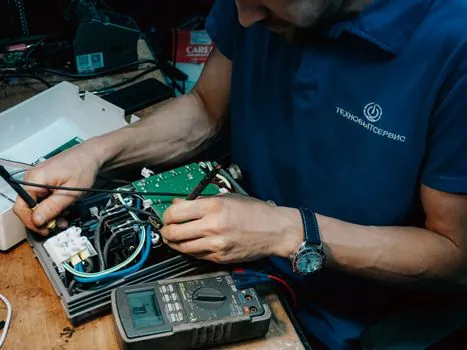
Elspec's 2026 product tree splits the category cleanly: fixed PQ analyzers for permanent panel or switchgear installation with continuous trending, portable PQ analyzers for engineering surveys and commissioning, and handheld PQ analyzers for quick spot-checks and electrician troubleshooting [S4].
Fixed units typically stream to a SCADA or PQSCADA-class software package (Elspec's PQSCADA Sapphire, for example, also reads COMTRADE and PQDIF files for cross-vendor replay) and live on the same network as revenue meters, which is why Ethernet/IP, Modbus TCP, and IEC 61850 support have become near-mandatory for substation retrofits [S4].
Portable units (Fluke 1770-series, Dranetz HDPQ, Hioki PW3198, SATEC EM133/EM235) are the workhorse for power quality surveys, energy audits, and post-incident forensics, balancing battery runtime, IP65 ruggedness, and 4-current + 4-voltage channels against weight under 5 kg.
Handheld single- or two-channel units (Fluke 43B-class, Hioki 3286-class) are useful for one-shot checks of socket-level voltage, neutral-to-ground voltage, and basic THD, but their limited channel count rules them out for three-phase load studies.
Channel Count, Current Clamps, and the 4-Quadrant Question
Three-phase four-wire systems (the European/Asian TN-S default at 400 V) need 4 voltage and 4 current channels minimum: L1, L2, L3, N for voltage, plus the same three phases and neutral for current, so a meter with only 3 current channels will under-read neutral current and miss the most common source of overheating neutrals in office and data-center feeders [S1][S4].
Current-clamp compatibility is a hidden second-tier spec: Rogowski coils handle 1000 A+ switchboard feeders but lose accuracy below ~5 A, while Hall-effect or flex CTs cover both ends with a wider but less linear envelope, and the wrong clamp type is the most common reason an otherwise Class A analyzer produces a misleading reading [S5].
For four-quadrant measurement (import/export, plus reactive and apparent energy both directions), which is mandatory behind any onsite solar or battery storage, the analyzer must explicitly support signed kW and signed kvar, not just magnitude; this is a documented gap in older 1990s-vintage revenue meters that some facilities still try to reuse as PQ analyzers.
Decision Matrix: Picking Among Class A Brands
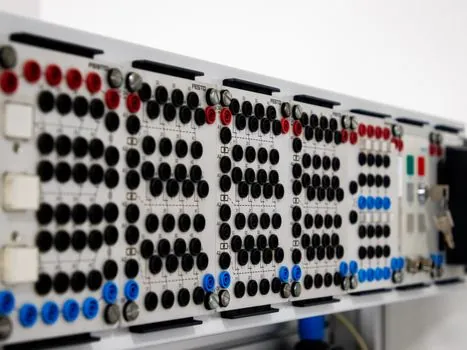
Shortlisting among Fluke, Elspec, Dranetz, Hioki, and SATEC in 2026 is mostly a function of four criteria: sampling bandwidth, channel count, comms protocol stack, and software ecosystem, with brand preference a distant fifth [S1][S4][S5].
Fluke 1770-series wins on bench-and-troubleshoot use cases: 1 MHz / 20 MHz sampling, 8 kV transient envelope, 30 kHz harmonics, and Energy Analyze Plus software for one-touch automated reporting against built-in PQ standards [S5].
Elspec wins on fixed installation and utility-grade deployments, with the MV Equalizer (medium-voltage dynamic compensation) and Hybrid Equalizer (active harmonic filtration + VAR compensation) sitting alongside the analyzer line, so the same vendor covers measurement and remediation at the MV level [S4].
Hioki, Dranetz, and SATEC cover the portable-survey middle with strong Class A compliance, IEC 61000-4-30 method, and broad clamp ecosystems; Dranetz in particular remains the default choice for North-American utility power quality studies, while Hioki PW3198-class units are heavily specified in Japanese and East-Asian facility audits [S1].
Algodue, CIRCUTOR, and the smaller listed specialists (DABECO, Sonel, Metrel, KoCoS, Newtons4th) are the right pick when budget is the leading constraint and the application is a single-site energy audit rather than multi-site fleet standardization [S1].
When NOT to Buy a Top-Tier Class A Analyzer
A Class A three-phase portable is overkill for residential or light-commercial single-phase troubleshooting, where a 600 V CAT III handheld with basic THD and voltage event capture (Hioki 3286-class, Fluke 43B-class) does the job at 20-30% of the cost [S1][S5].
It is also the wrong tool for a 24/7 permanent revenue-grade measurement behind a utility interconnection, where a revenue meter with PQ functionality (IEC 62053-22 Class 0.2S or 0.5S accuracy for kWh) plus a separate digital fault recorder covers the duty without forcing a single instrument to do two jobs badly.
Buyers who only need a one-off energy consumption survey, with no need to capture sub-cycle transients or to share data with a third party, can step down to a Class S portable or even an energy logger (Fluke 1730-series, Hioki PW3360-class) and put the saved budget into current clamps, since clamp quality is what dominates uncertainty in most field readings [S1].
Standards and Software Lock-In
Beyond IEC 61000-4-30, the related standards stack that buyers should reference is IEC 61000-4-7 (harmonic measurement method, windowing, and instrument bandwidth), IEC 61000-4-15 (flickermeter), and IEEE 519 (harmonic distortion limits at the PCC) for the North-American compliance path [S1][S5].
For data interchange, COMTRADE (IEEE C37.111) and PQDIF (IEEE 1159.3) are the two file formats that survive a 10-year archive; any analyzer that exports only proprietary binary files should be downgraded on the shortlist unless the rest of the fleet is single-vendor [S4].
Software lock-in is the other real cost: Fluke Energy Analyze Plus, Elspec PQSCADA Sapphire, Dranetz View (DranView), Hioki PQ One, and SATEC ExpertPower each have their own database and license terms, so the total cost of ownership over a 5- to 10-year fleet is analyzer plus software plus annual calibration, not just the sticker price [S1][S4][S5].
For cross-vendor fleet managers, the practical move is to standardize on PQDIF or COMTRADE export and run all analytics in a third-party platform, accepting the import friction in exchange for not being held hostage to one vendor's license server.
Trackable 2026 Signals to Watch
Three signals will move the 2026-2027 shortlist: (1) wider rollout of 18-channel Class A fixed analyzers as data-center MV distribution shifts to 415/690 V, (2) tighter integration of PQ analyzers with DC-side measurement for solar-plus-storage interconnections, and (3) growing specification of IEC 61850-9-2 (Sampled Values) outputs on substation-class analyzers as digital substations displace hardwired I/O [S4].
For 2026 specifier cost and selection logic across adjacent instrumentation categories, the spec-first method used in this guide also applies to displacement and vibration sensors, so the eddy current tester buying guide and the accelerometer buying guide 2026 are useful cross-references when a power quality investigation points at mechanical resonance or shaft currents. A working baseline on the measurement fundamentals covered here is also worth pairing with the encyclopedia entry on power quality analyzers before any purchase committee meeting.
Spec-level background on the components involved: linear guide, and air quality monitor.