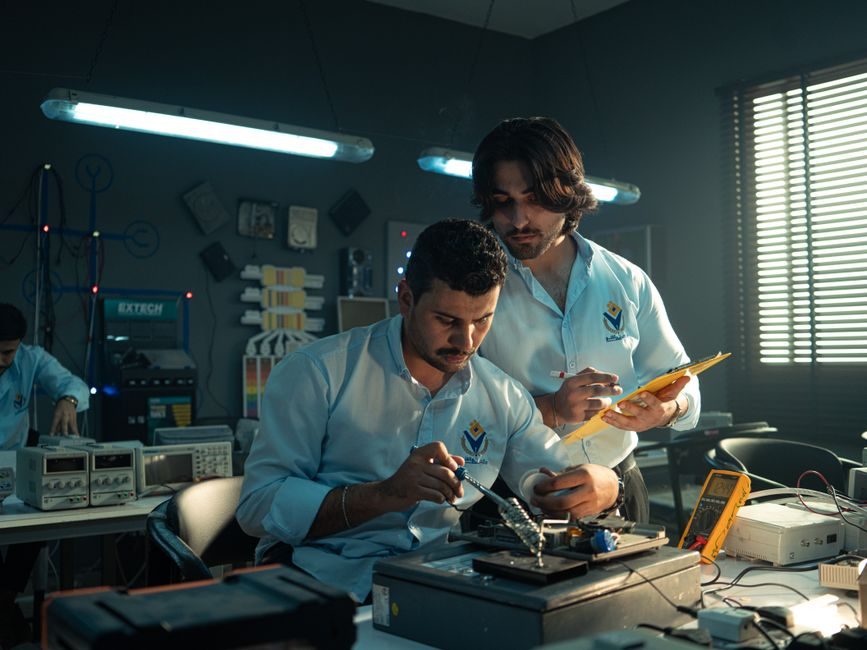
As of 2026-08, factory-quoted FOB China prices for three-phase handheld power quality analyzers cluster between US$680 and US$2,048 per unit, with a Wuhan Huayi Electric Power model listed at a flat US$1,800 per set [S7].
The published price spread is driven primarily by harmonic bandwidth, transient capture, communication interfaces, and Class A vs Class B compliance, not by brand premium alone; Huazheng's Hzcr-5000 lists US$1,300-US$2,048 in a single SKU band [S7], while Hebei Dual Canopy's CE-certified three-phase data logger PQA prices at US$680-US$1,980 [S5].
Price Bands by Class and Channel (2026-08)
Chinese domestic B2B listings divide into three price tiers, each with a distinct spec profile. Entry tier at roughly US$680-US$1,300 covers CE-marked three-phase PQA data loggers with standard 50/60 Hz harmonic analysis and 4-quadrant energy measurement [S5]. Mid tier at US$1,300-US$2,048 adds extended harmonic bandwidth up to the 50th order and Ethernet/Wi-Fi reporting, exemplified by the Huazheng Hzcr-5000 portable harmonic/energy analyzer [S7]. The professional tier, anchored by Dranetz HDPQ Guide Plus and Fluke 1770 series, sits above US$3,000 in typical North American distribution; the Dranetz unit supports VNC remote control and Dran-View 7 software via Ethernet or Wi-Fi from any smartphone, tablet, or PC [S1].
Specialty instruments such as the AEMC 2136.30 power quality analyzer are listed without published reference price on Chinese distributor pages, with final pricing negotiated by contract [S4]. For context on the underlying measurement hardware that drives these price bands, see the power quality analyzer reference.
What the Spec Sheet Is Actually Paying For
Transient capture capability is the single largest spec-driven cost driver in the professional tier. The Fluke 1770 series captures fast transients up to 8 kV and harmonics up to 30 kHz [S3], with the 1775 sampling at 1 MHz and the 1777 at 20 MHz for the fastest transients in high detail. Mid-tier Chinese PQA units rarely publish transient specifications beyond basic impulse detection, which is why the Hzcr-5000 ceiling of US$2,048 [S7] is materially below the Dranetz or Fluke price floor.
Compliance class matters: Class A (IEC 61000-4-30) instruments cost more because they meet stricter measurement-uncertainty windows than Class S or Class B devices. Communication protocols also move the price — instruments with Ethernet, Wi-Fi, and Bluetooth add interface hardware and certification overhead versus USB-only designs. For buyers evaluating energy billing accuracy, the same spec discipline that drives a power meter spec sheet also applies: measurement uncertainty, not display resolution, is what dictates whether a US$700 logger is fit for tariff-grade auditing or only for trend surveys.
Selection Criteria: Matching PQA Class to Application
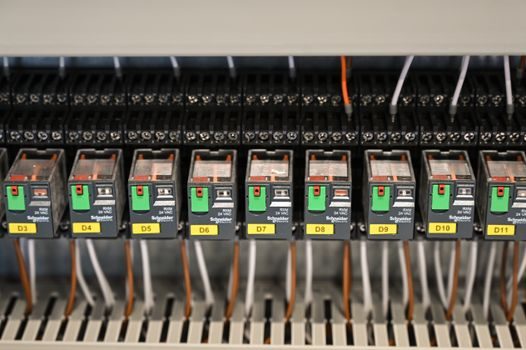
For utility-grade revenue metering and EN 50160 compliance reporting, a Class A IEC 61000-4-30 instrument with 9 kHz to 150 kHz harmonic bandwidth is the only defensible choice; expect US$4,000-US$8,000+ at the Dranetz HDPQ Guide Plus or Fluke 1777 tier [S1][S3]. For industrial plant energy surveys and load studies on switchboards, the mid tier at US$1,300-US$2,048 [S7] covers most three-phase load profiling needs and supports the same overload-panel analytics the Fluke 1770 series performs via Energy Analyze Plus software [S3].
For facility electricians troubleshooting harmonics, dips, and swells on a single MCC, an entry-tier three-phase PQA at US$680-US$1,300 [S5] is sufficient, provided the unit logs to a removable SD card for offline analysis. A useful rule of thumb: if the report will leave the building or trigger a capacitor-bank purchase order, skip the entry tier.
Total Cost of Ownership Beyond the Sticker
Purchase price is roughly half the five-year cost of a professional PQA. Software licenses are recurring — Dran-View 7 is bundled with the HDPQ Guide Plus [S1], but Energy Analyze Plus for the Fluke 1770 series is sold separately and version-upgrades carry an annual cadence. Current clamps and flex CTs are the most commonly replaced accessories; Rogowski coil sets rated to 6,000 A typically run US$400-US$900 per set, separate from the instrument body.
Calibration is the hidden line item. Battery replacement on handheld units at the 3-4 year mark adds another US$100-US$300. Compare that against the entry tier, where some Chinese OEM units are factory-recalibrated rather than lab-calibrated; the cost saving is real but traceability is weaker, which matters for ISO 17025 audit chains.
Lead Time, MOQ, and Sourcing Channels
Standard Chinese domestic PQA SKUs ship ex-stock in 7-15 days at 1-piece MOQ from manufacturers such as Huazheng Electric (Baoding) and Hebei Dual Canopy, both Diamond-tier audited suppliers on Made-in-China.com [S5][S7]. Wuhan Huayi Electric Power Technology requires 1-set MOQ at a flat US$1,800 with no published quantity discount [S7]. For OEM/ODM runs with custom firmware or branding, MOQ typically rises to 10-50 units and lead time extends to 30-45 days; the power cable accessory ecosystem is sourced on similar lead-time terms and is a useful parallel for planning electrical-instrument procurement.
North American and EU buyers sourcing through distribution will see roughly 20-35% markup over the Chinese factory FOB price once freight, duty, and distributor margin are layered in, based on typical industrial-instrument channel structures observed in 2026 listings [S7]. For hazardous-area or substation-class work, ATEX/IECEx-certified variants add 15-25% to base price and longer lead times of 8-12 weeks.
Limits, Failure Modes, and Common Spec Traps
The most common spec trap is conflating sampling rate with measurement bandwidth — a 1 MHz sampler does not automatically meet IEC 61000-4-30 Class A, which also requires strict time-base uncertainty and synchronization behavior that cheaper instruments skip. A second trap is reading "harmonic analysis up to 50th order" without checking whether voltage and current harmonics are both captured to that order; some entry units limit current harmonics to the 25th or 31st to save DSP cost [S3].
Failure modes in the field are predictable: clip-on CT saturation during motor-start transients is the dominant source of bad data, followed by SD card corruption on long unattended surveys, and battery cutoff on units left in cold environments below -10 °C. Remote-control features like the Dranetz HDPQ VNC interface [S1] reduce arc-flash exposure during setup, which is a real safety value beyond convenience and worth pricing into the spec comparison when the cabinet is energized. A reviewer evaluating adjacent measurement categories — for example a linear guide spec sheet — will recognize the same pattern: published headline numbers look comparable across vendors, but the binding constraints (temperature drift, calibration cadence, channel count) decide whether the unit is actually fit for purpose.
Next signal to track: 2026 Q4 IEC 61000-4-30 working-group outputs on the next amendment cycle, which will likely tighten Class A transient response windows and push the entry tier further away from utility-grade compliance. Also watch Q3 2026 Chinese OEM price revisions on the Hzcr-5000 and equivalent SKUs; the US$1,300-US$2,048 band held through July 2026 [S7] and is the most likely anchor for any downward adjustment if harmonic-chip supply normalizes.
Related analysis: PVC Resin Supply 2026: SG3-SG8 Price Spread, MOQ Reality, Sourcing Risk.