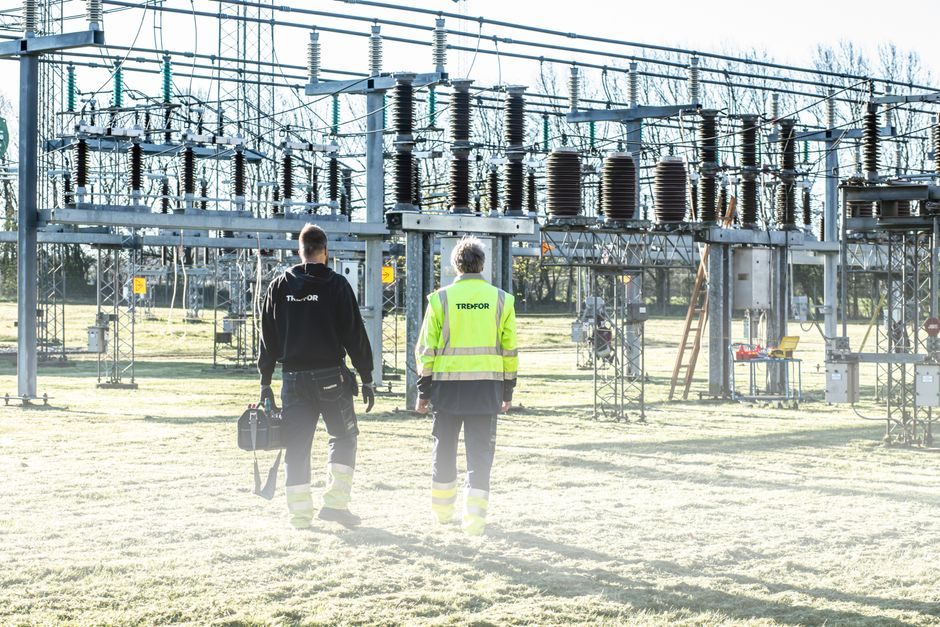
A power quality analyzer is selected by matching IEC 61000-4-30 measurement method, voltage class, channel count, and transient capture bandwidth to the specific disturbance being investigated, with Class A instruments required for contractual and regulatory disputes [S3].
Buyers in 2026 choose between handheld troubleshooters, three-phase energy loggers, and fixed PQ meters that feed SCADA; the decision turns on accuracy class, safety rating, memory depth, and communication protocol rather than brand alone [S5][S6].
Measurement Class: IEC 61000-4-30 Class A vs Class S
IEC 61000-4-30 Class A instruments use a defined measurement method with strict timing and aggregation rules so that two compliant meters produce identical readings on the same signal, which is the baseline for utility-grade and contractual measurements [S3]. Class S instruments relax timing and aggregation tolerances and are typically used for statistical surveys and troubleshooting where exact cross-site correlation is not required [S3]. The Fluke 435 Series II and 1740-series loggers are documented examples of Class A and Class S implementations respectively, with the 435 Series II explicitly cited for three-phase power quality and energy analysis [S3].
Class A compliance is mandatory when measurements may be used in regulatory or commercial disputes, such as verifying harmonics compliance against IEEE 519 limits or documenting voltage sag compensation claims; Class S is acceptable for internal energy audits and trend logging where absolute inter-instrument agreement is not enforced [S3][S5].
Voltage Class, CT Input, and Safety Rating
Portable analyzers for low-voltage commercial and industrial sites commonly accept direct voltage input up to 1000 V RMS CAT III 600 V or CAT IV 300 V per IEC 61010, with current inputs via flexible Rogowski coils or split-core CTs in 1 A to 6000 A ranges [S3]. Medium-voltage substation work requires the analyzer to be fed through potential transformers and CTs with a 110 V or 110/√3 V secondary, and the instrument itself must carry appropriate CAT ratings for the accessible secondary side [S5].
For utility-grade revenue and PQ metering on switchgear, fixed-mount analyzers with 1 A or 5 A CT inputs, 57.7 V to 400 V direct voltage range, and IEC 61850 communication are specified; these devices overlap functionally with revenue-grade power meters but add transient capture and harmonic aggregation beyond what a standard energy meter records [S6].
Channel Count, Sampling Rate, and Transient Capture
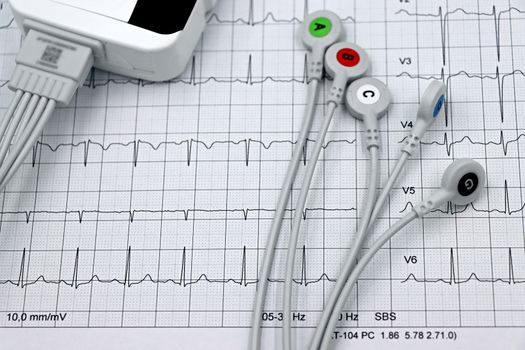
Three-phase four-wire systems need a minimum of four voltage and four current channels; single-phase troubleshooting can be done on a two-channel handheld, while six-channel instruments (three voltage, three current) are common for motor and drive analysis where DC bus and output waveforms are recorded simultaneously [S3][S5]. Sampling rate for harmonic analysis is typically 5 kHz to 25 kHz, but transient capture requires 1 MHz or higher bandwidth to record 6 µs to 100 µs impulses from capacitor switching, lightning, or SCR commutation events [S3].
Memory depth and recording interval are the two variables that determine survey duration: Class A energy loggers configured at 10-second averaging with full waveform-on-trigger storage typically retain 30 days of data on internal memory, while fixed-mount units with circular buffering push event files to SCADA over Ethernet or RS-485 Modbus [S3][S6].
Comparison: Handheld vs Logger vs Fixed-Mount
Handheld three-phase analyzers (typ. 1 to 2 kg, battery-powered, 4-channel) suit field troubleshooting, motor signature work, and spot energy audits; expect 3 to 8 hours of battery life and Class A or Class S measurement methods per IEC 61000-4-30 [S3]. Three-phase energy loggers (typ. 2 to 5 kg, IP65, weeks of autonomy, 4-channel with remote data retrieval) target long-term surveys on switchboards and are the workhorse for energy audits under ISO 50001 [S5]. Fixed-mount panel or DIN-rail units provide continuous monitoring with Ethernet, IEC 61850, or Modbus output to SCADA, and overlap with power quality analyzer functionality at the supervisory layer [S6].
Do not specify a handheld where the requirement is continuous compliance reporting; the battery and storage constraints make unattended long-term operation impractical compared with a DIN-rail monitor with line power and a wired link back to the historian [S3][S5][S6].
Communication, Protocols, and Data Export
Modern analyzers export data through USB, Ethernet, Wi-Fi, and cellular modems, with industry protocols including Modbus TCP, IEC 61850, DNP3, and proprietary vendor software; Fluke's 430-series FAQ documents direct PC communication workflows over USB and Ethernet for the 435, 1735, and VR1710 instruments [S3]. Elspec's fixed-mount solutions emphasize continuous measurement, control, and resolution workflows that feed data into SCADA or cloud dashboards [S6].
Buyers integrating with a new digital substation should confirm IEC 61850 GOOSE and MMS support at the procurement stage, while plant-level energy projects under power meter rollouts can usually rely on Modbus TCP or BACnet to existing historians [S3][S6].
Use Cases: Harmonics, Sags, Swells, and Flicker
For harmonic surveys to IEEE 519 or EN 50160, a Class A instrument with 50th harmonic (2500 Hz at 50 Hz fundamental) capability and flicker measurement per IEC 61000-4-15 is the minimum configuration [S3]. Voltage sag and swell monitoring requires the analyzer to capture RMS variation events down to half-cycle resolution (10 ms at 50 Hz) and to record the associated pre-event and post-event waveforms for root-cause analysis [S3].
Practical industrial applications include: data center power audits where transients from chillers, UPS transfer, and welders must be characterized per the type of disturbances IBM documents as originating inside the building rather than on the utility feed (2025-03) [S2]; manufacturing lines where variable frequency drives generate harmonic distortion that overlaps with power transformer heating concerns; and renewable interconnects where 1 MHz transient capture is needed to document inverter switching behavior at the point of common coupling [S2][S3][S6].
Selection Checklist and Sourcing Signals
Match the instrument to the worst credible disturbance, not the steady state: capacitor switching demands 1 MHz transient bandwidth, 6 kV impulses from lightning demand peak detection, and IEEE 519 surveys demand Class A 50th harmonic accuracy [S3]. Confirm the safety category (CAT III 600 V or CAT IV 300 V minimum for industrial switchboards), the IP rating for the installation environment, and the software export format—CSV, COMTRADE, or PQDIF—required by the receiving historian [S3][S5].
For long-term sourcing, monitor vendor firmware and add-on releases such as NI's CompactRIO-based Power Quality Analyzer software IP, which provides a programmable platform for OEM integration rather than an off-the-shelf handheld [S1]. Watch the Class A device roadmap from Fluke, Elspec, and Hioki for the next compliance cycle, since measurement-method updates to IEC 61000-4-30 historically drive new model launches; cross-check instrument firmware revision against the latest published compliance certificates before placing a fleet order [S3][S6]. Engineers weighing analyzer budgets against broader instrumentation refreshes will find parallel selection logic in the Earth Ground Tester vs Loop Impedance Tester spec map, since both categories rely on IEC safety categories, CT input ranges, and recorded-waveform export as decision criteria [S3].