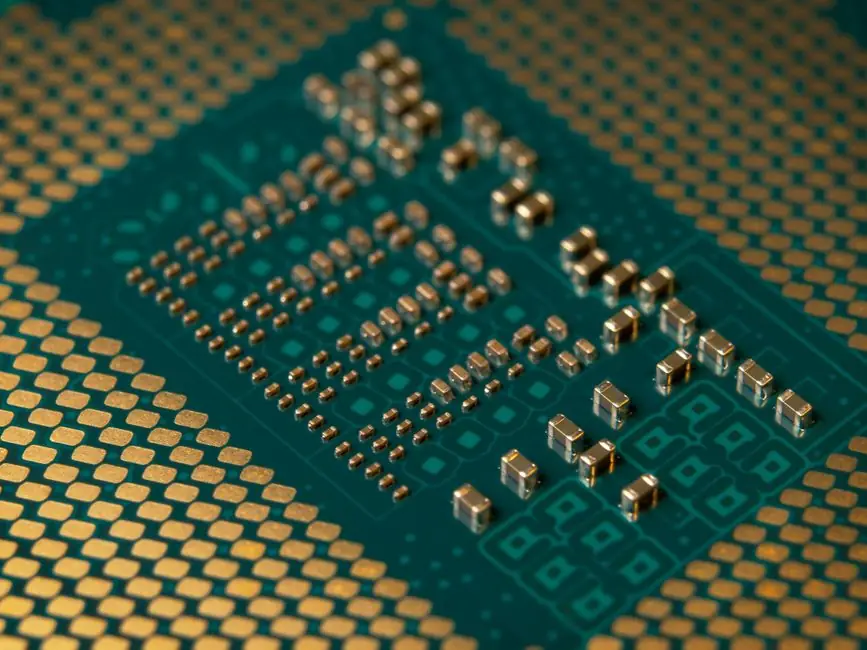
Global power semiconductor demand is being pulled, not pushed, into 2026-2030 by three structural loads: EV traction inverters, utility-scale solar plus HVDC interconnect, and the AI data-center power supply build cycle that all sit downstream of the same silicon power distribution backbone [S4].
The 2022 baseline is $48.9B, and the published trajectory lands at $79.9B by 2032, which is a 4.9% CAGR from 2023 onward; SiC is the dominant product line by revenue, GaN is the fastest-growing line, and the discrete component form factor still owns the largest share even as power ICs compound faster [S4]. The end-market mix is led by IT and telecom in 2022 revenue terms, with automotive overtaking as the fastest-growing application through 2032 [S4].
Product mix: SiC leads revenue, GaN leads growth, IGBT carries the industrial base
SiC held the largest revenue share of the power semiconductor market in 2022 and is expected to keep that position through 2032; GaN is the fastest-growing product segment over the same window [S4]. Within the transistor family, IGBT modules remain the workhorse for industrial motor drives, rail traction, and solar string inverters, while MOSFETs dominate low-voltage power tool and telecom DC-DC stages.
Material reality matters more than the marketing slides. SiC handles higher blocking voltages with lower switching loss than silicon, which is why traction inverters rated 400-800 V and HVDC converter stations lean on SiC diodes and SiC MOSFETs; GaN wins on switching frequency and is the default for sub-600 V high-density converters, including the AC-DC and DC-DC stages inside hyperscale AI racks. Discrete packages still outsell modules in unit volume, but modules are where the dollar growth concentrates because EV and grid customers pay for integrated thermal stacks.
Component form factor: discrete vs. module vs. power IC
The discrete segment held the largest share of the power semiconductor market in 2022 and is expected to retain that lead through 2032; power ICs are the fastest-growing component category across the same forecast [S4]. That combination is consistent with what designers actually order: discretes for retrofit and low-cost power meter front-ends, modules for any application above roughly 50 A per phase or where thermal management is non-trivial, and power ICs wherever a controller, gate driver, and protection can be collapsed into one part.
Practical threshold for module versus discrete is set by current density and cooling budget, not by the marketing brochure. Below roughly 20-30 A continuous, a TO-247 or DFN discrete with a clip-bond lead frame is usually cheaper; above that, transfer-molded or pressed-contact modules win on R<sub>DS(on)</sub> per cm<sup>2</sup> of board area. Power ICs take over under 5 A and below 100 V, which covers most USB-PD, LED driver, and small appliance power mixer electronics.
Application pull: automotive outruns IT and telecom through 2032
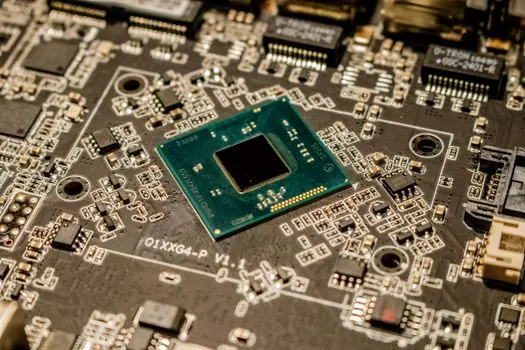
IT and telecom was the largest application segment by revenue in 2022; automotive is forecast as the fastest-growing application from 2023 to 2032 [S4]. The shift is mechanical: every 800 V BEV platform carries 3-10x the SiC content of a 400 V silicon design, and the global EV production ramp through 2028-2030 translates directly into SiC MOSFET, IGBT, and gate-driver wafer demand.
Industrial, energy and power, and transportation round out the long tail. Solar PV and HVDC are the swing factors in the utility bucket, with HVDC converter stations typically using thyristor valve stacks at the line side and IGBT/SiC modules at the converter side. Aerospace and defense, medical, and consumer electronics are smaller but stickier, anchored by long qualification cycles and lower price elasticity. For buyers mapping casting ladle selection for hardware manufacturing the same SiC upstream supply chain that feeds inverter heatsink blanks and lead-frame clips, demand visibility 18-24 months out is the practical planning horizon.
Supply side: IDM inventory cycle, China capacity, and SiC substrate bottleneck
The historical reference is useful: in late 2019, Infineon and other IDMs had worked their power chip inventories down to healthy levels and Taiwan-based industry sources were calling a demand pickup [S2]. The 2026-2030 picture is shaped by a different constraint: SiC and GaN wafer capacity, not silicon fab utilization, is the binding capex gate. IndustryARC frames the market forces through supplier bargaining power, customer bargaining power, new-entrant threat, rivalry, and substitute threat, with the supply chain split between IDMs, fabless designers, and foundry partners [S1].
Domestic Chinese suppliers are a structural variable. Unigroup Guoxin (stock code 002049) carries MOSFET, IGBT, and IGTO power transistor product lines through its Wuxi subsidiary, alongside FPGA, smart card IC, and memory chip businesses, with end markets spanning industrial, automotive, energy, and aerospace [S3]. Allied Market Research's 2022 baseline of $48.9B and 2032 projection of $79.9B at 4.9% CAGR assume no major decoupling shock, but the SiC substrate side is the one number to watch: if 150 mm and 200 mm boule supply stays tight, automotive-grade SiC MOSFETs will continue to carry 12-18 month lead times through 2027 [S4].
Selection criteria for buyers: voltage class, switching frequency, and qualification gate
Three decision variables do most of the work in a 2026-2030 power semiconductor RFQ: blocking voltage class, switching frequency, and the qualification regime the end product has to clear. Below 200 V, GaN is increasingly the default for high-frequency DC-DC stages; 600-1200 V is the SiC sweet spot for traction, solar, and server power distribution; 1700 V and above remains IGBT territory for industrial drives and grid. [S4]
Qualification gates vary by application. AEC-Q101 is the de facto gate for automotive discretes; IEC 60747 and UL 1557 cover isolation and creepage for modules; railway applications stack EN 50155 and EN 50121-4 on top. Buyers who skip the qualification screen and chase the lowest $/A figure typically pay for it in field returns inside 24 months. Allied Market Research's segmentation reinforces this point: automotive is the fastest-growing application, but also the segment where the qualification bar most aggressively filters out second-source suppliers [S4].
Limitations and failure modes to plan around
The principal constraint on SiC scaling through 2030 is substrate crystal growth: 150 mm SiC boules grow slowly, and the move to 200 mm is still uneven across suppliers [S4]. GaN's main failure mode is dynamic R<sub>DS(on)</sub> drift under high-voltage off-state stress, which catches out designers who treat GaN FETs as drop-in silicon MOSFET replacements. For IGBT modules, the recurring failure mechanism is bond-wire lift and solder fatigue under thermal cycling, which is why press-pack and sintered-silver variants are gaining share in HVDC and wind.
Practical planning signal: any buyer who needs SiC MOSFETs in volume for a 2026-2027 production slot should already have a second-source qualified, because even with the projected $79.9B 2032 market, wafer capacity additions are back-end loaded [S4]. MEMS sensor makers face a parallel structural bottleneck on the sensing side, and the same 18-24 month lead-time pattern shows up in adjacent semiconductor lines as in the wider MEMS market.
Trackable signals for the next planning cycle: (1) the 2026 Q3 earnings calls from Infineon, STMicroelectronics, ON Semiconductor, and Wolfspeed for 150 mm versus 200 mm SiC wafer yield disclosures; (2) the China domestic-substitution rate for IGBT and SiC modules in solar and EV inverter designs; (3) whether the 4.9% CAGR from the Allied 2022 baseline is revised upward or downward when 2026 actuals are tallied against the 2032 projection [S4].