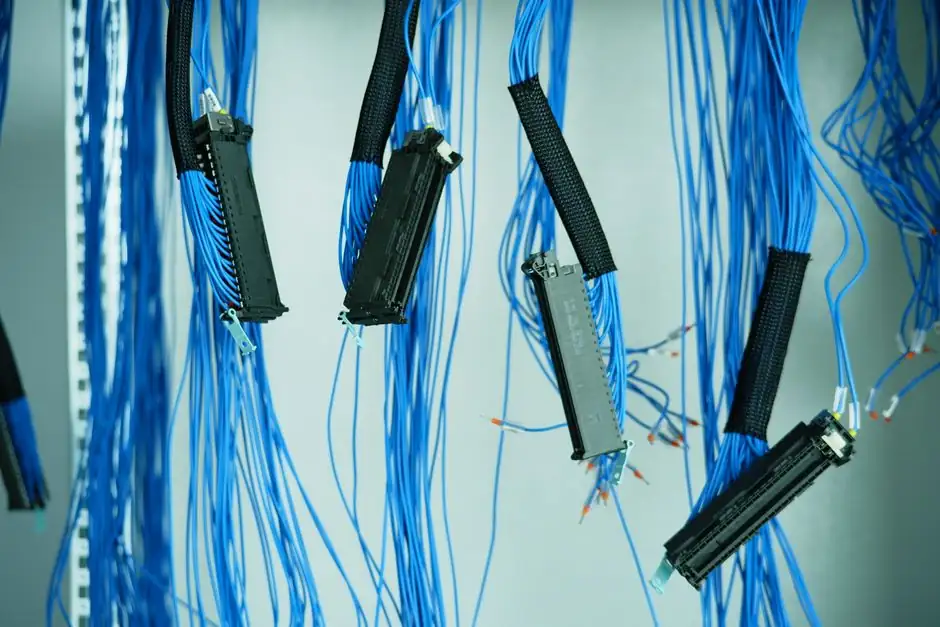
Delta introduced a prefabricated AI modular data center at COMPUTEX 2026 that reduces deployment time by up to 60% against traditional construction approaches [S1].
Delta’s June 2026 solution packages power, cooling, piping systems and IT infrastructure into prefabricated units and includes GoCool 260 kW LTA and 3 MW LTL cooling designs, while KAYTUS separately unveiled a gigawatt-scale prefabricated AI data center.
What Defines a Prefabricated Modular Data Center?
Prefabricated modular data centers shift much of the integration work from the construction site into a factory, where racks, power distribution, cooling, controls and cabling are assembled and tested before shipment [S1][S2][S3].
Three implementation levels appear in the 2026 supply chain. XINKE combines seven systems, including racks, power distribution, cooling, management, lightning protection, cabling and fire protection, in a factory-tested micro module for small computer rooms and edge sites [S2]. Delta uses prefabricated units containing power, cooling, piping and IT infrastructure, including a containerized configuration with UPS equipment, IT systems and cooling in one factory-preassembled block [S1]. KAYTUS unveiled a gigawatt-scale prefabricated AI data center.
For comparison, the 10 FT, 20 FT and 40 FT container format offers a fixed-envelope option, while Delta emphasizes modular infrastructure blocks and KAYTUS targets large, liquid-cooled AI campuses [S3][S4].
Schedule and Factory Integration
Factory pre-assembly and testing reduced Delta’s stated deployment time by as much as 60%, moving schedule risk away from the jobsite but making early interface control more important [S1].
“By completing pre-assembly and testing at the factory, the deployment time is reduced by as much as 60%,” said Kelvin Huang, vice president and general manager of Delta’s ICT Infrastructure Business Group [S1]. A separate container supplier states that factory integration and testing support delivery and deployment in as little as 40 days [S3].
This advantage is strongest where the deployment envelope is fixed, utility connections are defined and the module can leave the factory with little commissioning work. It is less suitable for sites where load, cooling architecture or equipment selection remains unsettled, because late interface changes can negate the benefit of factory integration [S1].
Power Architectures for AI Loads
Delta lists 800 VDC in-row power as a core building block of its prefabricated AI modular data center solution.
Delta lists a 3 MW LTL cooling design among the core building blocks of its prefabricated AI modular data center solution.
These figures are not universal market specifications. They describe Delta’s announced architecture, so a buyer must match UPS capacity, battery duration, DC distribution, cooling demand and rack load to the installed IT configuration rather than adopt the figures without engineering validation [S1]. Power and thermal components can be evaluated alongside the broader DC power supply discipline applied to high-density AI facilities.
Liquid Cooling and Thermal Density
Delta’s cooling technologies include the GoCool 260 kW LTA and 3 MW LTL designs.
XINKE uses cold-plate liquid cooling combined with sealed hot-aisle and cold-aisle air-liquid coordination. Its monitoring covers temperature, humidity, power consumption and the power-distribution chain, while dual-redundant power distribution and hot-swappable key components support maintenance without shutdown [S2]. The module’s cooling output is controlled to track server load rather than remain fixed at a maximum [S2].
KAYTUS unveiled a gigawatt-scale prefabricated AI data center. Indirect cooling remains an option in the broader container market, with wall-mounted, in-row and room cooling configurations available from 5.5 kW to 122.9 kW [S3]. The thermal choice must follow server architecture, coolant chemistry, pressure, heat-rejection capacity and service access, not rack power alone.
Environmental Protection and Site Constraints

The container data center solution is available in 10FT, 20FT and 40FT sizes and supports customization of protection capabilities, container size and cooling types.
These environmental claims apply to the described container design, not to every prefabricated data center. Transport dimensions, road limits, crane access, floor loading, flood exposure, seismic requirements and local fire authority acceptance still require project-specific verification [S3]. Site survey data for electrical, mechanical and environmental inputs can be captured with a data logger before the factory design is frozen.
Procurement Criteria for Buyers
Fabrication quality does not remove the need for a complete interface specification. Buyers should require an IT load schedule, power topology, cooling capacity, redundancy target, environmental envelope, transport envelope, fire strategy, controls protocol, acceptance test and factory-to-site responsibility matrix [S1][S2][S3].
Three options serve different buyer profiles. Containerized systems suit constrained sites, temporary deployments and projects requiring environmental hardening [S3]. Factory-tested micro modules fit small computer rooms and edge computing where utility connections and local civil work must be minimized [S2]. Large AI campuses need a scalable architecture with validated high-voltage distribution, direct liquid cooling and multi-megawatt expansion [S1][S4].
Pricing and general availability were not disclosed for Delta’s COMPUTEX 2026 solution [S1]. XINKE states that its manufacturing base covers 30,000 m² with annual capacity above 500 MW, while the stated regional service package includes a 2-year warranty and 7×24 response with 365-day free on-site service in China [S2]. These are supplier-specific commercial and service terms, not global market guarantees.
Testing, Monitoring and Commissioning

Factory testing must cover more than visual assembly. Critical tests include power-distribution protection, UPS transfer behavior, pump redundancy, leak detection, coolant flow and pressure, alarm propagation, network connectivity and integrated shutdown sequences [S1][S2][S3].
Delta’s N+1 liquid-to-liquid CDU and hot-swappable pumps support continuity during component service, while XINKE uses four-channel alarms delivered through SMS, email, voice call and audible-visual notification [S1][S2]. Its interface also includes 3D visualization, mobile remote operation, facial-recognition access control and a 21-inch industrial touch display [S2].
For field validation, technicians still need to verify electrical protection settings, alarms, sensor calibration, cooling control, network latency and operating-mode transitions. Portable measurement equipment can be specified through the digital multimeter and electronic test and measurement categories, but acceptance criteria should be written against the contracted design rather than copied from a vendor presentation.
Ongoing capacity checks should track delivered megawatts, rack utilization, coolant temperatures, flow, differential pressure, UPS loading and PUE. Delta states that its containerized configuration maintains PUE below 1.19, but that figure is specific to the presented design and operating basis [S1].
The clearest 2026 procurement signal is the widening scale range, from factory-tested micro modules to 3 MW bases and 1 GW AI factory architectures [S2][S4]. Track two items before purchase: delivered lead time for the exact configured module, and a signed factory acceptance plan covering power, cooling, controls, fire protection and site-interface tests.