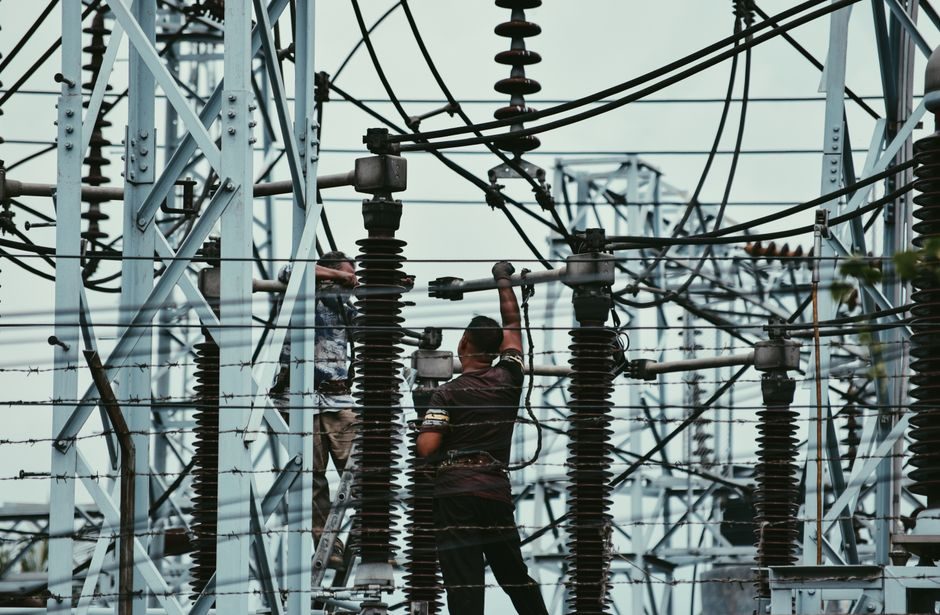
A 220 kV oil-immersed power transformer lists at US$6,000.00-500,000.00 per piece FOB on Chinese supplier channels as of 2026-07-01, with the lower end covering smaller substation builds and the upper end reserved for EHV transmission-class units [S3]. The single-phase low-voltage segment — CTAT/CTIT type from Taiwan — starts at 0.1 kVA and tops out near 100 kVA at 50/60 Hz, serving control panels and rectifier duty rather than grid step-down [S1].
For 2026 procurement the cost spread inside the same voltage class regularly exceeds 50x, so a spec-first kVA / voltage / insulation selection is the only way to keep quotes comparable. Reference the power transformer selection criteria for 2026 before requesting vendor pricing.
Cost Driver #1: kVA Rating and Voltage Class
kVA rating is the single largest line item — copper conductor mass, core steel cross-section, and tank volume all scale with apparent power. A 1,600 kVA 11 kV dry-type unit is a different procurement class than a 2,000 kVA 33 kV oil-immersed distribution transformer, even though both are sold under the "distribution transformer" heading [S5].
EHV units at 220 kV are explicitly marketed as core extra-high voltage transmission equipment for global grid projects, with manufacturers like Jiangsu Tianhua positioning custom builds against IEC standards for utility buyers [S4]. Above 110 kV the loss-evaluation methodology of ANSI/IEEE C57.120-1991 becomes a meaningful part of the spec sheet, because lower no-load loss (W) at a given kVA is paid for in core steel grade and amorphous vs CRGO lamination choice [S8]. When comparing two 1,000 kVA quotes within 10% of each other on price, the no-load loss in watts is the differentiator that justifies a 15-25% premium on the higher-priced unit over the transformer's 25-30 year life.
Cost Driver #2: Dry-Type vs Oil-Immersed Construction
Oil-immersed transformers dominate the 33 kV-220 kV class because mineral oil delivers superior dielectric strength and cooling per dollar of footprint [S4]. Dry-type (cast-resin or VPI) designs at 11 kV/0.4 kV carry a 30-80% price premium over equivalent kVA oil-immersed units, but eliminate the oil containment pit, fire deluge system, and environmental spill reporting that indoor substation rooms must otherwise handle [S5].
Compact oil-immersed designs are also actively marketed as an OEM/ODM category with ISO 9001-2000 / ISO 9001 supply chains, indicating a mature sub-tier where skid-mounted substations are pre-assembled before shipping [S6]. For indoor data-centre or commercial builds where fire class is a constraint, dry-type pays back its premium in reduced civil work; for outdoor utility substations, oil-immersed wins on $/kVA every time.
Certifications, Standards, and Where the Surcharge Hides
Transformer safety standards add a discrete surcharge per certification tier: IEC-compliance for grid projects, IEEE C57 series for North American utilities, and KEMA / short-circuit tested where utility buyers demand witnessed fault-withstand proof [S7]. IEEE C57.120-1991 specifically governs loss evaluation, not safety; safety is covered by IEC 60076 and the IEEE C57.12.00 / C57.12.90 test-code pair, which any reputable supplier will cite on the nameplate [S8].
Custom builds to IEC for global grid projects — including 220 kV oil-immersed units — are positioned as the "core" EHV product line by Jiangsu Tianhua and similar Tier-2 Chinese mills, with pricing tied to MVA rating, impedance percentage (typically 12-14% for 220 kV), and BIL / lightning impulse level [S4]. When a quote omits impedance%, BIL, and the reference temperature for loss figures (75°C vs 120°C winding), the price is not yet comparable to the next vendor — request those three before negotiating.
Total Cost of Ownership: Beyond the FOB Price
FOB price is roughly 55-70% of the landed cost for a 220 kV unit once you add ocean freight, foundation civils, oil filling, vacuum drying, and commissioning. A mid-sized 1,000-2,500 kVA distribution transformer shipped FOB at one price typically lands at 1.4-1.8x that figure delivered and energized, with oil, bushing CTs, and Buchholz relay as common add-on line items [S5].
Operating cost is dominated by no-load loss (24/7 magnetising) and load loss (I²R, scaling with load factor). At a 2,000 kVA rating, each 1 kW of no-load loss costs roughly US$800-1,200/year to supply at industrial tariffs — so a 3 kW no-load loss difference between two otherwise-equal units recovers the price gap in under three years. Pair transformer selection with upstream power cable sizing and downstream power meter revenue-grade metering so the loss numbers in the spec sheet translate to dollars on the utility bill.
Where Pricing Falls Apart: Volume Tier and Lead Time
Single-unit procurement at 220 kV attracts the listed 50x ceiling; bulk orders for utility framework agreements compress the curve, and container-loading volume on a 40 ft flat-rack (typically one 1,600-2,500 kVA unit plus accessories) is the practical ceiling per shipment [S3]. Lead time for custom 220 kV builds runs 90-150 days from PO; stocked 11 kV/0.4 kV distribution units in the 315-2,500 kVA band can ship in 15-30 days from regional warehouses [S5].
For 2026 buyers, the practical pricing matrix looks like: (1) 0.1-100 kVA single-phase control transformers priced per kVA in the low hundreds of USD [S1]; (2) 315-2,500 kVA distribution units in the tens of thousands of USD with voltage class as the main lever; (3) 10 MVA+ transmission units in the hundreds of thousands, where loss capitalisation and short-circuit impedance drive negotiation more than base price. Cross-check high-voltage transformer spend against station-level switching power supply and surge protective device budgets so the bay-level spend is consistent.
Spec-level background on the components involved: linear guide.