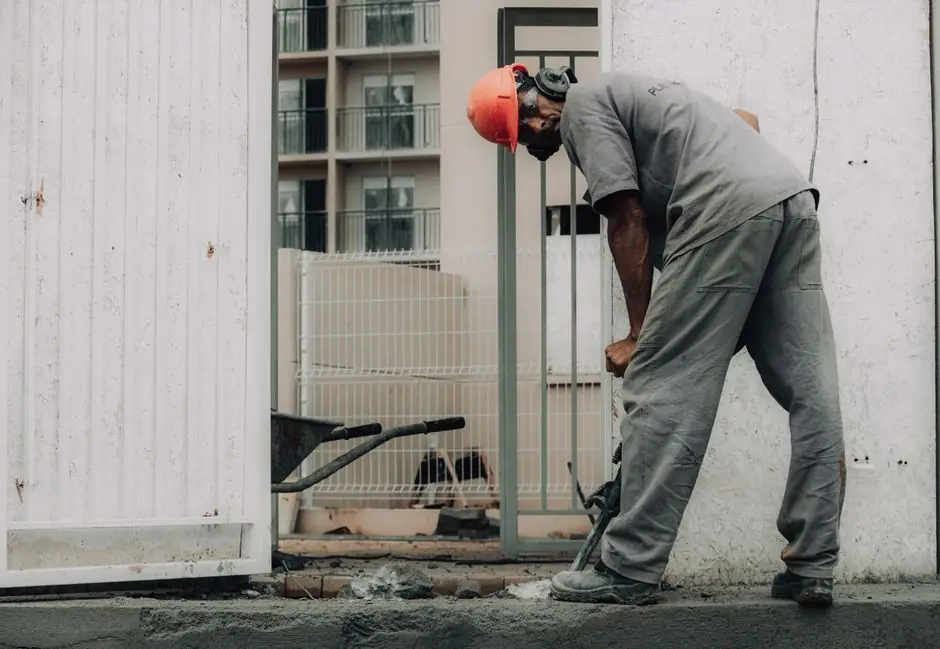
Power trowels are finish-only machines, and using one to break concrete is the fastest way to wreck the rotor and bearings, which is why contractors spec a dedicated power trowel class for the cleanup pass after a demolition hammer has done the breaking [S1][S2].
The relevant decision in August 2026 is not whether the trowel can break concrete (it cannot), but which rotor diameter, engine power band, and float-shoe configuration fits the post-demolition surface condition: exposed rebar pockets, spalled edges, low-slump repair mixes, and slabs under 200 m² versus open warehouse pours above 1,000 m² [S3][S4][S5].
Where a Power Trowel Fits in a Demolition Workflow
Power trowels sit at the very end of a slab-removal sequence, after the breaker, scabbler, or demolition hammer has removed the failed section and the repair patch has been poured and screeded flat [S2]. Their job is floating and densifying, not breaking: pan floats, float shoes, combination blades, and finish blades all work the surface of cured or curing concrete, never virgin demolition debris [S3].
Three concrete-work tools consistently top contractor guides for 2026: the rotary hammer for drilling and light demolition, the hand finishing trowel for small patches, and the power trowel for surface coverage on pours large enough that a hand trowel cannot keep pace [S2]. Labor can reach 50% of total project cost on concrete work, so the finishing-machine choice directly drives crew size and slab turnover time [S2].
The standard concrete finishing sequence, regardless of whether the slab is new or a demolition patch, runs pour, screed, bull float, power float with float shoes, then power trowel with finish blades; float shoes work the first 30 to 90 minutes after screeding, and finish blades take over once the slab supports machine weight without footprints [S3].
Rotor Diameter and Engine Power: Walk-Behind vs Ride-On
Walk-behind power trowels span 24 in. to 48 in. rotor diameters, with 36 in. classed as the mid-size workhorse for residential garage slabs, patios, and small commercial pads where maneuverability matters more than raw coverage [S4][S5]. Ride-on machines cover 36 in. twin-rotor up to 96 in. four-rotor configurations and are specified for commercial slabs, warehouses, and large pours above roughly 500 m² per pass [S2][S4].
Engine power scales with rotor size and operator mass. Walk-behind 36 in. units typically run 5.5 to 9 hp gasoline engines, while ride-on twins start around 20 hp and four-rotor machines push 40 to 60 hp for high-compaction finishing at production rates [S4]. The 36 in. walk-behind rental class shows the productivity benchmark: it covers ground efficiently on smaller slabs while staying inside pours where a ride-on would be too large to maneuver [S5].
On a demolition patch, the rule of thumb from the buyer's guides is to keep the rotor within the patch footprint plus a 12 in. overlap onto sound concrete, which is why most crews running spot repairs under 50 m² stay on 24 in. to 36 in. walk-behinds rather than dragging a ride-on onto a half-cured patch [S4].
Float Shoes, Pans, and Blades for Patch Finishing
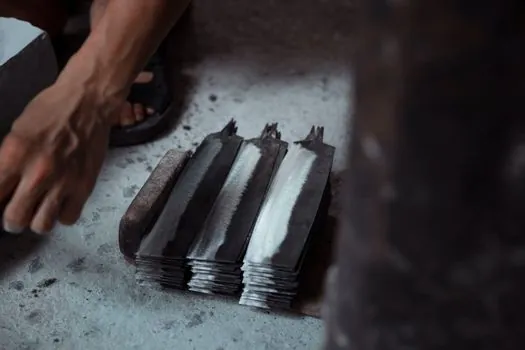
Float shoes are flat steel blades that clip or bolt onto the power trowel arms to flatten, level, and float freshly poured concrete during the initial finishing pass before final troweling, and they are the working interface between the screed stage and the finish-blade stage [S3]. Two mounting systems dominate: clip-on float shoes install in approximately 30 seconds per blade and slide over existing finish blades with spring-steel clips, while bolt-on float shoes require about 2 minutes per blade and fasten to the arm with hardware through pre-drilled holes [S3].
Float pans cover the full trowel diameter as a single disc and are used for aggressive initial floating on wet concrete with slump of 5 in. or higher; individual float shoes distribute less weight per square inch and are preferred for stiffer mixes at 4 in. slump or below, which is the typical case for repair patches where the water content is being held down to minimize shrinkage cracking against the old slab [S3].
Subtype counts run to six distinct float-shoe and blade variants in common contractor use: clip-on float shoes, bolt-on float shoes, universal float shoes (fit multiple OEM arm profiles without adapters), float pans, combination blades, and finish blades [S3]. Most power trowels accept 4 float shoes per rotor head, and universal clip designs fit multiple OEM arm profiles without modification [S3].
Blade Pitch, Sequence, and the Footprint Test
Blade pitch is the single most abused setting on a patch job. Float shoes run at 0° pitch during early passes, while finish blades ramp from 5° up to 15° as the surface firms; using a finish blade before the slab is ready tears the surface, pulls aggregate to the top, and creates permanent defects, which is why the float-shoe-first, combination-blade-second, finish-blade-last sequence is treated as a hard rule rather than a guideline [S3].
Finish blades are narrow (typically 5 in. wide) and angled, so they dig into uncured concrete; the wider, flatter float shoe is the correct first-pass tool on any patch, including demolition repairs where the mix stiffens faster than a full slab pour because of the smaller mass and the cold edge of the surrounding concrete [S3].
Timing is the second hard rule: float shoes work in the first 30 to 90 minutes after screeding, and finish blades work only after the slab supports full machine weight without leaving footprints. On a hot-day demolition patch, that window can compress to 20 minutes, which is where walk-behind maneuverability pays off over a ride-on that has to be repositioned carefully to avoid sinking [S3][S4].
Power Source and Rental Cost Signals (2026)
Three power options dominate: petrol (gasoline) for outdoor pours and most demolition-patch sites, mains electric for interior slabs where fume control matters, and battery for small interior patches where lead-in cable is a tripping hazard [S4]. For a 36 in. walk-behind mid-size class, Northside Tool Rental lists a $59.00 per-4-hour, $89.00 per-day, $259.00 per-week, and $699.00 per-4-weeks rate as of September 2025, with a 1-hour minimum rental [S5].
That rental benchmark matters for spec writing: a demolition patch that fits inside a single day of finishing time sits at the $89.00/day point, so the contractor decision between renting a 36 in. walk-behind and buying a smaller 24 in. unit often breaks on how many patch days the crew logs per quarter [S5]. The 36 in. class is explicitly positioned as the step up from hand troweling and the step down from ride-on production trowels, which makes it the default hire for a one-off demolition repair [S5].
Combo-blade sets are sold as a separate line item: 36 in. combo trowel blades in a set of 4 list at $79.95, which gives a sense of the consumable budget for a contractor speccing a trowel package for demolition prep work [S5].
Selection Criteria: Demolition Patch vs Full Slab
Four decision criteria line up the main options for a contractor choosing a trowel to finish a demolition repair: [S2]
1. Patch footprint. Under 50 m², a 24 in. to 36 in. walk-behind petrol unit is the most maneuverable choice. 50–500 m² shifts to 36 in. walk-behind or twin 36 in. ride-on. Above 500 m², a four-rotor ride-on covers in fewer passes and lower labor cost, which matters when labor approaches 50% of project cost [S2][S4][S5].
2. Mix stiffness. Slump at 4 in. or below calls for individual float shoes, not a float pan, because lower-slump mixes respond better to lower downward pressure per square inch and reduce the risk of sealing the surface too early [S3].
3. Site access and ventilation. Interior demolition patches after a slab removal typically need mains electric or battery to manage fumes in a partially enclosed space; outdoor patches default to petrol for runtime and refuel speed [S4].
4. Edge work. Patch edges against sound concrete are touched up with a 24 in. walk-behind or hand trowel even when the bulk of the pour is finished with a 36 in. unit, because the larger rotor cannot reach inside 6 in. of a wall or column line without leaving an unworked strip [S4][S5].
For a clean comparison, a power trowel spec on a demolition-patch job should pull together rotor diameter, engine power, float-shoe mounting (clip-on vs bolt-on), and the patch footprint it can finish inside the 30 to 90 minute float-shoe window; the 36 in. walk-behind at 5.5–9 hp is the default mid-size hire, with 24 in. walk-behinds reserved for tight patches and four-rotor ride-ons reserved for full-slab pours after a larger demolition [S3][S4][S5].
Limitations and Common Mistakes

The single biggest mistake is using a power trowel to break or chip concrete. The rotor, spider arms, and blade-pitch mechanism are not designed for impact loading, and a trowel pushed into a demolition debris field will throw a blade, crack a spider plate, or both; the correct tool for breaking is the demolition hammer, and the trowel comes in only after the repair patch is poured and screeded [S1][S2].
The second mistake is sequencing: finish blades run before float shoes tear the surface, pull aggregate, and lock defects into the patch that cannot be floated out later. The third is over-floating on low-slump mixes, which seals the surface early and traps bleed water below, causing blisters and delamination under the finished surface [S3].
On the rental side, the 1-hour minimum on a 36 in. walk-behind means contractors running a 30-minute touch-up pay for a full hour; tracking that utilization helps decide whether to buy a smaller 24 in. unit for the touch-up workload and rent the 36 in. for the day-of-pour work [S5].
Two watch-points to track into Q4 2026: whether electric and battery walk-behind trowel offerings expand beyond the 24 in. to 36 in. band into the ride-on twin class (the buyer's guides list the shift but do not put a date on it), and whether OEM float-shoe mount standards converge on a single universal clip profile, which would cut the 30-second clip-on install time across mixed-brand fleets [S3][S4].
The underlying component specifications are covered under aerial work platform.
For related coverage, see Bellows Seal Selection: Spec-First Guide for Gate, Globe, and Body Materials.