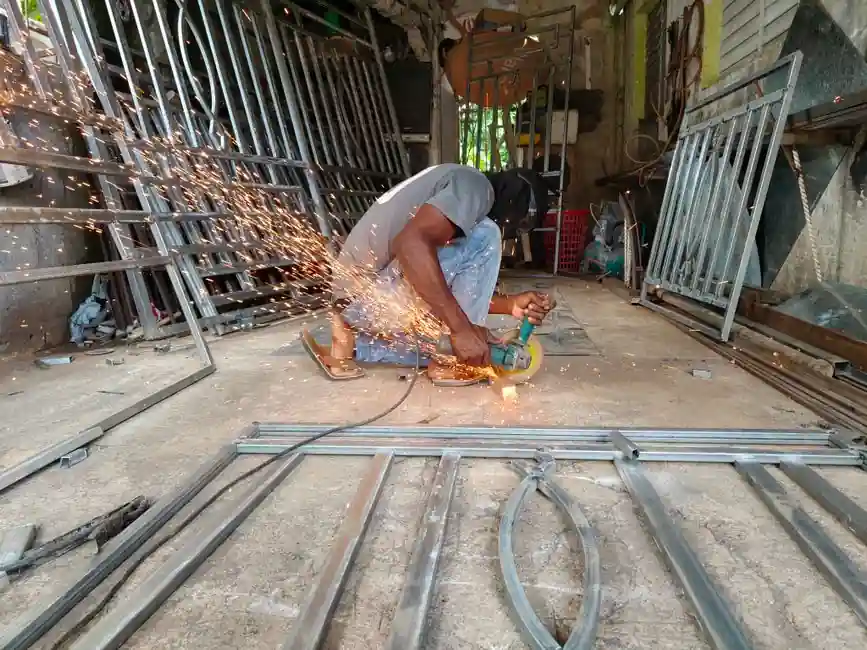
Walk-behind power trowels with rotor diameters from 24 to 48 inches handle the bulk of slabs under 5,000 square feet on steel-construction projects, where columns, base plates, and embedded anchor bolts create tight working zones that rule out larger equipment [S2].
For pours exceeding 5,000 square feet, ride-on twin-rotor trowels are documented as four to five times faster than walk-behinds on the same slab, with overlapping or non-overlapping blade sets of four or five blades per rotor delivering higher contact pressure and a denser burnished skin [S2]. Selection therefore hinges on three hard criteria: slab area, blade diameter and type, and power source match to site ventilation.
Walk-Behind vs Ride-On: Area Threshold and Maneuverability
Walk-behind power trowels carry a single rotor with three or four blades and weigh enough to be portable by one or two crew members through doorways, around columns, and across formwork perimeters [S2]. The same source specifies the 5,000-square-foot cutoff: below it, walk-behinds are the standard, above it, ride-ons are described as much more efficient and faster [S2].
On a steel-construction deck, the walk-behind's lower mass also matters where slab thickness is limited or where composite-metal-deck tolerances do not allow a heavy machine. In northern climates, lighter walk-behinds are preferred to avoid sinking into slower-curing mixes, while southern pours with faster set times can accept heavier units, per equipment engineering guidance [S5]. Standard rotor diameters in production walk-behind lines include 24, 36, and 46 inches, with 36-inch machines being the most common compromise for commercial slab work [S6].
Blade Type and Diameter: Float, Finish, and Combo
Three blade categories govern finish quality. Float blades are wider, set at lower pitch, and used in the first pass to compact the slab and bring cement-rich cream to the surface; finish blades are narrower with higher pitch, used in the second pass to close pores and burnish the top; combo blades blend the two profiles so a single set handles both passes [S3].
Pro-grade walk-behinds use hardened, precision-ground steel blades rather than generic stamped stock, and a heavier spider assembly plus sealed bearings to keep the rotor true under load [S1]. The same source notes that adjustable pitch controls on a pro machine hold their setting across the curing window, which is the difference between a flat floor and one that chatters ridges into the surface [S1]. For a steel-construction slab where flatness tolerances under FF/FL numbers are typical spec items, the blade-quality gap is not cosmetic.
Power Source: Gas, Diesel, Electric, and Hydraulic
Walk-behind trowels are typically powered by gasoline engines or electric motors, while ride-on units run on gas or diesel and are offered in hydraulic or mechanical drivetrains [S2]. Hydraulic ride-ons eliminate gearboxes, clutches, and belts as wear items, which lowers scheduled maintenance on high-hour machines; mechanical ride-ons cost less and deliver more torque to the blades [S2].
For indoor steel-construction pours (a multi-story office frame, a parking deck, or a warehouse with limited ventilation), electric walk-behinds remove exhaust fumes from occupied or partially enclosed spaces. Pneumatic walk-behinds such as the HoverTrowel are documented for thin-coat and overlay systems where a heavier gas machine would sink into the finish [S5]. The same source documents a retrofit path from pneumatic to gas power when site conditions change, which keeps the platform flexible across project phases [S5].
Steel-Specific Site Constraints: Base Plates, Anchors, and Edges
A steel frame complicates finishing because column base plates, anchor bolt clusters, and embedded shear studs sit proud of the slab. Walk-behind trowels in the 24 to 36-inch class fit between base plates in typical bay spacing, while 46 and 48-inch rotors are used in open field away from penetrations [S2]. Edging trowels are specified for the strip within roughly 12 inches of forms and columns that the main rotor cannot reach without gouging the form face [S3].
For decks that are part of a steel-construction package, the finishing sequence also has to account for metal decking deflection limits. A heavier ride-on concentrates load on smaller contact areas per blade and can leave track marks on a less mature slab, which is why walk-behinds dominate on composite metal decks until the concrete reaches sufficient set [S2][S5]. A related reference on tunnel concrete vibrator head sizing and drive matching covers the consolidation side of the same slab sequence, and is worth reading before the trowel stage is planned.
Comparison: Walk-Behind vs Ride-On Trowel on Four Decision Criteria

Across the four criteria that drive steel-construction slab selection, the two machine classes line up as follows. Coverage: walk-behind 24-48 inch rotor diameter handles slabs under 5,000 square feet; ride-on twin-rotor with 4-5 blades per rotor covers pours above 5,000 square feet at four to five times the rate [S2]. Power: walk-behind uses gas or electric, ride-on uses gas, diesel, or hydraulic, with mechanical drive delivering more torque and hydraulic drive removing clutches and belts [S2]. Maneuverability: walk-behind fits through doors and around base plates, ride-on needs open field and trained operators [S2][S3]. Cost: walk-behind is much more affordable and portable; ride-on is a large-ticket item that only pays back on regular high-area work [S5].
For steel-construction work specifically, the deciding factor is rarely raw productivity; it is whether the bay layout allows the ride-on to turn. In tight column grids, two walk-behinds operated in parallel can outperform a single ride-on blocked by base plates, a scenario the equipment literature explicitly acknowledges [S2].
Selection Checklist and Failure Modes
A spec-first selection for a steel-construction slab should lock down: rotor diameter matched to bay width minus edge clearance, blade type (float, finish, or combo) matched to the required number of passes, power source matched to indoor or outdoor ventilation, and weight class matched to slab thickness and metal-deck deflection limits [S3][S5]. Pro-grade build indicators (cast-iron housings, sealed bearings, thick-gauge spider assemblies, adjustable pitch that holds setting) are documented as the differentiators that prevent the two recurring failure modes: rotor wobble that transfers to the floor, and pitch drift that tears the surface as the slab cures [S1].
Trackable signals for the next planning cycle: manufacturer release of 40-inch-class walk-behind rotors in the 200-300 kg bracket to bridge the gap between 36-inch hand-propelled units and 46-inch pro models, and wider adoption of hydraulic ride-ons on metal-deck pours above 10,000 square feet as composite-deck curing windows tighten under fast-track schedules. For related consolidation-side specs on the same pours, the guide on masonry concrete vibrator head size, VPM, and power source covers the upstream step that determines whether the trowel has a well-compacted slab to finish.
For component-level specifications, see power trowel, construction tools, and power cable.