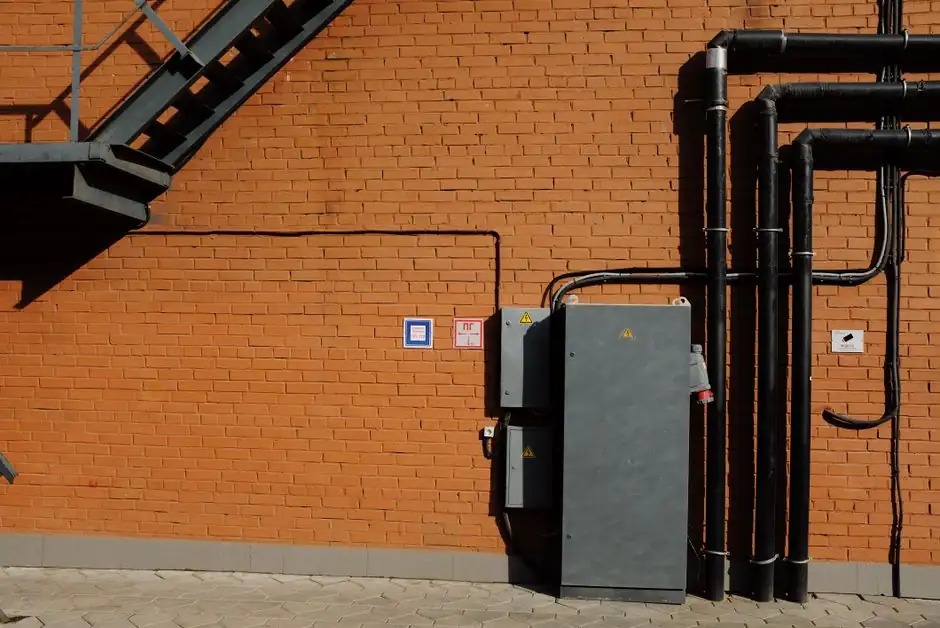
Hospitals should run PN20 (S2.5) or PN25 (S2) PPR pipe in 32 to 110 mm sizes on hot risers and main distribution loops, with PN16 (S3.2) in 20 to 40 mm sizes for cold branch lines feeding individual fixtures and clinical wash stations.
Hospital potable water is not a residential problem: design temperatures on hot supply can sit at 60 to 80 °C for infection-control flushing, risers run continuously with low night flow, and any joint failure behind a sealed wall becomes an infection-control and compliance event. That is why mechanical engineers default to the upper PN grades and oversized main runs rather than the residential baseline of PN12.5 [S1][S3].
PN Rating Map: Which Grade Goes Where in a Hospital
Hospital hot water at 60 to 80 °C should use PN20 (S2.5, SDR 6) or PN25 (S2) PPR pipe; the working-pressure drop at elevated temperature is what kills undersized pipe, not the room-temperature rating [S1][S4]. PN16 (S3.2) is acceptable for cold potable water branches and mixed-temperature loops below roughly 60 °C, where it gives a usable pressure margin in 20 to 40 mm branch sizes [S3]. PN12.5 (S4) and PN10 (S5) belong in cold, low-rise, non-clinical ancillaries such as ground-floor plant rooms or landscape irrigation, not in patient-floor risers [S1][S4]. PN20 is the practical "comfortable buffer" grade for domestic hot water per industry guidance, and PN25 is reserved for high-rise risers and any line where the designer wants extra thermal margin [S4].
Size Routing: Branches, Risers, and Building Mains
Branch lines feeding a single sink, scrub station, or bed-bath outlet should run 20 mm PPR at roughly 15 to 20 L/min; 25 mm at 25 to 35 L/min covers shower and bathroom group branches; 32 mm at 40 to 60 L/min serves floor-level bathroom groups; 40 mm at 90 to 110 L/min handles small building mains; and 50 mm and above (up to the 110 mm catalog ceiling) carries 150 L/min and beyond for vertical risers and plant-room headers [S1][S2][S7]. A 10 m run of undersized PPR can drop usable pressure by 5 to 10 % depending on flow, so hospital designers routinely step up one size on long horizontal runs between the plant room and the first fixture [S1]. Standard catalog diameters of 20, 25, 32, 40, 50, 63, 75, 90, and 110 mm cover essentially every hospital branch, riser, and main scenario [S2][S7].
Why PPR Fits Hospital Potable Water

PPR is a Polypropylene Random Copolymer with a useful temperature band of roughly -20 °C to 95 °C, no rust or scale formation like metal, and a smooth inner wall that holds flow and pressure loss down over decades [S5]. Joints are made by socket heat fusion, which produces a homogeneous weld with no mechanical joint, no threaded interface, and no rubber gasket to age out behind a tile wall [S4][S5]. For infection-control teams, the practical wins are the absence of corrosion byproducts in the water and the fact that properly fused PPR does not support the same biofilm regimes that legacy steel and copper systems do, provided the system is sized and flushed correctly.
Options Compared: PPR vs PPR-CT vs PP-RCT vs Metal
The base decision is plastic vs metal (copper, stainless, galvanized steel). Copper and stainless steel remain common for hospital steam, medical gas, and high-temperature sanitization lines, but for portable hot and cold water they cost more per meter, require soldering or mechanical joining, and introduce corrosion byproducts. Within plastics, three material families compete on the same hospital spec: standard PPR (Type 3), PPR-CT fiber-reinforced composite, and PP-RCT (crystalline-structure-random-copolymer) which carries a higher stress capacity at the same SDR. The comparison below uses the four decision criteria a hospital MEP team actually ranks on: [S4]
Material / Cost vs PPR baseline / Sustained hot-water pressure (PN20 at 70 °C) / Joint method / Best fit in a hospital. Standard PPR: 1.0x baseline cost, lower pressure margin at 70 °C, socket heat fusion, fits cold branches, DHW at 60 °C, non-critical risers. PPR-CT (fiber-glass middle layer composite): 1.2 to 1.4x baseline, higher creep resistance, same socket fusion, fits hot risers and high-rise stacks. PP-RCT: 1.1 to 1.3x baseline, higher design stress at the same SDR, socket fusion, fits high-pressure hot risers where SDR must stay small. Copper Type L: 2.5 to 4x baseline, high at 70 °C, soldered, fits medical gas and steam; oversized for potable only. For a generic hospital potable-water spec, PN20 or PN25 PPR (or PPR-CT) wins on cost, joint integrity, and 50-year service life claims under proper installation [S1][S5][S6].
Selection Criteria an Engineer Has to Lock Before Sourcing
Five parameters fix the spec. (1) Design temperature: cold water 20 °C, DHW circulation 55 to 60 °C, infection-control flushing 70 to 80 °C; each step up the temperature curve requires a step up in PN grade [S1][S4]. (2) Design pressure: typical hospital working pressure is 0.4 to 0.6 MPa with a 1.5x safety factor, which rules out PN10 for anything beyond cold plant-room pipe [S3]. (3) Pipe series: confirm S-series (S5, S4, S3.2, S2.5, S2) maps to PN10, PN12.5, PN16, PN20, PN25 before ordering, because suppliers use both nomenclatures [S1][S3]. (4) Size and flow: match diameter to fixture units using 20 mm for single fixtures up through 110 mm for building mains [S2][S7]. (5) Certification: insist on internationally recognized certification; IS 15801 and DIN 16962 are commonly cited for hot-and-cold PPR systems, with other regional equivalents in use [S5]. Skipping any one of these is the most common route to a re-spec mid-project.
Jointing, Installation, and What Goes Wrong on Site
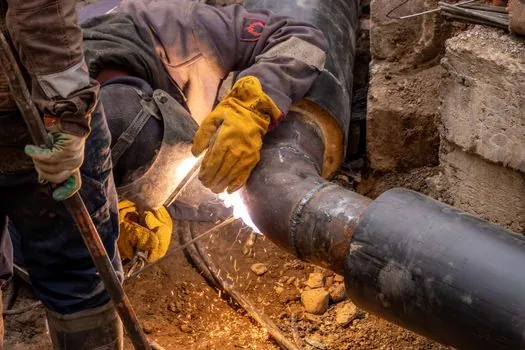
Socket heat fusion is the only correct joint for hospital PPR: a 260 °C-class heater socket, a 5 to 8 second heating window, and a clean push-in hold matching the fitting depth, per the manufacturer's published fusion table [S5]. For pipe fitting selection, elbows, tees, couplers, reducers, end caps, and valves should be from the same manufacturer and PN family as the pipe; mixing brands is the single most common cause of joint failures in warranty data reviewed by industry sources [S3][S5]. Common on-site mistakes to flag in the quality plan: cutting the pipe with a non-PPR saw (leaves burrs that scrape the fusion socket), reusing a fitting that was mis-fused the first time, failing to deburr and chamfer the spigot end before heating, and not allowing a full cool-down before pressure testing [S5].
Limitations and Where PPR Should Not Be Used
PPR is not for medical gas, oxygen, vacuum, nitrous oxide, laboratory acid-waste, or steam lines, and it should not be run outdoors without UV protection or in fire-sprinkler systems where the local code lists only metallic or listed CPVC pipe. Sustained temperatures above roughly 95 °C are out of the material's working window, and any application with aggressive chemicals (concentrated acids, certain solvents) belongs in a lined metal or dedicated chemical system [S5]. Hospital projects where a 24/7 hot recirculation loop holds pipe walls above 70 °C for years should default to PN25 or to PPR-CT/PP-RCT rather than standard PN20, because the long-term creep at 70 °C is the actual failure mode, not the burst pressure at 20 °C.
Procurement and Sourcing Checklist for Hospital PPR
Lock the spec on paper before opening a quote: PN grade per line (PN16 cold branches, PN20 or PN25 hot risers), S-series confirmation, certified to a recognized standard (IS 15801, DIN 16962, or local equivalent), pipe-to-fitting brand match, and a published 50-year service-life statement under the design temperature [S1][S5]. Require batch traceability and dimensional consistency on outer diameter and wall thickness, plus clear on-pipe print marking of PN and size to prevent site mix-ups [S4]. For a related engineering parallel, the spec-first approach to hospital potable water mirrors the logic in our Industrial Flooring Specified for Residential Builds: Selection Map: pin the standard first, then size second. For a broader look at why plastic pipe families are preferred over metals in many modern hospital MEP packages, the stainless pipe comparison in our reference set is the useful counter-case to read first.