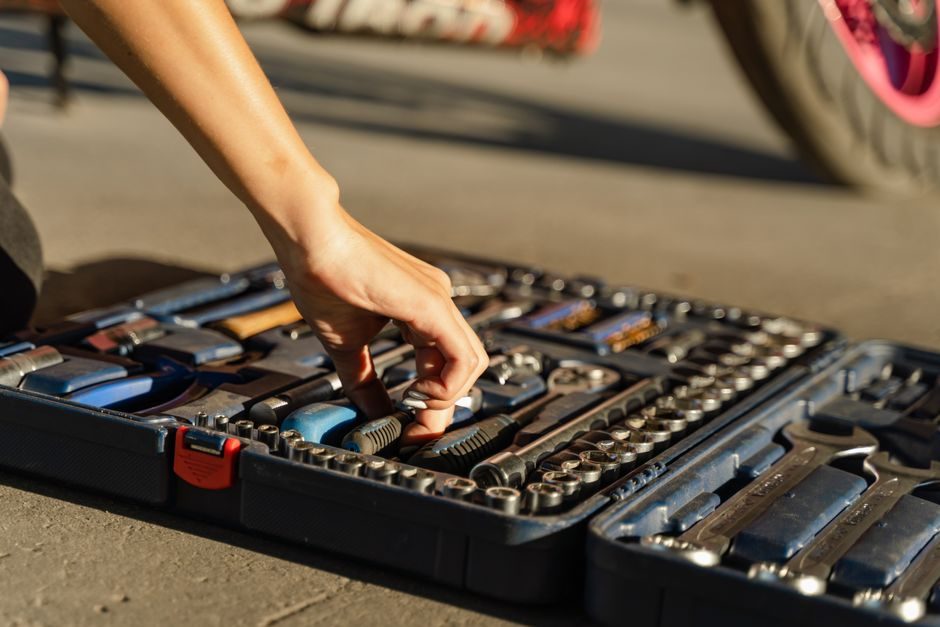
Outdoor maintenance-area filtration in 2026 is dominated by three threats: wind-driven moisture, UV degradation of seals, and combustible dust or vapor ingress during tool change-out — and a correct RFQ must address all three on the first pass.
The relevant filter category sits between a standard industrial filter and a precision filter: outside-plant air or gas streams where the consequence of bypass is equipment damage, product contamination, or personnel exposure, and where the housing lives on a rooftop, pad, or skid for the next 10-15 years.
RFQ Line-Item 1 — Process Fluid and Contaminant Envelope
The first block of the RFQ must define what is being filtered, in what phase, and at what loading — because every downstream spec, from media to housing rating, derives from these three numbers. State fluid name, phase (gas/liquid/steam), normal flow in Nm³/h or m³/h, operating temperature in °C, operating pressure in barg, particulate loading in mg/m³, and the target outlet cleanliness (ISO 8573-1 class for air, or a particle-count threshold in micron and mg/L for liquid). The buyer should also disclose worst-case upset loading: a refinery gas filter that sees 5 mg/m³ in normal service can spike to 200 mg/m³ during a catalyst-dump event, and the housing must survive that without media collapse or gasket blow-by [S4]. A bag filter configuration, with a defined number of bags and length, is a common outdoor specification because individual bag change-out does not require breaking the housing, an important factor when the unit sits at height on a maintenance platform.
RFQ Line-Item 2 — Media Class, Efficiency, and Change-Out Method
For outdoor air handling, the RFQ must call out a media efficiency class: G4 / M5 / M6 / F7 / F8 / F9 per EN 779, or ePM10 / ePM2.5 / ePM1 per ISO 16890, with the corresponding arrestance or efficiency value. For hazardous or bio-contaminant service, the typical upgrade path is HEPA H13 (≥99.95% at MPPS) or H14 (≥99.995% at MPPS), often delivered in a filter element format inside a BIBO housing so the operator never contacts the loaded media — a BIBO change-out is the clean-room-grade protocol referenced in GB 19489-2008 for biosafety laboratories and is now being specified for outdoor pharma and biotech maintenance pads [S4]. The line item must also state the maximum allowable differential pressure (typically 250-450 Pa initial, 1000-1500 Pa change-out for HEPA-grade outdoor service) and whether the change-out is top-load, side-load, or BIBO. Omitting the change-out method is the single most common reason a quote comes back with the wrong housing geometry, because vendors default to a 20-inch cartridge that the maintenance crew cannot physically lift off a 4 m platform.
RFQ Line-Item 3 — Housing Material, Pressure Rating, and Connection Standard
Outdoor housing material must be written explicitly, not left to vendor choice: 316L stainless is the 2026 default for any chloride exposure within 5 km of coastline, chemical wash-down, or food/pharma wash zones; carbon steel with hot-dip galvanizing plus a UV-stable powder coat is acceptable for general utility but must be excluded from any chloride-bearing or acidic atmosphere. Specify the pressure vessel code the housing is built to (PED 2014/68/EU for EU, ASME BPVC Sec VIII Div 1 for North America, GB 150 for China), the design pressure at the rated temperature, and the hydrostatic test pressure (commonly 1.43× design). Connection standard is its own line: flanged per EN 1092-1 PN16 / ANSI B16.5 Class 150, with face type (RF, FF, RTJ) and gasket groove (ASME B16.20 for RTJ) — pin the right standard to the right face, since a buyer who writes "ASME B16.20" on an RF flange has just forced a requote. Drain and vent port size, NPT or BSP thread, and instrument-tap location (for delta-P transmitter) all belong on the same line. [S2]
RFQ Line-Item 4 — Ingress Protection, Corrosion Class, and Ambient Envelope
An outdoor housing without a clear IP/IK rating is a warranty dispute waiting to happen. The minimum is IP55 for sheltered service and IP66 for any unit exposed to wind-driven rain, hose-down, or coastal spray; IK07 to IK10 impact rating should be added where forklift or tool impact is possible. The RFQ must state the ambient temperature range (e.g. -30 °C to +55 °C), relative humidity range, and the corrosivity category (ISO 12944 C2 / C3 / C4 / C5-I / C5-M) — C4 is the practical floor for industrial outdoor service, and any coastal, chemical, or wastewater plant should default to C5-M. For arctic or desert sites, add low-temperature ductile iron or 316L confirmation, and a housing drain plug rated for the lowest expected temperature to prevent freeze-burst. The harmonic filter encyclopedia page is unrelated to this mechanical envelope but is a useful cross-reference when the same outdoor cabinet also houses VFD line-side filtering, since the thermal derating of the two subsystems must be summed. [S1]
RFQ Line-Item 5 — ATEX/IECEx Zone, Gas/Dust Group, and Temperature Class
If the maintenance area is in a classified zone — common at refineries, chemical terminals, gas compressor pads, and grain elevators — the RFQ must carry the zone, group, and temperature class on the same line as the filter, not as a separate "options" entry. The four fields the vendor needs to quote correctly are: zone (1 or 2 for gas, 21 or 22 for dust, per IEC 60079-10-1 and -2), gas group (IIA / IIB / IIC for gas, IIIA / IIIB / IIIC for dust), temperature class (T1 to T6, with T6 the most restrictive at 85 °C surface), and the equipment protection level (EPL Ga/Gb/Gc or Da/Db/Dc). The certification document the buyer should demand on delivery is the ATEX EU Type Examination (2014/34/EU) or IECEx Certificate of Conformity, and the housing nameplate must carry the full marking string — any vendor who replies with only "ATEX certified" is signalling a future audit finding. For non-classified outdoor service, the same line can carry NACE MR0175 / ISO 15156 compliance if the process gas contains H₂S above the sour-service threshold. [S1]
RFQ Line-Item 6 — Accessories, Instrumentation, and Documentation
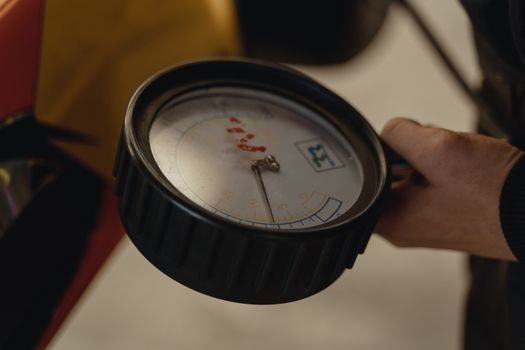
The last block of the RFQ determines whether the filter can actually be maintained as designed. Specify a differential-pressure gauge or transmitter (4-20 mA + HART for SCADA integration, with the HART signal carried on a 4-20 mA analog loop — a point that has tripped several variable-area flowmeter projects where the integrator assumed HART on a digital bus), a sample port upstream and downstream, a Magnehelic or digital gauge with a range matched to the change-out delta-P, a drain valve with plug, a lifting lug or eye-bolt rated for the wetted weight, and a nameplate in 316L with stamped or laser-etched data. Documentation line should pin: EN 10204 3.1 material certificates for all wetted parts, hydrostatic test report, FAT report with witnessed delta-P curve, ATEX/IECEx certificate copies, and a recommended spare parts list for the first 3 years (one full set of media elements, two gaskets, one DP instrument). The next decision node a process engineer typically faces after this RFQ is issued is the Vibration Sensor Buying Guide 2026: Types, Specs, and Selection Map, because the new filter housing will alter the piping dynamic and the existing vibration monitoring loop must be re-baselined; track that interface at FAT and again at site commissioning. [S2]