
Procurement data published on 2026-07-27 confirms a hard rule for industrial valves: the initial purchase price of a pressure reducing valve typically accounts for only 10-15% of its total cost of ownership, with the remaining 85-90% accumulating through installation, energy, maintenance, spares, and unplanned downtime [S1]. A separate 2026-07-17 water and wastewater guide places that same number slightly wider, at 15-20% purchase vs 80-85% lifecycle, reflecting the longer mean-time-between-overhaul in municipal service [S6].
For a typical ANSI Class 150-300 pressure reducing valve on a steam or compressed-air header, that means a USD 1,200 unit can quietly carry USD 8,000-12,000 in lifetime cost over a 15-year service window, dominated by seat wear, setpoint drift, and the energy wasted across a poorly sized orifice. Engineers who treat TCO as a line-item problem instead of a thermodynamic one end up buying the valve twice [S1][S3].
Cost Driver 1: Material Grade and Body Specification
Material choice is the single largest first-cost multiplier, and it compounds through the lifecycle because corrosion rate, seat life, and compatibility with the process fluid all feed back into the maintenance line. The 2026-08-10 Mordor Intelligence pressure-relief market report flags stainless-steel grades as dominant in corrosive and high-purity duties, and oil and gas (32.21% of 2025 revenue) as the segment that drives the highest alloy demand [S2]. For a WCB carbon-steel PRV on a 200 °C steam let-down, upgrading to a stainless body and trim roughly doubles unit cost but can triple the mean time between overhauls, which matters more than the sticker on a 15-year horizon [S2][S6].
A practical body-material comparison for pressure-reducing service: WCB carbon steel handles non-corrosive steam and water up to about 400 °C at the lowest first cost; CF8M (316 stainless) covers corrosive chemicals, demin water, and pharmaceutical duties at 1.8-2.5x unit cost; duplex and super-duplex grades are specified for chloride-bearing service above 60 °C and for offshore produced water, typically 3-4x unit cost; alloy 20, Hastelloy C, or titanium sit above that for sulfuric, hydrochloric, or seawater service. Material upgrades must always be justified against the pressure measurement loop, because a drifting upstream transmitter forces the valve to throttle harder and accelerates seat wear regardless of body alloy [S2][S6].
Cost Driver 2: Sizing Accuracy, Setpoint Selection, and Orifice Trim
An oversized PRV operates below 20% of its capacity range, where seat stability, repeatability, and seat life all collapse; an undersized one chokes, cavitates, and erodes the trim within months. The 2026-02-26 Atlas SSCV severe-service data illustrates the damage ceiling: standard globe trims can fail in 6-18 months under continuous choked flow, while a properly axisymmetric, recovery-rated trim survives 10+ years at the same duty, with noise held below 60 dB against the 85-120 dB typical of a conventional globe [S5]. That delta is the entire TCO equation in cavitation-prone service.
Selection rule of thumb: target 60-80% of the valve's capacity range at normal flow, with the maximum required flow landing inside the 90-95% band so the valve does not enter full lift during a transient. For a pilot-operated PRV, a 2026-03-23 Patsnap Eureka comparison finds pilot-operated designs become the lower-TCO option once the service window passes 5-7 years of continuous duty, because the higher first cost is recovered through tighter pressure control, lower seat leakage (which protects the downstream pressure gauge and transmitter population), and reduced fugitive emissions [S4]. Spring-loaded units remain the economic choice for short-cycle, low-pressure applications where the installation is expected to be replaced or rebuilt before year five [S2][S4].
Cost Driver 3: Installation, Commissioning, and Acceptance Testing
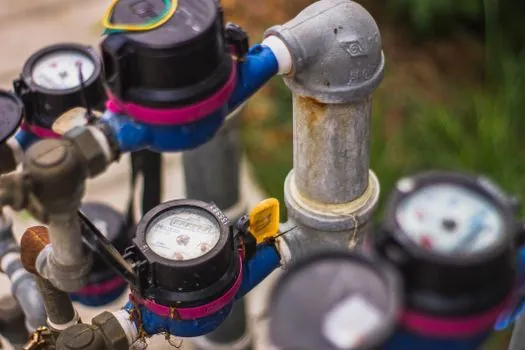
Installation labour and the engineering time to commission a PRV correctly is one of the easiest lines to under-budget. A clean installation on a horizontal pipe run with the required straight-pipe lengths (typically 5-10 diameters upstream, 3-5 downstream), a properly supported bypass, and a calibrated pressure calibrator for setpoint verification routinely runs 30-50% of the all-in hardware cost on small-bore units and falls toward 15-25% on larger flanged assemblies. Skipping the straight-pipe or installing a PRV too close to a pump or elbow invites turbulence that shows up as setpoint drift, water hammer, and accelerated diaphragm fatigue [S1][S6].
Commissioning acceptance tests should be documented with the as-built set pressure, reseat pressure, and a leak-rate measurement against the API 527 or equivalent standard tolerance, because a 2-3% setpoint error on a steam let-down is a continuous energy loss that compounds for 15 years. For buyers who want a worked example of the setpoint and acceptance-test procedure, the Pressure Reducing Valve Installation: Sizing, Setpoint, and Acceptance Test walkthrough maps the same acceptance numbers to field practice. The 2026-07-27 procurement guide also points out that installation quality is the single largest predictor of unplanned downtime in the first 36 months, more so than the brand of valve itself [S1].
Operating-Cost Layer: Energy, Downtime, and Safety-Relief Interaction
Operating cost dominates TCO in any PRV that throttles continuously. On a steam or compressed-air let-down, the energy dissipated across the valve is paid for in fuel or compressor input every hour of the year, so even a 5% reduction in pressure drop through trim selection or paralleling two smaller valves returns a measurable annual saving. The 2026-07-02 Marse efficiency study, while written for thermoregulation, makes the same point for any continuously operating control element: energy across the useful life easily exceeds the purchase price, and the largest item of operating cost is the one that runs every shift, not the one that gets installed once [S3].
Downtime is the line that ends budgets. A single four-hour unplanned shutdown on a continuous process line is frequently priced in the five- to six-figure range, so the TCO calculation should include a realistic mean-time-between-failure and a site-mobilization cost per service visit. This is also where the safety relief valve population matters: a pressure-reducing station that drifts high forces the downstream relief valves to lift more often, which means more leak-seat maintenance on the relief side and a higher probability of a fugitive-emissions finding under API 526 and ASME Section VIII inspection regimes [S2]. Smart, HART- or IIoT-enabled PRVs with continuous setpoint and diagnostic telemetry are projected into Mordor's 2026-2031 forecast because they cut unplanned visits and feed the brownfield-revamp maintenance cycle that is otherwise driving replacement demand in the Middle East [S2].
Standards, Compliance, and Where TCO Audits Should Anchor

The compliance backbone for PRV specification in oil and gas, petrochemical, and power remains API 526 (flanged steel safety and safety-relief valves) together with ASME Section VIII rules on overpressure protection, and NACE MR0175 for sour service, with the Mordor 2026 report attributing a +1.2% CAGR impact to that compliance regime alone in North America and the EU [S2]. For materials, ASME B16.34 (valve design and rating) and ASME B16.5 (pipe flanges) set the dimensional and pressure-temperature envelope that the procurement document has to call out; for seat leakage, API 527 sets the dimensional seat-tightness standard. None of these standards fixes a price, but all of them cap the operating envelope, and any TCO model that ignores them will under-budget on the safety-relief side [S2].
For procurement teams, the practical TCO audit method treats total cost of ownership as the sum of purchase price, lifetime operating energy, and maintenance over the equipment's useful life, with the purchase price of a valve typically representing only about 15-20% of that total and energy usually being the largest single line item. Cross-check the result against the 10-15% / 85-90% benchmark from the 2026-07-27 procurement guide [S1] and the 15-20% / 80-85% benchmark from the 2026-07-17 water-sector guide [S6]; if purchase is running above 25% of the all-in number, the specification is over-priced on hardware, and if it is below 10%, the installation or maintenance lines are probably under-scoped.
Limitations and Failure Modes Buyers Underestimate
Three failure modes consistently drive TCO above the model. First, setpoint drift on direct-operated, spring-loaded PRVs without a pilot stage: setpoint creep of 3-5% over 24 months on steam duty is common, and each percent of drift is a percent of energy lost or a percent of safety margin eaten on the downstream safety relief valve. Second, cavitation and flashing on liquid let-down: a 10:1 pressure drop across a single standard globe trim is inside the damage band, regardless of body material, and the fix is either a multi-stage anti-cavitation trim, two PRVs in series, or a control valve with a recovery-rated geometry such as the 700:1-range axisymmetric design cited earlier [S5]. Third, fugitive emissions through the valve stem: packing leakage in a process plant averages around 1-2% of inventory per year for an unmaintained PRV, and tightening that requires bellows-seal stems, live-loading on the packing, or upgraded graphite packing rated for the service temperature [S2].
Watch the size band. Mordor's 2025 installed-base data shows the 2"-6" medium-PRV size class holding 41.02% of revenue, while large-bore units above 6" are growing at 7.74% CAGR through 2031, so the cost model for a large-bore PRV replacement should not be benchmarked against small-bore experience [S2]. The medium-pressure 150-600 psi set-pressure band is where most plant PRVs sit (41.07% of 2025 share), and the high-pressure band above 600 psi is the one growing fastest at 7.68% CAGR, which means the long-tail spare-parts inventory in a 15-year TCO model is more expensive than most buyers assume [S2].
Trackable Signals for the Next Procurement Cycle
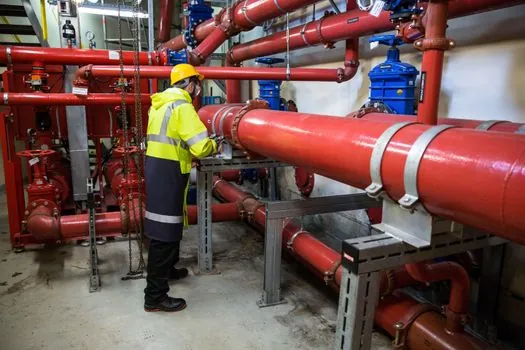
Two signals are worth watching through Q4 2026 and into 2027. First, the 2026-2031 pressure-relief market forecast calls pilot-operated designs to grow at 7.44% CAGR while spring-loaded units continue to dominate the installed base at 46.55% of 2025 share; that mix shift will pull the average PRV purchase price up and pull the average service interval down, both of which move TCO math on the next capex round [S2]. Second, the API 526 / ASME compliance refresh in process industries, combined with the brownfield-refinery replacement cycle in the Middle East, is forecast to add +2.1% to the CAGR driver stack through 2031, and any new build or revamp in that window should be tendered with the updated TCO benchmark, not the one carried forward from the 2020 vintage [S2].