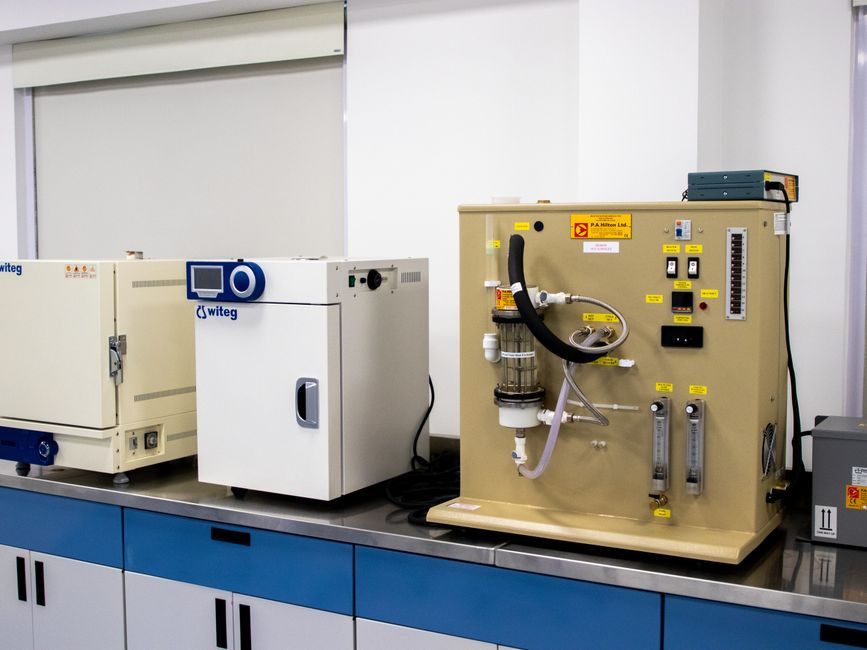
The 33X series from Riels Instruments, listed on DirectIndustry as of 2026-05-31, ships in relative, absolute and barometric pressure types with ceramic, thin-film and piezoresistive sensor options — a single SKU line that illustrates how selection is decided long before a model number is written [S1].
ABB's 266ASH absolute pressure transmitter, with its long-term-stability rating and combined HART and FOUNDATION Fieldbus communication options per the manufacturer overview, is used as the digital-output reference point in this article's comparison [S2]. A budget-class LED-display unit such as the ZORICREATO PT10SR-230 documents the OEM-tier envelope: stainless-steel housing, short-circuit protection, petroleum/chemical/hydrology scope [S3].
Gate 1 — Pressure Type: Relative, Absolute, Differential
Relative pressure transmitters vent the back of the sensing diaphragm to atmosphere and are the default for line pressure in non-condensing gas and clean liquid service [S1].
Absolute transmitters seal the reference side to a vacuum and are mandatory where the process value is referenced to a true vacuum — distillation column tops, barometric corrections, and vacuum-furnace control — the configuration ABB markets in the 266ASH [S2]. Differential transmitters measure the difference between two process taps, which is the standard way to infer level in a closed vessel via hydrostatic head; for that scope, a dedicated differential pressure transmitter is normally specified over a relative unit reworked with external manifolds. For tank-level, open-vessel and bubbler applications a dedicated level transmitter family handles the long capillaries and wet/dry leg corrections that a generic relative unit cannot.
Ceramic capacitive sensors, used in the 33X series, give strong chemical resistance against acids, slurries and aggressive condensate at the cost of a lower overpressure margin [S1].
Thin-film strain gauges on a stainless diaphragm are the workhorse for high-overpressure hydraulic and gas applications and are offered alongside ceramic in the same Riels catalogue, allowing the engineer to swap sensor class without changing the process connection [S1]. Piezoresistive silicon cells packaged in stainless or titanium housings (also documented in the 33X data) are the typical choice for low-pressure, high-accuracy gas measurement and OEM skids where cost per node matters more than chemical attack [S1]. When the application is hydrostatic tank gauging rather than line pressure, a level transmitter reuses the same sensor physics but is shipped with a tuned diaphragm and cable termination.
Gate 3 — Output Protocol: 4-20 mA, HART, Modbus, Fieldbus

The 4-20 mA current loop remains the most common process-control output in the 33X datasheet, paired with HART for digital overlay on the same two wires [S1].
The 266ASH overview lists HART and FOUNDATION Fieldbus as communication options, where HART is an FSK signal layered on a 4-20 mA analogue loop and FOUNDATION Fieldbus is a fully digital protocol per IEC 61158-2, so buyers needing multidrop diagnostics or asset-management screens select FOUNDATION Fieldbus for digital-only integration or HART when retaining the analogue loop [S2]. For OEM machine builders and skid integrators, RS-485 + Modbus RTU is the documented alternative, offered in the 33X product, which simplifies wiring back to a PLC without an analogue input card [S1]. For pure signal-trimming tasks on the bench, a pressure calibrator provides the same 4-20 mA loop simulation plus pressure source in a single hand-held unit. The 4-20 mA HART overlap matters when the same plant mixes legacy analogue wiring and modern asset-management software: HART rides on the loop, so adding diagnostics is a software upgrade rather than a rewire job [S1][S2].
Gate 4 — Hazardous-Area Certification and Ingress Protection
European process plants continue to specify ATEX-certified pressure transmitters for zone 1 and zone 2 installations, and the 33X lists ATEX and intrinsically-safe options alongside IP65/IP66/IP67/IP68 housing ratings for outdoor and wash-down locations [S1].
For North American builds, IECEx and CSA/US certification paths cover the equivalent hazardous-area requirement, while NACE MR0175 compliance becomes the deciding clause for sour-service hydrocarbon streams containing H2S. Process engineers running a multi-region EPC should also be aware that selecting ATEX-only hardware forces a separate material list for the same skid in the US or Middle East — a procurement cost that often exceeds the sensor price. For local indication at the tapping point, a mechanical pressure gauge remains a code-required backup in many boiler and vessel service lines.
Gate 5 — Process Connection, Wetted Material and Media Compatibility

Threaded process connections with flush-diaphragm options are documented in the 33X family, with stainless steel and titanium wetted parts, which covers the bulk of clean gas and non-scaling liquid services [S1].
For slurries, pulp stock and viscous or crystallising media, a flush diaphragm eliminates the dead leg where solids would build up, but the engineer must still confirm the O-ring elastomer matches the chemistry — FKM, EPDM and FFKM are the three typical choices. For absolute-pressure service on aggressive vapor lines the 266ASH datasheet calls out long-term stability under extreme ambient and process conditions as a primary design point, indicating welded diaphragms and Hastelloy-class wetted options for high-temperature acid gas [S2]. A relative pressure transmitter is normally selected on the basis of three material sub-decisions: process connection type, wetted material, and seal elastomer — each must be checked independently against the line class.
Comparison: Where Each Technology Fits Best
The three most common transmitter classes compare on the criteria that drive a process datasheet. [S1]
Relative thin-film with HART (e.g. 33X thin-film variant) scores best for cost-per-point and overpressure margin in line-pressure service. Absolute ceramic with HART/FF (e.g. 266ASH) scores best for chemical resistance and digital integration in column-top and vacuum service. For OEM skids and machine-builder panels, the 33X's RS-485 + Modbus RTU line is the lowest-friction option [S1].
What Pressure Transmitters Are Not For
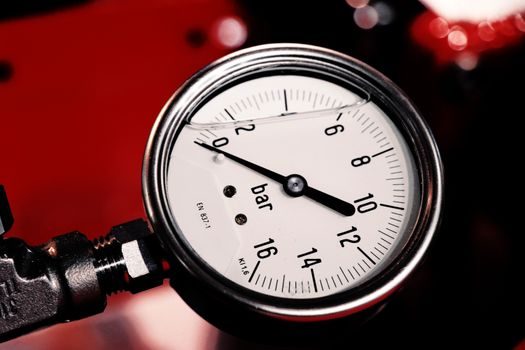
A pressure transmitter is not a substitute for a local mechanical gauge when the safety code mandates a visible on-skid readout — in that case a calibrated pressure gauge sits next to the transmitter rather than being replaced by it. [S2]
It is also not a flowmeter; a differential pressure transmitter infers flow only when paired with a primary element sized to ISO 5167, and it cannot replace a Coriolis or electromagnetic meter on a custody-transfer bill. It is not a level instrument in open-vessel or long-capillary applications — a level transmitter with the correct diaphragm and wet/dry leg compensation is the correct category. Finally, a HART-only transmitter cannot be dropped onto a Foundation Fieldbus or PROFIBUS PA segment without a gateway or replacement: HART is the FSK digital signal overlaid on a 4-20 mA analogue loop, while Foundation Fieldbus and PROFIBUS PA are fully digital protocols that do not carry HART frames.
Verification, Calibration and Trackable Signals
At acceptance, a pressure calibrator applies a traceable pressure standard to the impulse line and reads back the 4-20 mA loop or HART variable, which is the practical test for zero, span and linearity before the loop is energised on plant air. [S3]
For a sister decision on signal conditioning versus transmitter selection, the 4-20 mA signal conditioner selection guide for process engineers covers the loop-power and isolation trade-offs. For a different test-bench family, the torque sensor selection for powertrain evaluation article uses the same five-gate logic on a rotating-machinery axis.