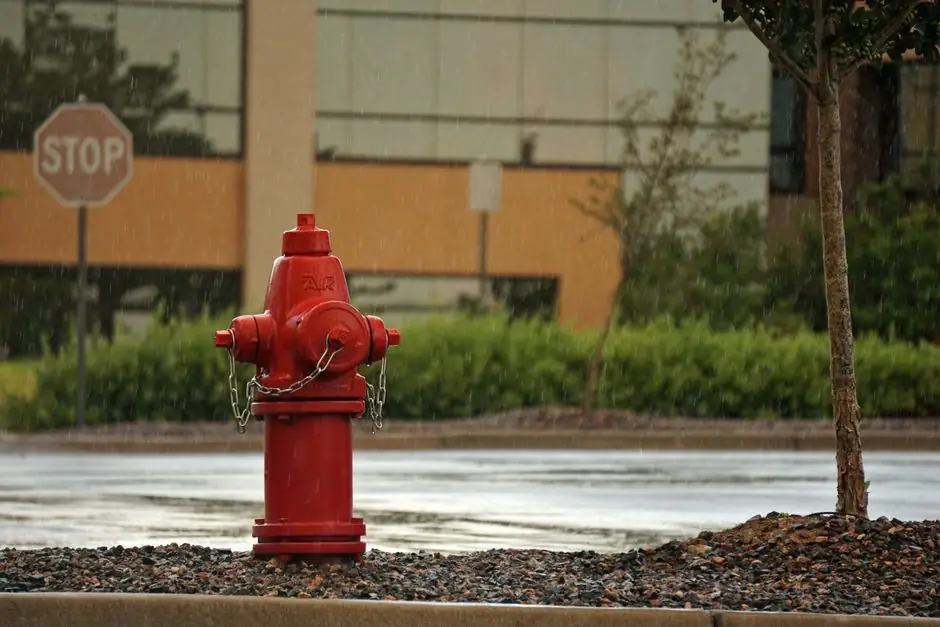
Industrial site owners should budget $200-$1,000 per private fire hydrant per year for annual inspection, with total annual maintenance (including flow testing, minor repairs, and lubrication) commonly landing in the $500-$2,000 per hydrant range [S4].
This figure covers NFPA 25-mandated annual flow testing, visual checks, stem and valve lubrication, and routine flushing, but excludes major capital events like full hydrant replacement, which averages $5,500 per unit [S6]. For an industrial campus with 18 hydrants (a typical park count), annual contracted inspection packages run roughly $78,750 at $175/hydrant before any repair work [S3].
What Drives the Per-Hydrant Maintenance Cost
Three variables dominate the per-hydrant annual figure: contract scope, hydrant age, and local water-department coordination requirements [S3]. Service provider rates cluster between $150 and $500 per hydrant per year for a baseline maintenance contract, with the Cromwell Water Division quoting $150/hydrant/year and private contractors on Angi averaging $100-$500 [S8][S9].
Inspection scope separates the cost tiers. A bare visual check runs the lowest, while a full annual package adds flow testing ($150-$500 per test), static and residual pressure measurement, and a written report acceptable to the Authority Having Jurisdiction (AHJ) and insurer [S4][S3]. The 2008 Fellsmere study pegged a baseline at roughly $174.50 per hydrant per year, a figure that has since tracked upward with labor and insurance costs [S1].
Industrial sites carry an additional cost driver: AHJ and water-department coordination.
Cost Breakdown: Inspections, Tests, Repairs, and Capital Reserves
Annual inspection of a private hydrant costs $200-$1,000 per unit when itemized separately from flow testing [S4]. Water flow and pressure testing adds $150-$500 per test, and most jurisdictions require this annually on private hydrants per NFPA 25 and the Alberta Fire Code referenced in private-hydrant compliance literature [S4][S2].
Repair line items are the volatile component. Gasket and seal replacements run $50-$150, valve or stem repairs $200-$800, and full valve replacements $100-$300 per event [S4]. Across a fleet of 18 hydrants on an industrial campus, even a 10% annual repair incidence produces a $1,000-$3,000 unplanned spend on top of the inspection contract.
Capital reserves should be planned separately. Rebuilding a hydrant averages $500 versus $5,500 for full replacement, and the rebuild-versus-replace decision is largely driven by barrel corrosion and stem-seat wear after 20-30 years of service [S6].
Industrial Site vs. Commercial Property: Volume and Reporting Differences

Industrial sites differ from light-commercial properties in three ways: hydrant density, hazard classification, and reporting burden. A 25-campus industrial-park portfolio averaging 18 hydrants each generates 450 inspection points, with annual inspection contracts around $78,750 at $175/hydrant and five-year flow-test cycles stacked on top [S3].
Hazard classification matters for inspection depth.
Reporting burden is the hidden multiplier. Accepted reports must satisfy the AHJ, the local water department, the insurance underwriter, and the site fire-protection engineer; when a contractor's reports are not accepted, retesting fees run $300-$1,000 per add-on event [S3]. For more on condition-monitoring documentation that overlaps with hydrant telemetry, see alarm fatigue in condition monitoring.
Comparison of Maintenance Contract Models
Three contract models dominate the private-hydrant maintenance market, each with distinct cost and risk profiles. [S3]
Model 1, municipal water-department contract: $150/hydrant/year, lowest direct cost, but only available in jurisdictions like Cromwell where the Water Division extends service to private owners, and turnaround depends on municipal scheduling [S9].
Model 2, private fire-protection contractor (full-service): $200-$450/hydrant/year base, includes annual flow test, lubrication, flushing, and AHJ-accepted documentation, with add-on repairs billed separately; this is the model most commonly used on industrial campuses [S3].
Model 3, self-administered with third-party verification: lowest direct inspection cost but highest coordination overhead, requiring the owner to maintain calibrated pitot gauges, manage water-department discharge permits, and schedule an independent witness for the annual flow test, which typically pushes total cost to $300-$600/hydrant/year once hidden labor is included [S3].
Failure Modes and Hidden Cost Multipliers
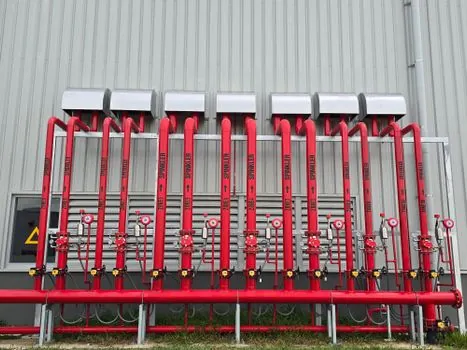
The most expensive line items in private-hydrant maintenance are not the inspections themselves but the deferred repairs that follow a failed flow test. A hydrant that fails to deliver rated flow at the required residual pressure triggers a deficiency cycle: retest fees ($300-$1,000), isolation valve work, and possible main-flushing coordination with the water utility [S3].
Cold-climate seasonality compresses the working calendar. In regions with frozen-ground conditions from November through March, the practical inspection window drops to 8-9 months, which raises per-hydrant costs for any site that cannot schedule its full fleet inside that window [S3]. This is a structural reason why dry-barrel hydrants dominate northern industrial sites despite higher unit cost [S4].
Owner liability is the unpriced cost. Insurance carriers frequently review maintenance records, and missing documentation can complicate claims; the property owner is liable for AHJ, insurer, and engineer compliance, not the contractor [S5][S7]. For sites with flammable-gas detection in the same process area, the maintenance-documentation discipline parallels open-path vs point gas detector coverage, where audit trails determine post-incident liability allocation.
Standards, Codes, and Frequency Floor
NFPA 25 governs water-based fire protection systems, including private hydrants, and is the standard cited across all reviewed maintenance guides [S4][S5]. The Alberta Fire Code and municipal bylaws like Calgary's Bylaw 40M2006 mandate annual or semi-annual inspection of all hydrants, including private units, with semi-annual checks recommended where seasonal extremes stress the hydrant barrel [S2].
Annual flow testing is the non-negotiable baseline; the test must verify water pressure and available gallons per minute against the design demand of the protected hazard [S5]. Post-use inspection is the second hard floor: any hydrant discharged during an emergency must be inspected, flow-tested, and serviced before being returned to service [S2].
For sites with high-value process equipment co-located, the hydrant flow-test data feeds the same risk-assessment envelope used for hydraulic power unit motor sizing, since firewater pump suction and process water systems often share the same supply main.
Total Cost of Ownership: A 10-Year Industrial-Site View
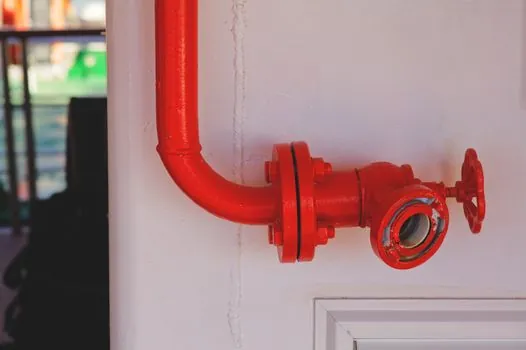
For a single private hydrant on an industrial site, a defensible 10-year total cost of ownership runs $7,000-$15,000 in 2026 dollars, broken down as: $2,000-$10,000 installed (median $5,000), $200-$1,000/year inspection, $50-$300/year average repair spend, and one mid-life rebuild at $500 around year 12-18 [S4][S6].
A 20-hydrant industrial campus should plan for a $50,000-$120,000 inspection budget over the same decade, plus a $15,000-$40,000 repair and capital-reserve layer, before any major main-extension or pump-house work. That figure excludes fire-water flow degradation from supply-side issues, which is the most common reason a "passing" hydrant fails its next annual test.
Owners negotiating 2027 contracts should request 2026 flow-test reports from every hydrant on the site before signing.
For the relevant spec sheets and selection criteria, see fire hydrant, fire door, and fire extinguisher.